




After graduating from Rice University, Wade received a Watson Fellowship that enabled a year exploring running cultures. Her journey took her from European clubs to Ethiopian training grounds, through Japan and on to Australia and New Zealand. The book combines those encounters with the mileage of an athlete who was still training, not simply observing. That dual position gives the travel a particular purpose. Wade wants to improve, but improvement gradually becomes a wider subject than workouts. Meals, hospitality, access to training partners and the social expectations around exercise all become part of her education. Recipes and photographs reinforce the sense of a life experienced through movement and conversation.
The Shelf · Books
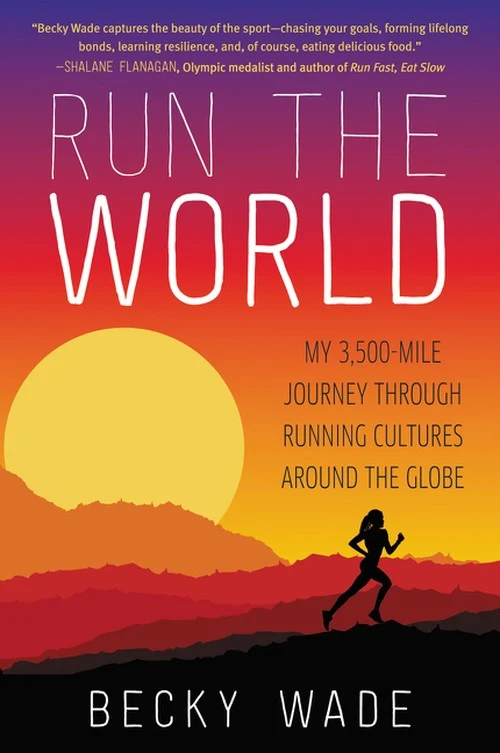
Run the World: My 3,500-Mile Journey through Running Cultures around the Globe
By Becky WadeReleased 2016Curated by SPMA Hub because sport culture lives beyond the field.
A training plan can tell a runner how far to go. It says much less about the people, meals and customs that make those miles possible. Becky Wade's Run the World follows a young American athlete abroad as she searches for running knowledge and discovers how differently a shared sport can fit into everyday life.
The Shelf
The Gist
Why it caught our attention
The Details
Quick facts

At A Glance
A training plan can tell a runner how far to go. It says much less about the people, meals and customs that make those miles possible. Becky Wade's Run the World follows a young American athlete abroad as she searches for running knowledge and discovers how differently a shared sport can fit into everyday life.

About This Shelf Item
About Run the World: My 3,500-Mile Journey through Running Cultures around the Globe
The contrast between locations is the source of the book's interest. Irish club running brings social rituals and shared company into view. Ethiopia introduces Wade to ambitious runners whose pursuit of opportunity takes place under very different material conditions. New Zealand connects her to the tradition surrounding Arthur Lydiard and the Waiatarua Circuit. Each setting changes what a familiar training activity means: the same run can be a communal habit, a route towards a livelihood or a way to participate in sporting history.
Access is not always straightforward. Her attempts to approach Japan's corporate running world encounter limits, and time spent circling Tokyo's Yoyogi Park offers a less glamorous side of sporting travel. These uneven experiences keep the journey from becoming a simple catalogue of elite secrets. Many of the people Wade meets are club runners or developing athletes. Their generosity and ordinary routines are as important to the account as encounters with famous competitors.

Why It Belongs
The Sport Connection
The international comparison is valuable for anyone organising participation programmes or athlete travel. Wade's experience shows how much a visitor depends on introductions, local knowledge and people willing to include an unfamiliar runner. A running community is partly built through those acts of welcome. The book also complicates the search for a universally superior training culture. A practice that works within one social environment may rely on relationships and routines that cannot be copied by inserting a session into a spreadsheet. For athletes and coaches, the interesting question becomes how to learn from another place while recognising the circumstances that give its habits meaning.

Our Recommendation
Why Read Run the World: My 3,500-Mile Journey through Running Cultures around the Globe
Run the World will appeal to runners who enjoy the social life of the sport as much as racing, and to travellers drawn to a destination through a particular activity. Wade's curiosity makes room for both achievement and pleasure. The food, friendships and changes of scenery offer more than decoration around training: they explain why a year of running abroad could change her understanding of what an athletic life contains. Readers seeking a prescriptive programme should expect a travel memoir instead. Its useful ideas emerge from encounters and comparisons, leaving room to consider which parts might suit their own circumstances.
Final Thoughts
Arash's Final Thoughts
Wade sets out with the focused curiosity of a competitive runner, yet the journey's lasting appeal comes from the breadth of the answer she receives. Running knowledge lives in people as well as methods. A shared route, an invitation to a meal or a place in a club session can teach something a formal plan misses. The book makes that discovery tangible, presenting ambition as compatible with openness and reminding dedicated athletes that paying attention to the world can itself be part of their development.
Keep Exploring
Similar Books on The Shelf






Same sport
More Running on The Shelf


Stay in the loop
Follow SPMA
New jobs, interviews and sport-industry news in your feed.






Hiring now on Sports Hired
43251294 new jobs in sport this week
Teams, leagues, agencies and brands in Canadain the USAin Canada & the USA are hiring. Find your next role, or let new ones come to you.
3571,0141,371 open jobs3,8128,01711,829 organizations
Just posted
 Digital Content & Social Media InternSport Management Hub · Toronto, ONFeatured
 Assistant/Associate Golf ProfessionalGlen Abbey Golf Club · Oakville, ON14 hours ago
 Physical Literacy Program LeaderPISE (Pacific Institute for Sport Excellence) · Victoria, BC19 hours ago
- Digital Content & Social Media InternSport Management Hub · Toronto, ONFeatured
 Summer InternFirst Tee · Charleston, SC8 hours ago
Copied
