The Shelf · Books

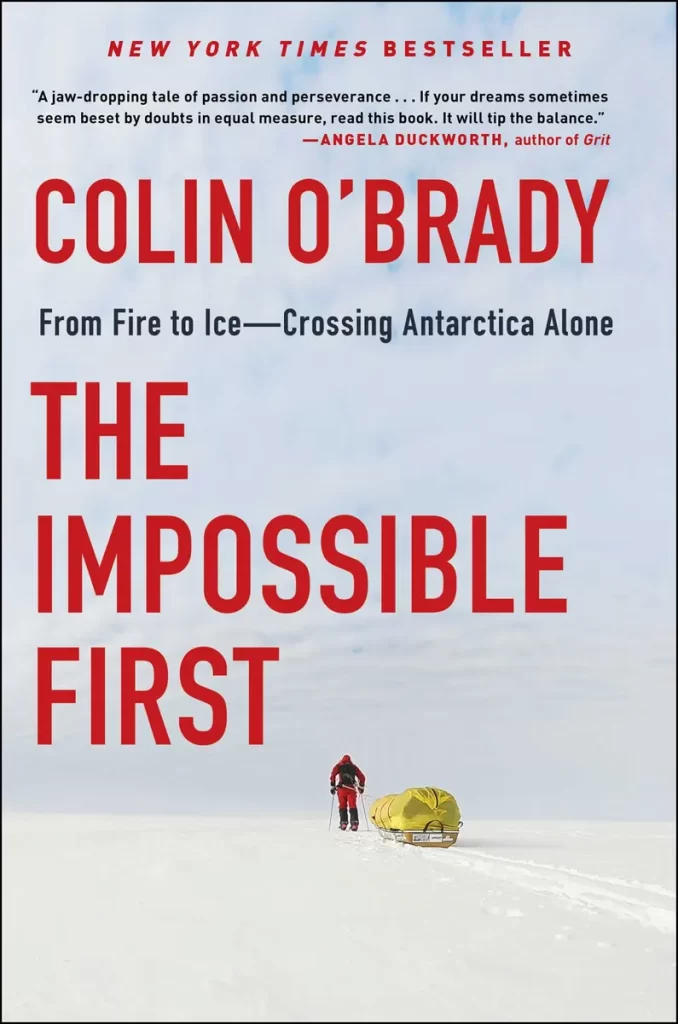
The Impossible First: From Fire to Ice: Crossing Antarctica Alone

By Colin O'BradyReleased 2020Curated by SPMA Hub because sport culture lives beyond the field.

For Colin O'Brady, the Antarctic journey began long before the first mile of ice. The Impossible First connects his recovery from severe burns with the ambition that carried him into a demanding solo expedition. The memoir follows a body under strain and a mind occupied by memory, doubt and the desire to finish an extraordinary undertaking.

Arash Sayed
Covered by Arash Sayed
The Shelf
The Impossible First: From Fire to Ice: Crossing Antarctica Alone

The Gist

Why it caught our attention

Published in 2020, the book centres on O'Brady's 2018 journey of roughly 932 miles across Antarctica. British explorer Louis Rudd was pursuing a similar objective, giving the expedition the additional pressure of a race. O'Brady sets that experience within a longer personal story of injury, recovery and endurance challenges.

The title expresses how he understood the undertaking. Its claim to a particular kind of first subsequently became contested, making the memoir part of a wider debate about polar achievement. The physical journey and the public language used to describe it are both relevant to understanding the book.

The Details

Quick facts

Format
Book
Author
Colin O'Brady
Published
2020
ISBN
9781982133115
Relevant Sport
Climbing

At A Glance

For Colin O'Brady, the Antarctic journey began long before the first mile of ice. The Impossible First connects his recovery from severe burns with the ambition that carried him into a demanding solo expedition. The memoir follows a body under strain and a mind occupied by memory, doubt and the desire to finish an extraordinary undertaking.

About This Shelf Item

About The Impossible First: From Fire to Ice: Crossing Antarctica Alone

The account of recovery gives the later expedition its emotional foundation. An accident had placed O'Brady's ordinary mobility in doubt, so the decision to attempt increasingly demanding goals carries a personal meaning beyond the prospect of a record. The memoir links that earlier vulnerability with the confidence needed to begin again.

On the ice, the practical scale of the challenge becomes central. O'Brady describes pulling a heavily loaded sled, enduring cold and whiteouts, and continuing through isolation. Progress has to be made repeatedly, with yesterday's effort offering no substitute for the work required by the next stretch of the route.

The rivalry with Rudd introduces a different pressure. A journey can be difficult on its own terms while also being shaped by another person's progress. That combination makes the book a story about the management of attention: the traveller must respond to immediate conditions while carrying an awareness of the larger contest.

Memory supplies company during the expedition. O'Brady reflects on the relationships and experiences that formed his ambitions, bringing life beyond Antarctica into the account of solitude. The result is a memoir in which the remote setting repeatedly leads back to people, promises and earlier versions of the self.

Why It Belongs

The Sport Connection

For adventure sport and communications professionals, the discussion surrounding the book is especially instructive. National Geographic questioned how O'Brady described the route, assistance and historical precedence. He disputed the criticism in a detailed public letter. Those disagreements should remain visible when the achievement is presented to an audience.

The issue is one of definition as well as effort. Terms used in expedition records carry specific distinctions, and a short promotional claim can conceal those distinctions. The book provides a concrete setting for examining how an athlete, sponsor or journalist can communicate a demanding achievement accurately.

At the same time, the physical undertaking offers material for discussions of preparation and sustained performance. The memoir follows decisions made under fatigue and isolation, where an ambitious public goal must be translated into manageable action. That relationship between the declared objective and the next necessary task is central to endurance work.

Our Recommendation

Why Read The Impossible First: From Fire to Ice: Crossing Antarctica Alone

Readers interested in polar travel and personal accounts of demanding expeditions will find a strongly defined journey here. The recovery narrative broadens its appeal to people curious about how a changed physical outlook can reshape a person's ambitions.

It is also a worthwhile paired reading for sport communication students, alongside the published criticism and O'Brady's response. Reading those accounts together allows admiration for the effort to coexist with careful attention to the claims made on its behalf. That fuller context gives the memoir a more substantial place in discussion.

Arash Sayed

Final Thoughts

Arash's Final Thoughts

The Impossible First records the force of a goal that organised an athlete's life and carried him through prolonged discomfort. Its lasting interest includes the distance between a private experience and the public story built around it. O'Brady's journey invites attention to both: the person moving across the ice and the responsibility involved in describing what that movement achieved.