The Shelf · Books

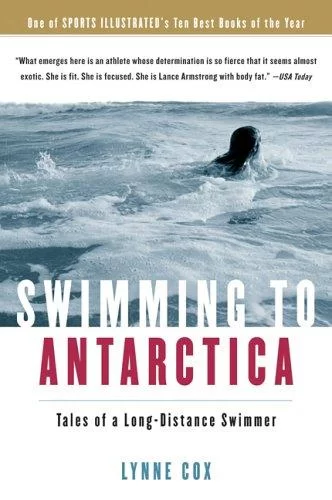
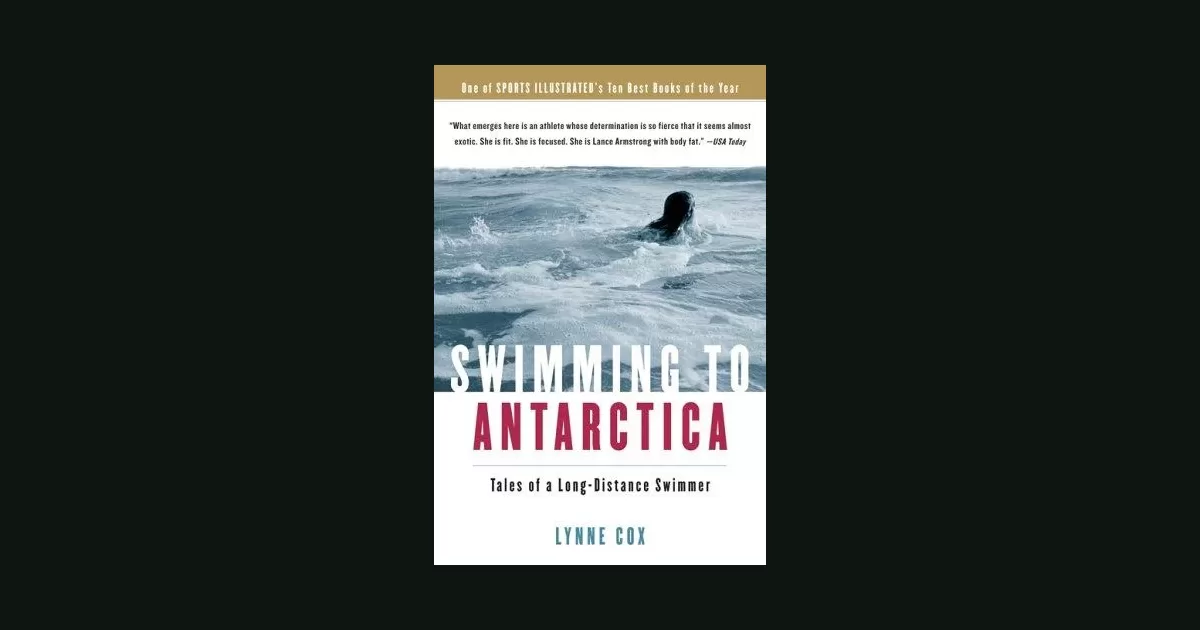
Swimming to Antarctica

By Lynne CoxReleased 2004Curated by SPMA Hub because sport culture lives beyond the field.

Swimming to Antarctica follows Lynne Cox into waters where a familiar sporting movement becomes an encounter with an unfamiliar environment. Her memoir is about endurance, but it is also about planning, curiosity and the meanings attached to crossing a stretch of sea that most people experience only as a boundary.

Alex Bennett
Covered by Alex Bennett
The Shelf
Swimming to Antarctica
The Gist Of Swimming to Antarctica

The Gist

Why it caught our attention

The book recounts Cox's development as an open-water swimmer and the demanding swims that shaped her life. Its scope includes early training, major crossings and the Antarctic swim named in the title. The attraction is not simply the accumulation of records; it is the changing relationship between a swimmer, a place and an objective.

Cox's early commitment gives the later achievements a substantial foundation. The ability to enter unusual conditions did not arrive as a spontaneous expression of courage. Years of swimming developed experience and self-knowledge. The memoir is therefore more useful when its striking destinations are connected to preparation rather than treated as proof that determination can replace expertise.

The Details

Quick facts

Format
Book
Author
Lynne Cox
Published
2004
Relevant Sport
Swimming

At A Glance

Swimming to Antarctica follows Lynne Cox into waters where a familiar sporting movement becomes an encounter with an unfamiliar environment. Her memoir is about endurance, but it is also about planning, curiosity and the meanings attached to crossing a stretch of sea that most people experience only as a boundary.

About This Shelf Item

About Swimming to Antarctica

Open water changes the nature of the challenge. There is no controlled lane in which each length reliably resembles the last. Weather, currents and temperature can alter what the swimmer must do and how progress should be understood. A visible destination does not guarantee a straightforward route, making judgment part of the athletic task rather than an administrative matter settled beforehand.

The 1987 Bering Strait swim gives the account a particularly distinctive dimension. Moving between Alaska and the Soviet Union connected an individual sporting undertaking to a politically charged boundary. The crossing could carry symbolic meaning precisely because it involved a real body moving through water, making an abstract division temporarily visible as a distance someone could attempt to swim.

The Antarctic objective adds another kind of boundary, defined by environmental conditions rather than nationality. Cox's experience in extreme cold is specific to her preparation, support and physical characteristics. Readers should not turn a memoir of an exceptional swimmer into a set of instructions or assume that a vivid account makes the underlying danger ordinary or easily reproducible.

Why It Belongs

The Sport Connection

For adventure sport management, the memoir makes the support behind an apparently solitary performance worth examining. The swimmer is the most visible participant, but an ambitious crossing requires organisation and people able to respond to changing circumstances. Solitude in the water should not be confused with independence from a wider operation before and during the attempt.

It also offers a useful discussion of how sporting goals acquire meaning. A record can provide a clear external measure, while a crossing may matter because of its location, history or personal significance. Those motives can coexist, but they do not lead to identical decisions. Understanding the purpose of an attempt helps explain why an athlete chooses one demanding project over another.

The political symbolism of the Bering Strait swim deserves proportion. A sporting act can attract attention and create a memorable expression of connection without independently resolving international tensions. Appreciating its symbolic force does not require making an exaggerated causal claim. The memoir is strongest as an account of how Cox understood and pursued the undertaking within that wider setting.

Our Recommendation

Why Read Swimming to Antarctica

Swimming to Antarctica will appeal to readers interested in endurance, open-water swimming and the relationship between sport and geography. Its distinctive subject is the swimmer's encounter with places that do not conform to a standard course. It provides a valuable contrast to event-centred sporting narratives, where rules and infrastructure usually make the conditions more predictable before the athlete begins.

Alex Bennett

Final Thoughts

Alex's Final Thoughts

Cox's story makes distance meaningful in several different ways: as a physical demand, a problem to organise and a boundary carrying human significance. The memoir's lasting appeal comes from keeping those meanings connected. The achievement is not only that a swimmer reached another shore, but that she made readers reconsider what lay between the two.