The Shelf · Books

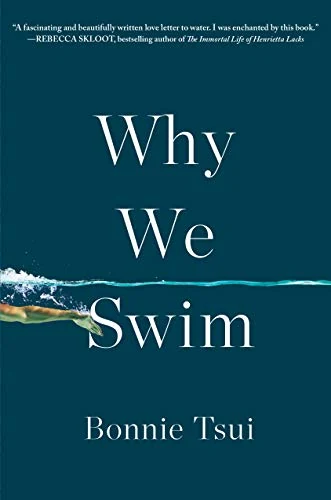
Why We Swim

By Bonnie TsuiReleased 2020Curated by SPMA Hub because sport culture lives beyond the field.

A pool can be a classroom, a refuge, a meeting place or a site of fierce competition. Bonnie Tsui's Why We Swim moves among those possibilities without losing sight of the water itself. Through remarkable swimmers and ordinary habits, she asks why an activity that requires us to adapt so completely can feel so deeply familiar.

Arash Sayed
Covered by Arash Sayed
The Shelf
Why We Swim

The Gist

Why it caught our attention

Published in 2020, the book combines reporting, cultural history and personal reflection. Tsui organises her enquiry around survival, wellbeing, community, competition and flow. The arrangement allows a life-saving skill and a carefully trained sporting performance to belong within the same account of human experience.

Tsui is also a swimmer, and that involvement gives the investigation a personal starting point. She is interested in what immersion feels like from within, as well as in what can be measured from outside. Her travels and interviews carry the question from familiar pools into very different bodies of water.

The Details

Quick facts

Format
Book
Author
Bonnie Tsui
Published
2020
ISBN
9781616207861
Relevant Sport
Swimming

At A Glance

A pool can be a classroom, a refuge, a meeting place or a site of fierce competition. Bonnie Tsui's Why We Swim moves among those possibilities without losing sight of the water itself. Through remarkable swimmers and ordinary habits, she asks why an activity that requires us to adapt so completely can feel so deeply familiar.

About This Shelf Item

About Why We Swim

An Icelandic fisherman's extraordinary survival after his boat capsizes opens one route into the subject. His ability to endure cold water raises questions about the body, adaptation and the boundary between an exceptional individual and a capability shared more widely. The drama of the incident gives the science a person to explain.

Marathon swimmer Kim Chambers provides another striking story. Swimming entered her life after a serious injury, eventually becoming an arena for demanding endurance challenges. Her experience places recovery and ambition within the same activity, showing how a person's reason for entering the water can change over time.

Tsui also considers swimming as a social practice. Community groups, competitive environments and cultural traditions give the act different meanings. A person swimming beside others may be pursuing a private goal while participating in a relationship that makes the return to the water more likely.

The book's attention to flow brings it back to the experience of movement. Rhythm, breathing and sensory awareness help explain why swimmers can describe a session in terms that reach beyond fitness. Tsui's own reflections give this material an intimate scale, linking broad questions about human life with the familiar decision to swim again tomorrow.

Why It Belongs

The Sport Connection

Why We Swim expands the way a recreation programme can understand participation. A swimming organisation may count visits or record race times, but Tsui's five-part enquiry suggests several different reasons those visits matter. A member seeking companionship and another training for competition can use the same facility while valuing different parts of the experience.

That distinction has practical relevance for programming and communication. The book encourages attention to the participant's purpose, whether learning a necessary skill, finding a regular community or pursuing a difficult personal challenge. Its range makes a single image of the typical swimmer seem inadequate.

The recovery and survival stories also place responsibility beside enthusiasm. Water's appeal includes its physical demands, yet those demands are experienced differently by different bodies. Tsui's curiosity about individual experience offers aquatic leaders a useful habit: listen closely before assuming that another swimmer's relationship with the activity resembles your own.

Our Recommendation

Why Read Why We Swim

Swimmers will find language for experiences that can be difficult to explain on dry land. Readers who prefer narrative nonfiction can enter through the people Tsui meets, whose reasons for swimming give the book variety and emotional substance.

It is also a thoughtful choice for recreation staff, coaches and anyone concerned with participation across a lifetime. The book follows an activity that can change its place in a person's life, allowing competition, restoration and belonging to coexist rather than demanding a permanent choice among them.

Arash Sayed

Final Thoughts

Arash's Final Thoughts

Tsui makes the ordinary act of getting into water feel worthy of sustained attention. Why We Swim succeeds by keeping several meanings alive at once: swimming can test a body, connect a group and offer a private moment of calm. The question in the title becomes richer as the answers accumulate, giving familiar water a less familiar depth.