The Shelf · Books

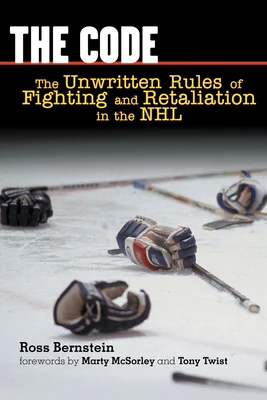
The Code: The Unwritten Rules of Fighting and Retaliation in the NHL

By Ross BernsteinReleased 2006Curated by SPMA Hub because sport culture lives beyond the field.

Hockey has a rulebook, and then it has the expectations players believe the rulebook cannot enforce. Ross Bernstein's The Code investigates that second system: the understandings surrounding fights, retaliation and protection in the NHL. The book asks insiders to explain conduct that can seem contradictory to anyone watching from outside their world.

Arash Sayed
Covered by Arash Sayed
The Shelf
The Code: The Unwritten Rules of Fighting and Retaliation in the NHL

The Gist

Why it caught our attention

Published in 2006, The Code draws on interviews with more than fifty players, coaches and media personalities. Bernstein explores the history of fighting and the conventions participants use to describe when it is accepted, expected or considered improper. The account is rooted in the NHL culture of its publication period.

The book's central distinction is between formal penalties and informal judgment. An action can receive a sanction from an official while still being defended by teammates, or avoid a penalty while attracting retaliation. That gap creates the subject Bernstein wants his interviewees to explain.

The Details

Quick facts

Format
Book
Author
Ross Bernstein
Published
2006
ISBN
9781572437562
Relevant Sport
Hockey

At A Glance

Hockey has a rulebook, and then it has the expectations players believe the rulebook cannot enforce. Ross Bernstein's The Code investigates that second system: the understandings surrounding fights, retaliation and protection in the NHL. The book asks insiders to explain conduct that can seem contradictory to anyone watching from outside their world.

About This Shelf Item

About The Code: The Unwritten Rules of Fighting and Retaliation in the NHL

Enforcers occupy a prominent place because their work depends on reputation. The threat of a response can matter before a fight begins. Players describing that role present themselves as protecting teammates and preserving space for the game, making physical confrontation part of an internal account of order.

The interviews also address what happens around a fight. Decisions about an opponent, the circumstances of an incident and the response afterward carry meaning within the group. Bernstein's interest is in how participants learn those expectations when no official manual sets them out. The code is transmitted through experience, correction and stories about what previous players did.

The book considers fighting against the background of changes around the 2004-05 lockout and the effort to make the NHL faster. That context gives the account historical value. Rules designed to change the visible game also affect specialised player roles and the informal understandings attached to them. The result is a portrait of a culture explaining itself while parts of its environment are shifting.

Why It Belongs

The Sport Connection

The Code is useful for sport managers because every organisation has informal expectations alongside written policy. Hockey makes the difference unusually visible. Bernstein's interviews show how a group can consider its own practices legitimate even when those practices sit uneasily beside the formal rules.

That does not make an internal explanation a sufficient justification. The governance question is who bears the consequences of an informal arrangement and who has authority to change it. In this case, the costs are carried by players' bodies, while teams, supporters and the wider league may value the spectacle or the claimed deterrent.

The book also helps explain why rule changes can have effects beyond the immediate infraction being targeted. A player whose professional identity has been built around one role may face a different market when the game changes. Understanding that transition requires attention to culture and employment, as well as the text of the new rule.

Our Recommendation

Why Read The Code: The Unwritten Rules of Fighting and Retaliation in the NHL

Hockey readers curious about enforcers and the game's informal traditions are the clearest audience. The interviews provide access to the reasoning participants use, including assumptions that may not be apparent from watching a fight alone.

The book also suits discussions of organisational culture and authority. Its value is strongest when the participants' explanations are examined as evidence of how the system operates. It provides material for understanding an era of the NHL without requiring readers to endorse every practice described within it.

Arash Sayed

Final Thoughts

Arash's Final Thoughts

The Code reveals how much of a sporting culture can operate beyond its official language. Bernstein records a system sustained by reputation, obligation and the belief that players must enforce certain boundaries themselves. The enduring question is whether that arrangement protects the game, protects its participants or asks them to confuse the two.