The Shelf · Movies

The U

Released 2009Curated by SPMA Hub because sport culture lives beyond the field.

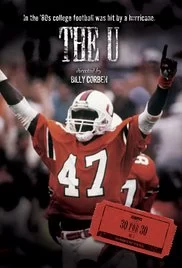
The Miami Hurricanes became college football's most provocative programme in the 1980s. Billy Corben's documentary shows how championships, Black cultural expression, fierce local loyalty and national criticism fed one another. The U is not simply a celebration of winning games; it is an account of a university team whose image escaped the athletic department's control and helped define an era.

Arash Sayed
Covered by Arash Sayed
The Shelf
The U

The Gist

Why it caught our attention

Premiering in 2009 as part of ESPN's 30 for 30 series, The U was directed by Miami filmmaker Billy Corben. It traces the University of Miami football programme's rise in the 1980s and early 1990s, when the Hurricanes combined extraordinary talent with a style that unsettled much of the college-football establishment. Players, coaches and administrators recall a period when Miami's football identity became inseparable from the city's social tensions and public reputation.

Corben brings a local viewpoint to a national story. Miami's cultural mixture, changing demographics and contested image provide context for the football programme's defiant personality. The team's success was undeniable. The reaction to its confidence, celebrations and appearance revealed that some audiences were judging far more than its tactics.

The Details

Quick facts

Format
Movie
Released
2009
Relevant Sport
American Football

At A Glance

The Miami Hurricanes became college football's most provocative programme in the 1980s. Billy Corben's documentary shows how championships, Black cultural expression, fierce local loyalty and national criticism fed one another. The U is not simply a celebration of winning games; it is an account of a university team whose image escaped the athletic department's control and helped define an era.


About This Shelf Item

About The U

The documentary explains the attraction of the Hurricanes' style without asking viewers to approve every action associated with the programme. Miami's players were highly skilled and aware of the attention they generated. Their celebrations and public language challenged the restrained codes that many traditional college-football supporters regarded as respectable. This was a branding phenomenon before institutions routinely called such behaviour personal branding.

Corben uses archive footage and interviews to revisit both spectacular victories and contentious episodes. The player testimony is particularly important because it resists the idea that outside commentators alone should define the programme's meaning. At the same time, remembering a successful generation is not identical to providing a complete institutional record. The film's enthusiasm and local attachment are part of its perspective, not reasons to avoid examining the programme critically.

The story grows beyond a single coach or championship. Sustained recruitment and continued visibility made Miami a model that rivals could study and a symbol that opponents could resent. In this sense, the Hurricanes altered expectations about who could become the public face of college football and what that face might look like. Their influence extended through the players who moved into the NFL and through the later teams that borrowed elements of their identity.

Why It Belongs

The Sport Connection

For sport marketing, The U shows how a programme's identity can develop through the people who represent it rather than through planned messaging. Miami acquired fans partly because of the confidence that angered others. That polarization brought attention, but it also invited scrutiny and made reputational controversies difficult to separate from the team's achievements.

The film is equally relevant to collegiate governance. Recruitment, athlete behaviour, community relationships and institutional reputation are interconnected, especially when a team becomes a city's informal ambassador. Administrators who attempt to benefit from a distinctive public image must understand the obligations attached to the athletes making that image possible. A college cannot celebrate a player's individuality as promotional value and dismiss it as a problem whenever criticism arrives.

Our Recommendation

Why Watch The U

Watch for Corben's energetic use of archive material and for the contrast between inside recollections and outside judgement. The film is most engaging when it captures the sense that the Hurricanes were defining themselves in public, with consequences they could not always manage.

It is particularly useful for viewers interested in race and representation in sport, the economics of major college football and the history of the Miami programme. The director's enthusiasm gives the documentary its charge; it also makes the film worth watching with a questioning eye rather than treating every retrospective interpretation as settled fact.

Arash Sayed

Final Thoughts

Arash's Final Thoughts

The U understands that sporting identity is never only a logo or a record. Miami won championships, but the documentary is really about the struggle over what those victories were allowed to signify. That dispute shaped the Hurricanes' legacy as powerfully as the football itself.