The Shelf · Movies

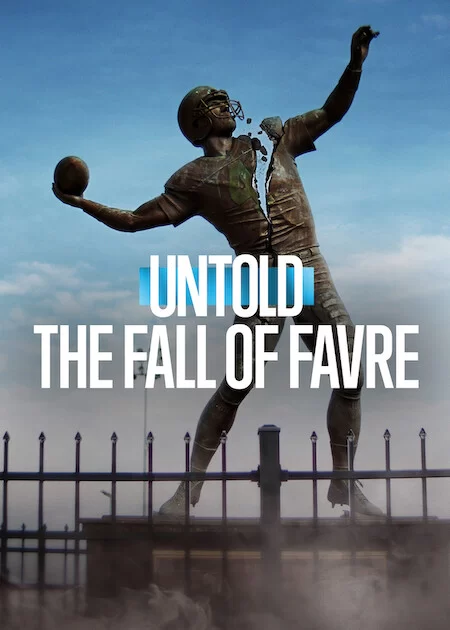
Untold: The Fall of Favre

Released 2025Curated by SPMA Hub because sport culture lives beyond the field.

Untold: The Fall of Favre examines how sporting prestige influences the response to allegations against a star. Rebecca Gitlitz's documentary asks audiences to separate admiration for Brett Favre's professional football achievements from the evidence and responsibilities surrounding his off-field controversies.

Arash Sayed
Covered by Arash Sayed
The Shelf
Untold: The Fall of Favre

The Gist

Why it caught our attention

Released by Netflix in 2025, Rebecca Gitlitz's documentary revisits Brett Favre's career as a Green Bay Packers quarterback while examining allegations and documented controversies away from the field. Favre was a three-time NFL Most Valuable Player and Super Bowl champion, credentials that helped make him one of American football's most recognisable public figures. The film places those accomplishments beside allegations from former New York Jets employee Jenn Sterger involving explicit text messages and Favre's connection to Mississippi's welfare fraud scandal.

The result is not a conventional career retrospective. Its subject is the machinery surrounding a famous athlete: the admiration, institutional loyalty and public patience that can make misconduct easier to dismiss. The film's central question is uncomfortable because it applies beyond Favre. How much harm can a successful sports identity absorb before the identity itself becomes part of the problem?

The Details

Quick facts

Format
Movie
Released
2025
Relevant Sport
American Football

At A Glance

Untold: The Fall of Favre examines how sporting prestige influences the response to allegations against a star. Rebecca Gitlitz's documentary asks audiences to separate admiration for Brett Favre's professional football achievements from the evidence and responsibilities surrounding his off-field controversies.

About This Shelf Item

About Untold: The Fall of Favre

The documentary is presented as an investigation into Favre's complicated legacy rather than a celebration of his playing career. Netflix describes it as a tell-all film that explores a pattern of unchecked behaviour, including the Sterger allegations and Favre's alleged role in receiving public funds intended for families in need. Those matters are not equivalent, and the film's treatment depends on keeping their different evidence and consequences visible.

Gitlitz uses interviews and archival material to connect private conduct with public reputation. The point is not that every criticism of a sports celebrity carries the same weight. It is that the celebrity system often evaluates off-field conduct through the lens of sporting achievement. Favre's touchdowns and awards can become a kind of informal character reference, even when the issue under discussion has little to do with quarterback play.

The film gives space to people describing the consequences of the conduct they allege. That perspective needs careful attribution. At the film's May 2025 release, Favre had denied wrongdoing in the Mississippi welfare matter and had not been criminally charged in that scandal. TIME's interview with Sterger also reported that he denied sending explicit photographs to NFL investigators. Allegations, civil claims and findings must remain distinct; the documentary's argument is not a substitute for the legal record.

Why It Belongs

The Sport Connection

The sport-management issue here is the governance of star power. Teams, leagues, sponsors and broadcasters depend on athletes who can attract attention, sell merchandise and embody institutional history. That commercial value can create reluctance to confront behaviour that would be treated more decisively if the person involved had less influence.

Favre's case also illustrates the difference between reputation management and accountability. A team may issue a statement, a league may impose a penalty, or an organization may distance itself from a player. None of those actions automatically addresses the people who were affected. In management terms, the question is whether a system measures risk only through headlines and revenue, or whether it has procedures capable of hearing complaints before they become public crises.

This is an interpretation of the documentary's implications, not a claim that every organization behaved identically. The broader lesson is that sporting success can become an organizational asset that managers protect instinctively. When that happens, loyalty to the asset may compete with duties to employees, fans and public institutions.

Our Recommendation

Why Watch Untold: The Fall of Favre

Watch Untold: The Fall of Favre if you are interested in athlete reputation, institutional silence and the limits of legacy-based forgiveness. It will be especially useful for sport administrators, communications staff and students studying ethics because it treats fame as a governance problem rather than a personality trait.

The limitation is its concentrated perspective. This is a documentary about the controversies surrounding Favre, not a complete history of his playing career or Mississippi's welfare system. Viewers looking for a statistical career retrospective will need other sources. Those willing to examine how sports organizations decide whose conduct is tolerable will find the sharper subject here.

Arash Sayed

Final Thoughts

Arash's Final Thoughts

Untold: The Fall of Favre leaves the viewer with a difficult separation: athletic greatness can be real without being morally exculpatory. Its value lies in refusing to let a celebrated football career settle questions that the career cannot answer. For the sport industry, that distinction is not abstract. It is a test of whether accountability applies when the name on the jersey still carries commercial weight.