The Shelf · Movies

Greater

Released 2016Curated by SPMA Hub because sport culture lives beyond the field.

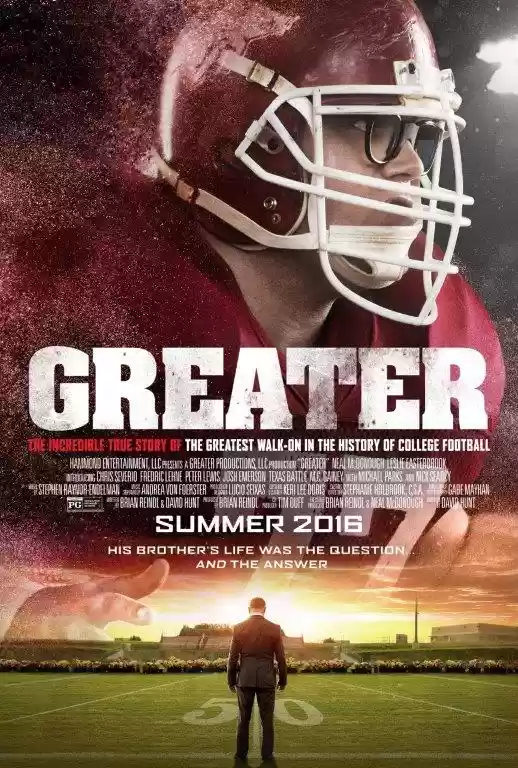
Greater tells the story of Brandon Burlsworth, an Arkansas offensive lineman who arrived without a scholarship and became an All-American. The film's most useful lesson for sport management is not that hard work guarantees success, but that talent identification can be imperfect.

Arash Sayed
Covered by Arash Sayed
The Shelf
Greater
Greater
The Gist Of Greater

The Gist

Why it caught our attention

In David Hunt's 2016 biographical drama, Brandon Burlsworth enters the University of Arkansas football program as a walk-on. He is neither the obvious star of a recruiting class nor someone for whom the program has reserved a prominent role. Played by Christopher Severio, Burlsworth is awkward, persistent and willing to repeat unglamorous work until other people begin to take notice. His progression is framed as a long process of earning trust rather than a sudden discovery in one practice.

That trajectory becomes more complicated because the story is told in the shadow of tragedy. Burlsworth died in a car accident shortly after the Indianapolis Colts drafted him in 1999. Greater moves between his development as a player and the grief felt by those close to him. Its Christian perspective is a central part of how the film explores loss, not an incidental message that viewers can strip out without changing the work.

The Details

Quick facts

Format
Movie
Released
2016
Genre
Drama
Relevant Sport
American Football

At A Glance

Greater tells the story of Brandon Burlsworth, an Arkansas offensive lineman who arrived without a scholarship and became an All-American. The film's most useful lesson for sport management is not that hard work guarantees success, but that talent identification can be imperfect.

About This Shelf Item

About Greater

The real Burlsworth's path from walk-on to an Arkansas All-American is well documented, and the film is based on a book about his life. The National Football League opportunity that followed makes his story especially striking. Yet the feature-film format selects the episodes that serve its account of perseverance, family and faith. It cannot tell us how many equally committed walk-ons never received comparable opportunities, or separate every dramatized encounter from an archival record.

That limitation is precisely why the film benefits from a sports-industry reading. Walk-on stories are often presented as reassuring evidence that merit will eventually be recognized. In practice, access to coaching, facilities, feedback and selection decisions still matters. A player cannot improve in a program that denies meaningful opportunities to demonstrate growth. Burlsworth's work is central to the film, but his development also required other people to reassess their initial judgments.

Why It Belongs

The Sport Connection

For recruiting departments, Greater is a reminder that evaluation is a process rather than a permanent verdict. Physical projection, existing competition experience and performance in a brief trial are useful inputs, but they cannot measure everything an athlete may become. Coaches need mechanisms for recognizing sustained improvement, particularly among athletes without the status of a recruited scholarship player. Otherwise, a program can reward its own early predictions instead of recognizing new evidence.

The film also raises a responsibility question around walk-on participation. Admiring someone for accepting a demanding, uncertain route is not the same as ensuring that route is equitable. Sport managers should consider how roster opportunities, educational support and expectations are explained to people with limited guarantees. Honest communication can coexist with high standards. The challenge is to avoid turning rare success stories into a blanket justification for difficult systems.

Our Recommendation

Why Watch Greater

Greater will appeal to readers interested in college football, talent pathways and team culture. It gives the least glamorous phases of athlete development emotional weight and reminds an audience that an eventual selection decision can be shaped by years of routine preparation. The film's treatment of family and faith also creates space to consider how institutions acknowledge the personal communities behind competitors.

Its inspirational framing is forceful and may not suit viewers looking for a neutral account of NCAA football. The tragedy at the centre of the narrative should also be approached with care: Burlsworth's death is a human loss, not a convenient motivational device. The sports-business value is in the questions his athletic journey leaves behind. How are late developers identified? Who gets a second evaluation? What opportunities do programs create for people not initially judged to be their best prospects?

Arash Sayed

Final Thoughts

Arash's Final Thoughts

Greater earns its Shelf place by focusing attention on a player whom the recruiting system did not initially place at the front of the line. Burlsworth's story cannot prove that every overlooked prospect will become an All-American. It can challenge organizations to keep looking, listening and evaluating long after their first decision.