The Shelf · Movies

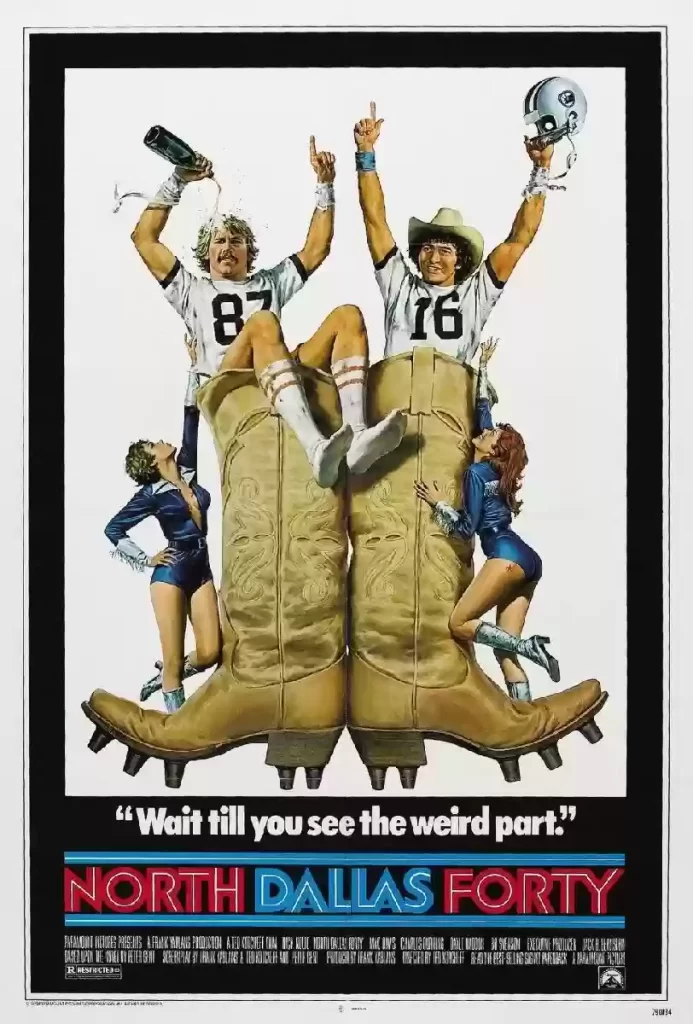
North Dallas Forty

Released 1979Curated by SPMA Hub because sport culture lives beyond the field.

Nick Nolte plays a professional football receiver whose body is almost worn out, though the team still expects him to behave like a replaceable part. Ted Kotcheff's 1979 satire looks behind the controlled language of team loyalty to injuries, medication, parties and management pressure. It is funny in places, but the laughter has a bitter edge: nearly everyone knows the bargain is unequal.

Arash Sayed
Covered by Arash Sayed
The Shelf
North Dallas Forty

The Gist

Why it caught our attention

North Dallas Forty was adapted from former Dallas Cowboys player Peter Gent's novel, with Gent contributing to the screenplay alongside director Ted Kotcheff and producer Frank Yablans. The team at its centre is fictional, but its world draws on the realities of professional American football in the 1970s. Nolte's Phillip Elliott is a gifted but ageing receiver; Mac Davis plays quarterback Seth Maxwell, one of the few people who understands Elliott's mixture of talent, fatigue and disillusionment.

Where a conventional football film builds toward a crucial touchdown, Kotcheff becomes interested in what a player must do to remain available for the next one. Injuries are normalised, bodily sacrifice is demanded as proof of character, and the language of team discipline is used to settle matters that are often about authority rather than the quality of play.

The Details

Quick facts

Format
Movie
Released
1979
Genre
Drama
Relevant Sport
American Football

At A Glance

Nick Nolte plays a professional football receiver whose body is almost worn out, though the team still expects him to behave like a replaceable part. Ted Kotcheff's 1979 satire looks behind the controlled language of team loyalty to injuries, medication, parties and management pressure. It is funny in places, but the laughter has a bitter edge: nearly everyone knows the bargain is unequal.

About This Shelf Item

About North Dallas Forty

Elliott's conflict with the organization is not the familiar story of a selfish athlete resisting a noble coach. Management expects compliance while treating the players' bodies as its essential resource. Medical treatment, including medication that allows an injured player to perform, is part of the machinery that gets a roster onto the field. The player's own judgement about pain has surprisingly little weight when it conflicts with the club's needs.

The satirical tone is vital. Elliott and Maxwell joke, drink and behave irresponsibly, and the film does not present them as simple heroes. Their bad behaviour exists within a working environment that rewards risk and then punishes the people who become inconvenient. In a league built around public ideas of discipline, the players' private lives reveal a different kind of disorder.

Nolte makes Elliott's fatigue tangible. This is not an athlete suddenly discovering the injustice of professional sport; it is someone who has lived with its rules long enough to understand them and can no longer pretend they are reasonable. The coaches and executives are rarely interested in his broader life, and that absence of curiosity is the film's sharpest criticism. The organization says it values the team, but the word 'team' frequently means the people who hold authority over it.

Why It Belongs

The Sport Connection

North Dallas Forty remains unusually useful for sport-management study because it treats player welfare as an employment issue rather than merely a question of individual toughness. The club controls access to playing time, medical services, income and status. That concentration of power creates conflicts of interest whenever an injured player is asked to perform for the benefit of the organization.

The film predates many contemporary debates about independent medical evaluation and long-term neurological harm, but its questions still travel. Who decides when a player is fit? What does informed consent mean when a person's job depends on being available? Can a team credibly claim to put health first if the person reporting an injury expects a penalty for doing so? Kotcheff does not offer a regulatory blueprint; he shows why the questions are unavoidable.

Our Recommendation

Why Watch North Dallas Forty

Watch it for the actors' uneasy camaraderie and for the way its jokes expose an organizational culture that polished coverage usually conceals. The football scenes matter, but so do offices, treatment rooms and parties. These settings show the full economy of professional sport: public admiration on one side, a tightly managed workforce on the other.

The film is a product of its era, including attitudes and language that have aged, yet that context adds to its value as a historical portrait. Its cynicism is not a substitute for analysis. It is the texture through which Elliott experiences a system that has stopped listening to him.

Arash Sayed

Final Thoughts

Arash's Final Thoughts

The question North Dallas Forty leaves behind is not whether Phillip Elliott loves football. He clearly understands what it has given him. The question is why loving a sport should require surrendering every claim to personal judgement. Decades later, that remains an uncomfortable test of professional football's language about family and loyalty.