The Shelf · TV Series

Elway

Released 2025Curated by SPMA Hub because sport culture lives beyond the field.

John Elway's football story is often told backward, beginning with two Super Bowl victories and allowing everything before them to look inevitable. The Netflix documentary Elway restores the uncertainty. It follows a celebrated Stanford quarterback through a fraught draft, painful championship defeats and a long Denver career that did not receive its neat ending until very late. The interesting part is how much happened before the trophies.

Arash Sayed
Covered by Arash Sayed
The Shelf
Elway

The Gist

Why it caught our attention

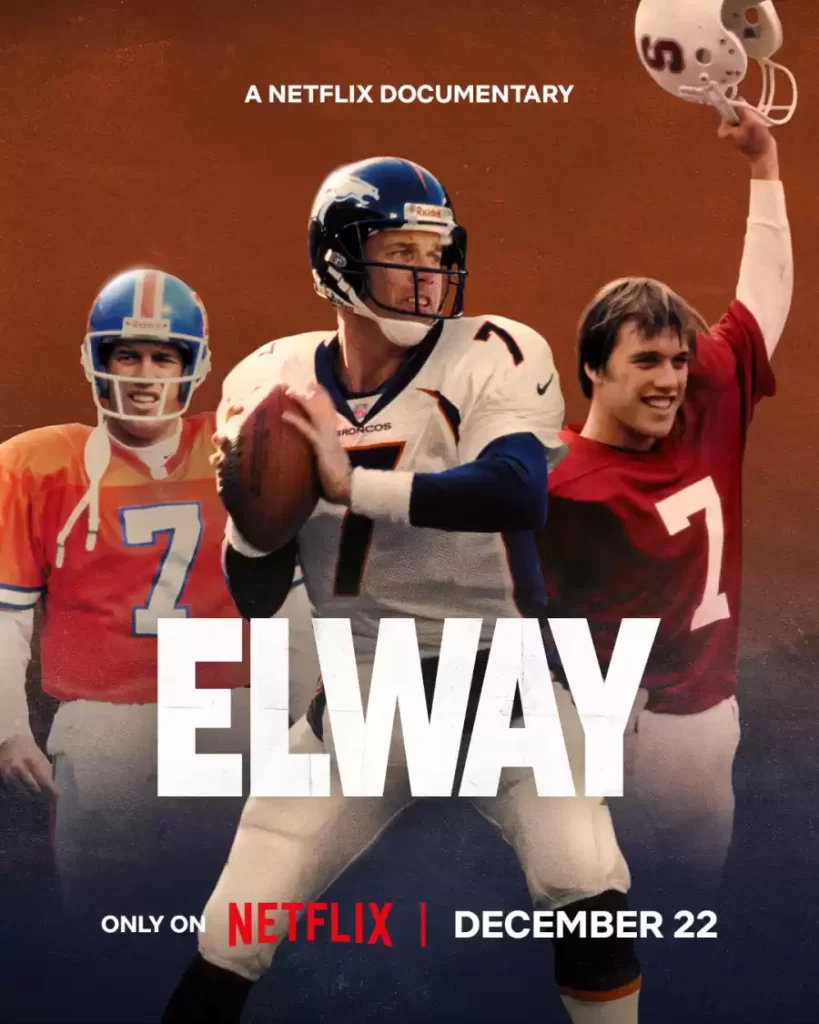
Released on Netflix in December 2025, Elway is a 99-minute feature documentary directed by Ken Rodgers and Chris Weaver, not a television series. Its principal subject is John Elway, whose sixteen seasons as the Denver Broncos' starting quarterback made him the most recognizable athlete in the franchise's history. The film reaches back to Stanford and his early reputation as an unusually gifted quarterback, then follows the expectations that accompanied him into professional football.

His transition into the NFL carried an unusual business dimension. The Baltimore Colts selected Elway first in the 1983 draft, but he refused to play for the franchise and was traded to Denver. Baseball offered another possible career: the New York Yankees had drafted him, giving him leverage that most prospective NFL players could only imagine. These events were more than prelude. They established that the relationship between celebrated talent and professional employers is negotiable, even when a league's entry system is built to constrain player choice.

The Details

Quick facts

Format
TV Series
Released
2025
Relevant Sport
American Football

At A Glance

John Elway's football story is often told backward, beginning with two Super Bowl victories and allowing everything before them to look inevitable. The Netflix documentary Elway restores the uncertainty. It follows a celebrated Stanford quarterback through a fraught draft, painful championship defeats and a long Denver career that did not receive its neat ending until very late. The interesting part is how much happened before the trophies.


About This Shelf Item

About Elway

The documentary's most familiar football landmarks are the AFC championship comeback against Cleveland known as 'The Drive' and the Super Bowl defeats that followed in the 1980s. They matter because the public image of a quarterback can move faster than a franchise's ability to win. An exceptional passer still needs a working offensive system, a defence, protection and competent decisions elsewhere in the organisation. Elway became famous enough for each failure to feel personal, even when the final score had many authors.

Later seasons change the shape of the account. With Mike Shanahan coaching and Terrell Davis producing a dominant running game, Denver won consecutive Super Bowls at the end of the 1997 and 1998 seasons. Elway retired after the second title. Those victories are normally framed as vindication, but the film's structure creates a more interesting question: why do viewers often use a championship to rewrite their opinion of a player's earlier excellence? His talent and achievements before the titles had not been imaginary.

The story extends beyond his playing career to his return in a football executive role. That is a particularly revealing second act for a quarterback whose own career had been shaped by front-office negotiations and team-building choices. An athlete's reputation does not automatically translate into organisational judgment, and the work of assembling a winning roster differs radically from reading a defence on third down.

Why It Belongs

The Sport Connection

Elway's draft dispute remains one of the film's clearest connections to the business of sport. The NFL's draft distributes recruiting rights to teams, but elite prospects occasionally possess leverage through alternative opportunities or unusual market power. Elway's baseball option changed the bargaining relationship. It also made clear that the formal rules of a talent system are not identical to the power individual participants actually wield.

Denver's long wait for a Super Bowl victory tells a second organisational story. Even a franchise quarterback cannot solve every problem. Management has to build a roster capable of complementing a high-value player, while broadcasters and supporters often reduce the outcome to that player's ability to 'win the big one.' The arrival of a formidable running game and a more complete team in Elway's later years complicates the individual-hero version of the narrative.

His post-playing work brings the story into franchise governance and reputation. A celebrated former player arrives with credibility that a conventional executive may lack, but still faces the discipline of scouting, contracts, coaching decisions and accountability for results. The film invites that comparison without requiring every front-office decision to be interpreted as another chapter in a quarterback's redemption story.

Our Recommendation

Why Watch Elway

The value here is in the distance between remembered highlights. Watch the early scenes for the pressure attached to the 1983 draft, then consider how the repeated Super Bowl losses shaped media judgments. When the two championships finally arrive, ask whether the outcome has changed the evidence about his earlier career or merely changed the preferred story about it.

For sport-management readers, the executive chapter deserves as much thought as the field footage. Elway is unusually well placed to illustrate both sides of a professional sports organisation: the player negotiating his entry and the decision-maker later responsible for a roster. The documentary's access to its subject is a strength, although any authorized retrospective should also be read with an awareness of whose perspective anchors the account.

Arash Sayed

Final Thoughts

Arash's Final Thoughts

Elway is a career biography that becomes more compelling when its famous ending is not treated as proof that everything happened for a reason. The draft confrontation, long run of near-misses, late championships and later executive responsibilities reveal several different kinds of leverage and accountability. Rodgers and Weaver give the quarterback room to revisit what the public remembers about him. The lasting point is that a franchise's most visible employee may be its defining symbol without ever being its only important decision-maker.