




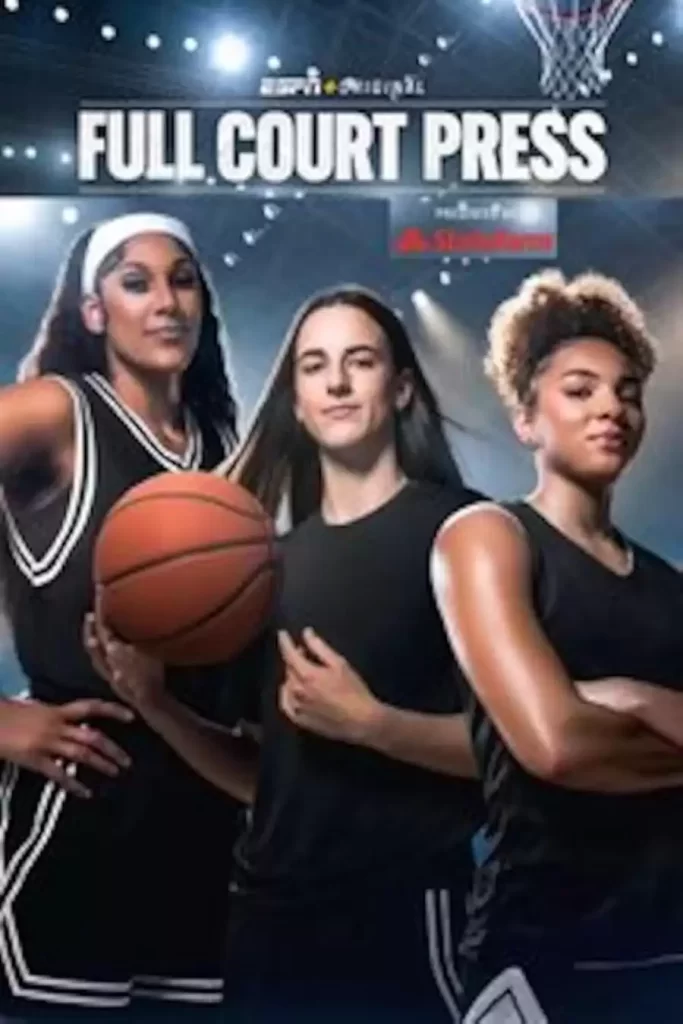
Women's college basketball has produced a level of public attention that would once have been difficult to imagine, but attention is unevenly distributed among athletes and programs. ESPN's Full Court Press follows Caitlin Clark, Kamilla Cardoso and Kiki Rice during the 2023–24 NCAA season, documenting their different routes through an increasingly visible sport. The series places performance, identity and team expectations alongside the media environment surrounding the players. For sports-management readers, its significance lies in that combination. Record audiences and endorsement opportunities can create new value, yet universities and leagues still have to deliver appropriate support, fair competition and long-term opportunities beyond a single star's popularity.
The Shelf · TV Series
Full Court Press
Full Court Press follows elite women's college basketball players through a transformative season, linking individual ambition to the growing business of the sport.
The Gist
Why it caught our attention
The Details
Quick facts
- Format
- TV Series
- Released
- 2024
- Genre
- Documentary
- Relevant Sport
- Basketball

At A Glance
Full Court Press follows elite women's college basketball players through a transformative season, linking individual ambition to the growing business of the sport.

About This Shelf Item
About Full Court Press
The three players occupy different positions in the college landscape. Clark's historic scoring and attention provide one high-profile storyline; Cardoso's role within South Carolina's championship pursuit provides another; and Rice's experience at UCLA shows another route through elite collegiate competition. The filmmakers document training, team relationships and personal pressures without pretending that the athletes are following identical careers. Their differences are essential to the series. Growth in a sport is not experienced equally by every player, and the financial or emotional implications of celebrity vary widely. By following several athletes at once, Full Court Press gives viewers a more useful picture than a single-person triumph narrative could provide.

Why It Belongs
The Sport Connection
The series is particularly relevant to university athletic departments navigating name, image and likeness opportunities. Increased media interest affects event operations, sponsorship sales, player privacy, travel demands and media scheduling. It can also expose gaps between departments with significant resources and those serving less visible teams. Managers must be clear about what support is available for athletes negotiating commercial relationships and how promotional duties intersect with academic responsibilities. The program also raises questions about institutional storytelling. A team may benefit from a star's public profile while still needing to acknowledge the coaches and other players who make competitive achievement possible.
The athletes featured in Full Court Press entered a media environment that was changing rapidly for women's college basketball. Increased viewership, bigger public profiles and new commercial opportunities did not eliminate the everyday expectations of training, studying and competing. The series is revealing because its subjects did not all occupy the same place in that environment. Programs vary in resources and competitive circumstances, while players have different relationships with public attention. An athletic department should not assume that every athlete wants or benefits from the same promotional exposure. Support systems need to help with scheduling, financial decisions, media demands and ordinary student obligations without treating personal brand development as mandatory. The program also gives broadcasters a responsibility: the most commercially prominent player should not become the only story told about a team sport. From a management perspective, Full Court Press is about how institutions adapt when public interest grows faster than the structures intended to support participants.

Our Recommendation
Why Watch Full Court Press
Full Court Press offers a valuable opportunity to distinguish short-term visibility from structural investment in women's sport. Strong television numbers are an encouraging signal, but managers should examine facilities, staffing, salaries, developmental pathways and the consistency of broadcast access across the season. If growth depends entirely on a handful of personalities, the industry risks repeating an old cycle of heightened enthusiasm followed by withdrawal of support. The documentary also illustrates why athlete-facing communications need consent and care. Young competitors should be able to focus on performance and education even when the sport's commercial prospects make their stories attractive to broadcasters and sponsors.
Final Thoughts
Arash's Final Thoughts
Full Court Press belongs on the Shelf because it captures a significant moment in women's basketball without reducing its players to symbols of growth. Their careers illuminate the managerial choices that determine whether increased attention becomes lasting opportunity.
Related organizations


Keep Exploring
Similar TV Series on The Shelf











Same sport
More Basketball on The Shelf











Stay in the loop
Follow SPMA
New jobs, interviews and sport-industry news in your feed.






74224298 new jobs in sport this week
Teams, leagues, agencies and brands in Canadain the USAin Canada & the USA are hiring. Find your next role, or let new ones come to you.
Just posted
 Digital Content & Social Media InternSport Management Hub · Toronto, ON★ Featured
 Event Operations & Fan Experience Crew (Game Day Staff Pool)Saskatoon Mamba · Saskatoon, SK1 day ago
 Chapter Director, First Tee – AlbertaGolf Canada · Edmonton, AB9 hours ago
 Assistant Athletic Trainer - BaseballUniversity of Iowa · Iowa City, IA9 hours ago
 General ManagerBrodie Rec League · Austin, TX19 hours ago
 Customer Marketing Coordinator, CommsFanDuel · New York, NY23 hours ago
- Digital Content & Social Media InternSport Management Hub · Toronto, ON★ Featured
- Assistant Athletic Trainer - BaseballUniversity of Iowa · Iowa City, IA9 hours ago
- General ManagerBrodie Rec League · Austin, TX19 hours ago
