The Shelf · Books

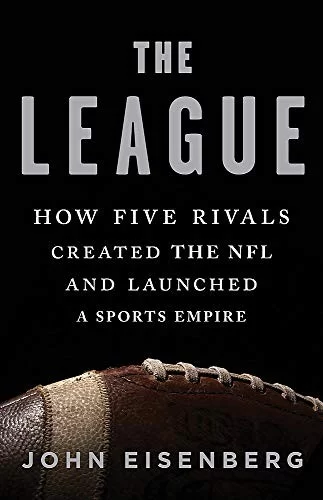
The League

By John EisenbergReleased 2018Curated by SPMA Hub because sport culture lives beyond the field.

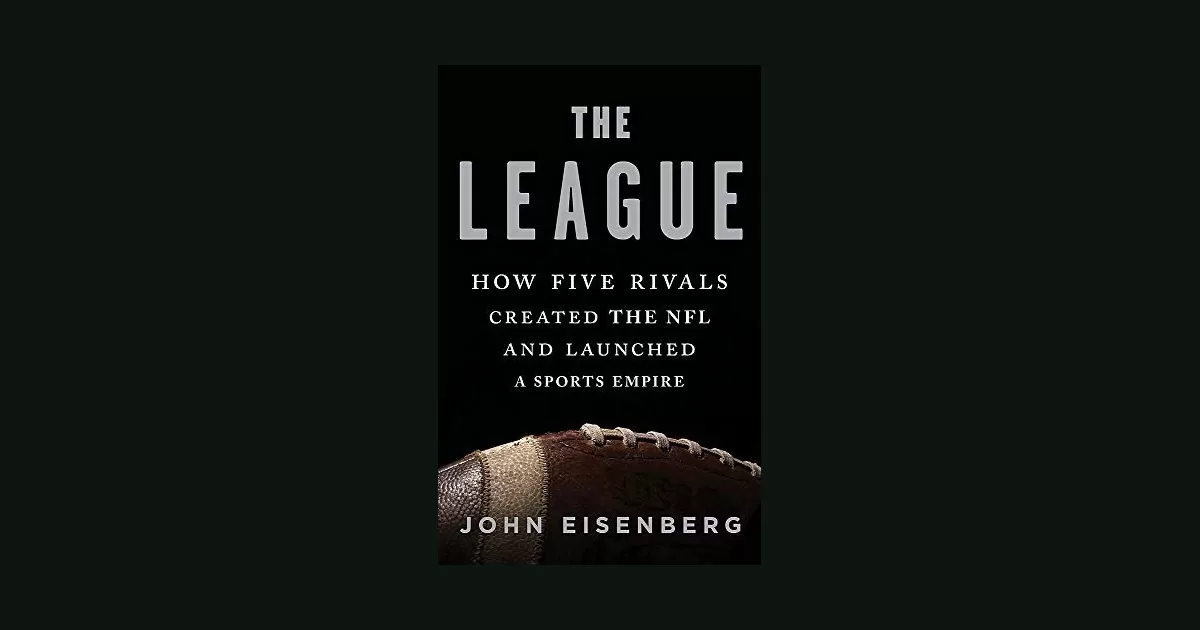
The League returns to a time when professional football's survival was uncertain. John Eisenberg follows five influential owners whose rivalries helped shape the early NFL, while showing why their teams could not prosper unless the competition around them became viable too.

Alex Bennett
Covered by Alex Bennett
The Shelf
The League
The League
The Gist Of The League

The Gist

Why it caught our attention

The 2018 history centres on Art Rooney, George Halas, Tim Mara, George Preston Marshall and Bert Bell. Its principal setting is the NFL's difficult early decades, when professional football competed for attention with established sports and with college football's stronger public position.

That starting point is valuable because later prominence can make an institution's rise look inevitable. Eisenberg instead examines people making decisions without the comfort of knowing how large the league would become. Their commitment mattered, but commitment alone did not remove financial pressures or conflicts of interest.

The Details

Quick facts

Format
Book
Author
John Eisenberg
Published
2018
Relevant Sport
American Football

At A Glance

The League returns to a time when professional football's survival was uncertain. John Eisenberg follows five influential owners whose rivalries helped shape the early NFL, while showing why their teams could not prosper unless the competition around them became viable too.

About This Shelf Item

About The League

The book's governing tension is the relationship between a team and its league. An owner wants his own club to succeed, but a club also needs credible opponents, workable arrangements and a competition worth following. A decision that benefits one franchise immediately may weaken the shared structure on which its future depends.

Following several owners allows that problem to take human form. Personalities, loyalties and ambitions influence choices that can otherwise sound like abstract questions of business design. Cooperation is not presented as a natural state among people who spend much of their time trying to defeat one another.

The early period also restores attention to uncertainty. A struggling sports enterprise must persuade players, spectators and other partners that it will remain meaningful. Growth depends partly on performance, but also on confidence that the institution will continue to exist and that participation is worth the risk.

Reading an ownership-centred history requires another distinction. Explaining the importance of powerful figures does not require treating every one of them as an uncomplicated hero. Their ability to build an institution and the standards by which their conduct should be judged are separate questions. The league's eventual success cannot answer every question about its beginnings.

Why It Belongs

The Sport Connection

For SPMA readers, The League offers a concrete account of interdependence in sport. Rivals produce an event together even while pursuing opposing results. That feature makes a league different from a collection of businesses whose competitors could disappear without damaging the product.


The case is useful when considering shared rules, collective decision-making and the willingness to accept short-term limits for longer-term stability. The relevant lesson is not that cooperation always overrides disagreement. It is that disagreement needs a structure capable of protecting the competition on which all participants rely.

The historical setting also encourages caution about business inevitability. Looking backward from a wealthy league can hide the alternatives that once seemed plausible. Administrators studying a developing competition should pay attention to its actual constraints rather than assume that passion, famous investors or a large potential audience guarantees a durable organisation.

Our Recommendation

Why Read The League

The League suits readers interested in the institutional side of football rather than a season-by-season account of games. Its owners provide a narrative thread through issues that remain recognisable in newer competitions: conflicting incentives, uneven resources and the difficulty of building trust among rivals.

The scope is deliberately selective. This is an account organised around influential owners, not a complete history of every player, supporter or employee who contributed to professional football. Recognising that choice helps readers use the book's insight without mistaking its central figures for the whole institution.

Alex Bennett

Final Thoughts

Alex's Final Thoughts

The League belongs on the shelf because it makes professional sport's shared foundations visible. Eisenberg's early NFL is a fragile arrangement sustained through decisions that sometimes required owners to look beyond their own immediate advantage. Its continuing relevance lies in that tension: a franchise can compete aggressively only when the competition itself remains worth sustaining.