The Shelf · Books

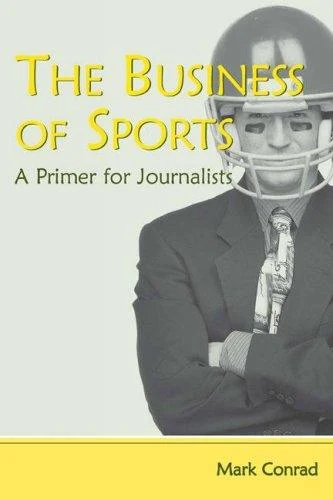
The Business of Sports: A Primer for Journalists

By Mark ConradReleased 2006Curated by SPMA Hub because sport culture lives beyond the field.

A team's move, a labour dispute or a media contract can matter as much as the result on the field. Mark Conrad's The Business of Sports gives journalists a foundation for covering those stories. The primer explains the structures and interests behind sporting headlines so that reporting can move beyond an organisation's preferred explanation.

Arash Sayed
Covered by Arash Sayed
The Shelf
The Business of Sports: A Primer for Journalists

The Gist

Why it caught our attention

Published in 2006, Conrad's original primer set out to equip journalists for the business stories surrounding sport. A team sale, contract dispute or proposed stadium involves institutions and obligations that a match report rarely needs to explain. The book makes those relationships part of a reporter's preparation, providing a structured introduction to the industry behind the daily sporting news.

Conrad organises the material around professional, individual, college, school and international sport before examining subjects that cross those settings. The approach helps explain why the same headline can involve different governing structures, contracts and responsibilities depending on the part of the industry concerned.

The Details

Quick facts

Format
Book
Author
Mark Conrad
Published
2006
ISBN
9780805850444

At A Glance

A team's move, a labour dispute or a media contract can matter as much as the result on the field. Mark Conrad's The Business of Sports gives journalists a foundation for covering those stories. The primer explains the structures and interests behind sporting headlines so that reporting can move beyond an organisation's preferred explanation.

About This Shelf Item

About The Business of Sports: A Primer for Journalists

The contents include sport contracts, labour relations, agents, team relocation and facility issues. These are areas in which a familiar sporting story can conceal a complicated allocation of rights and obligations. A reporter needs to know who has authority, what agreement applies and which interests are represented before interpreting a public statement.

Chapters on injuries, drug testing and discrimination connect the business structure with consequences for participants. They make clear that industry reporting is not limited to revenue and ownership. Decisions about safety, eligibility and treatment can affect both an athlete's livelihood and an organisation's responsibilities.

Intellectual property and media receive their own attention. Sporting value is created partly through the ability to control and distribute images, broadcasts and recognisable identities. Understanding those arrangements helps a journalist explain why access, licensing and coverage are business issues rather than incidental details.

The original edition also provides a historical point of comparison. The legal and commercial examples belong to its publication period. Readers can use the framework to understand how a question is structured while checking subsequent developments before applying an old example to a current story.

Why It Belongs

The Sport Connection

The most direct audience is sport journalism, but the primer is also useful for communications and management students. An organisation's statement often describes a decision from one position within a larger system. Conrad's structure encourages the reader to identify the other parties and the relationships that make the decision possible.

For newsroom work, that habit supports better questions. In a facility story, for example, the issue is not simply whether a team wants a new home. The relevant enquiry includes who controls the proposal, who carries obligations and how the arrangement affects the surrounding community.

Managers can benefit from the same perspective because their decisions will be interpreted outside the organisation. Understanding the institutional context makes communication more accurate and helps prevent a narrow internal explanation from being presented as the whole story. The book gives those questions a systematic starting point.

Our Recommendation

Why Read The Business of Sports: A Primer for Journalists

Choose this edition when you want Conrad's original introduction or are studying the development of sports-business reporting. It is particularly useful alongside contemporary documents, where the older framework can be compared with the current form of an agreement or institution.

Students interested in reporting beyond games will find a clear professional purpose here. The book treats business knowledge as part of the reporter's basic equipment, giving familiar sporting events a set of additional questions about ownership, incentives, obligations and power.

Arash Sayed

Final Thoughts

Arash's Final Thoughts

The Business of Sports makes a lasting case for informed curiosity behind the headline. A transaction becomes more intelligible when the reporter knows how the relevant institution works and whose interests are involved. Conrad's primer supplies that foundation, while its age makes careful attention to subsequent changes part of using it well.