




George has a major product launch approaching, a struggling workplace team and a marriage under strain. The interruption to his commute creates the setting for a series of conversations over two weeks. Joy and the other passengers introduce ten principles intended to change how he takes responsibility, communicates a direction and responds to the people around him. Published in 2007, the book belongs to the business-fable tradition: its invented characters carry a set of practical leadership ideas. The point is not to offer a documented corporate turnaround. It is to give readers a memorable story through which to discuss choices that can otherwise remain abstract or uncomfortable.
The Shelf · Books
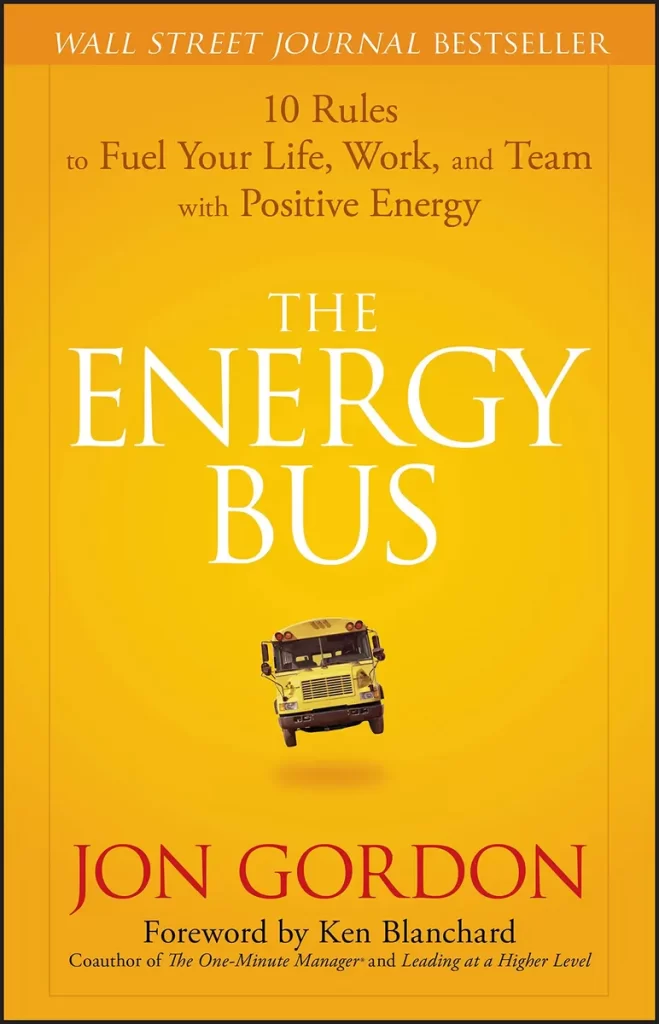
The Energy Bus: 10 Rules to Fuel Your Life, Work, and Team with Positive Energy
By Jon GordonReleased 2007Curated by SPMA Hub because sport culture lives beyond the field.
A flat tyre forces George onto a bus when his work and home life already feel close to breaking down. The driver, Joy, offers him a different way to approach both. Jon Gordon's The Energy Bus uses a simple fictional journey to start a conversation about the emotional habits people bring into a team.
The Shelf
The Gist
Why it caught our attention
The Details
Quick facts
- Format
- Book
- Author
- Jon Gordon
- Published
- 2007
- ISBN
- 9780470100288
- Genre
- Non-Fiction

At A Glance
A flat tyre forces George onto a bus when his work and home life already feel close to breaking down. The driver, Joy, offers him a different way to approach both. Jon Gordon's The Energy Bus uses a simple fictional journey to start a conversation about the emotional habits people bring into a team.

About This Shelf Item
About The Energy Bus: 10 Rules to Fuel Your Life, Work, and Team with Positive Energy
The bus metaphor assigns George a role in deciding where his life and team are heading. He needs a destination and must communicate it clearly enough for others to choose to participate. Gordon links that direction with enthusiasm, purpose, trust and care for the people sharing the journey. The story's workplace deadline gives these ideas a test: George cannot simply adopt a new vocabulary and leave his relationships unchanged.
The book also deals with negativity, including the effect of people who repeatedly drain a group's effort. That is one of its more demanding subjects in practice. A team needs to address persistent destructive behaviour, but it also needs people who can identify a genuine problem. Reading George's story thoughtfully means considering that distinction. The useful question is how a leader builds commitment while making it possible to raise concerns, rather than treating every difficult conversation as evidence of a poor attitude.

Why It Belongs
The Sport Connection
The connection to sport lies in the shared language a short fable can give a team. Coaches and captains often need to discuss responsibility, effort and interpersonal behaviour with people who bring different experiences to the same task. George's predicament provides a less personal starting point than immediately diagnosing a teammate's conduct. A group can examine what he communicates, how he treats others and whether his actions support the direction he describes. The story also encourages leaders to notice their own contribution to the atmosphere. In a squad or front office, frustration can spread through everyday interactions long before it becomes a formal performance issue.

Our Recommendation
Why Read The Energy Bus: 10 Rules to Fuel Your Life, Work, and Team with Positive Energy
The Energy Bus is most useful as a brief shared read followed by discussion. Its accessible narrative suits teams, volunteer groups and readers beginning to think about leadership. People seeking a detailed research account of organisational behaviour will find a deliberately simpler format. The action material at the end helps move the conversation towards specific commitments, although readers still need to decide what those commitments mean in their own setting. George's problems at work and at home also invite reflection on the limits of compartmentalising emotion. How someone handles pressure in one area can affect how they listen and respond in another.
Final Thoughts
Arash's Final Thoughts
Gordon's fable works by making the leader's daily presence visible. George's team has a task to complete, but the way he approaches people influences its ability to attempt that task together. The book's value depends on translating its upbeat language into observable behaviour: clearer communication, consistent effort and attention to others. Its optimism is most credible when it supports that work. Read in that spirit, The Energy Bus can open a constructive conversation about how a group wants to travel and what each person contributes to the journey.
Keep Exploring
Similar Books on The Shelf












Stay in the loop
Follow SPMA
New jobs, interviews and sport-industry news in your feed.






Hiring now on Sports Hired
43251294 new jobs in sport this week
Teams, leagues, agencies and brands in Canadain the USAin Canada & the USA are hiring. Find your next role, or let new ones come to you.
3571,0141,371 open jobs3,8128,01711,829 organizations
Just posted
 Digital Content & Social Media InternSport Management Hub · Toronto, ONFeatured
 Assistant/Associate Golf ProfessionalGlen Abbey Golf Club · Oakville, ON14 hours ago
 Physical Literacy Program LeaderPISE (Pacific Institute for Sport Excellence) · Victoria, BC19 hours ago
- Digital Content & Social Media InternSport Management Hub · Toronto, ONFeatured
 Summer InternFirst Tee · Charleston, SC8 hours ago
Copied
