The Shelf · Books

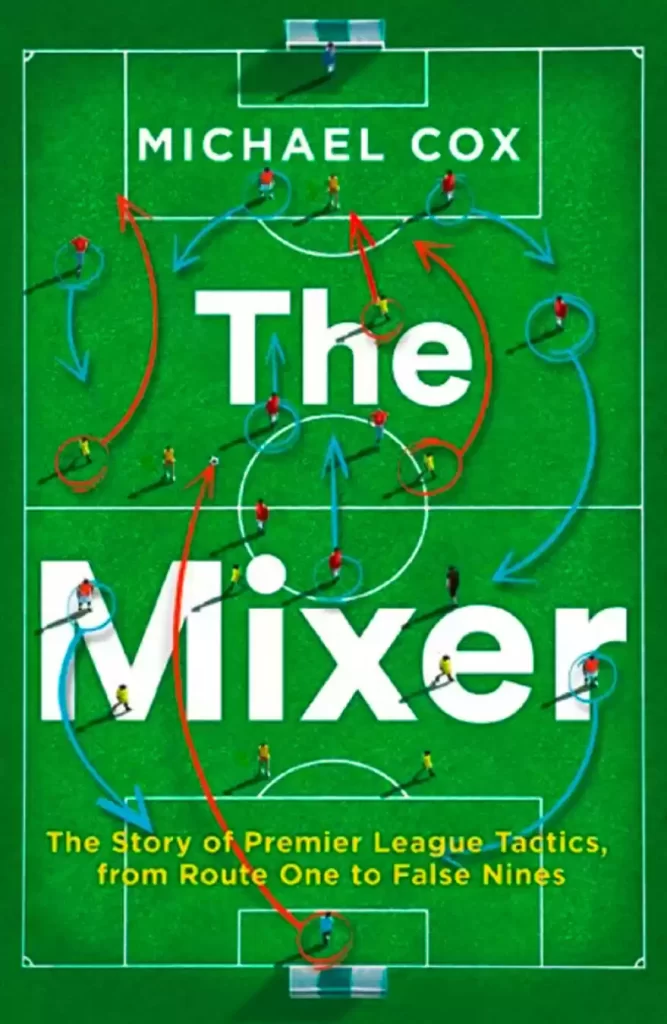
The Mixer

By Michael CoxReleased 2017Curated by SPMA Hub because sport culture lives beyond the field.

The Mixer makes the Premier League's tactical history feel like the history of a changing workplace. Michael Cox follows how formations, recruitment and coaching ideas evolved as English football became a more international and technically demanding industry.

Arash Sayed
Covered by Arash Sayed
The Shelf
The Mixer
The Mixer
The Gist Of The Mixer

The Gist

Why it caught our attention

When the Premier League began in 1992, English football was already preparing for changes that would make familiar habits harder to sustain. The restriction on goalkeepers handling deliberate back-passes challenged teams to build play differently, while coaches and players arriving from abroad introduced approaches that could not simply be described as variations on the same old 4-4-2. In The Mixer, Michael Cox traces those shifts through managers, specific teams and the problems they sought to solve.

The book is not a manual promising one superior formation. It is a history of tactical arguments, some of which become persuasive only after the right players or competitive conditions emerge. Cox is interested in why coaches made choices that looked unusual at the time and how successful examples changed what opponents believed possible. That makes the book valuable even for readers who do not intend to manage a football team themselves.

The Details

Quick facts

Format
Book
Author
Michael Cox
Published
2017
Relevant Sport
Soccer

At A Glance

The Mixer makes the Premier League's tactical history feel like the history of a changing workplace. Michael Cox follows how formations, recruitment and coaching ideas evolved as English football became a more international and technically demanding industry.

About This Shelf Item

About The Mixer

Cox connects periods of Premier League history with the managers who helped define them. Sir Alex Ferguson's Manchester United, Kevin Keegan's adventurous Newcastle, José Mourinho's Chelsea and Leicester City's counterattacking championship illustrate different responses to the league's competitive environment. Those approaches do not form a simple march toward a universally correct style. Each reflects the available squad, the manager's priorities and the strengths that opponents were trying to neutralize.

The historical structure also corrects a common way supporters talk about innovation. A tactic rarely appears without predecessors, and its eventual success can make earlier experiments seem more inevitable than they were. Cox gives developments a sequence and context. His evidence remains interpreted football history, not proof that one tactical decision caused a particular club to achieve all of its results. Match outcomes depend on execution, player quality, injuries and chance as well as design.


Why It Belongs

The Sport Connection

For sports management, the most important connection is between coaching identity and recruitment. An organization cannot promise to play in a particular way merely by announcing a philosophy. It must select players whose skills fit that approach, appoint staff who can teach it and provide enough stability for learning to occur. If a sporting director pursues one profile while the head coach wants another, the tactical problem quickly becomes an organizational problem.

The Mixer also shows why methods that work in one environment cannot simply be copied into another. A high-pressing system demands physical preparation and decision-making that differ from a more cautious structure. A team lacking suitable personnel may have to adapt or invest, while opponents continuously adjust to what has become predictable. Leaders need to ask whether their competitive approach fits their resources and whether the organization has the capacity to change before results force the issue.

Our Recommendation

Why Read The Mixer

The book is useful to coaches, analysts, scouts, sporting directors and people working in performance departments. Readers will find examples of the feedback loop between football ideas and the marketplace for players. The growth of specialist analysis is easier to understand when tactics are treated as decisions with specific operational consequences, rather than decorative diagrams alongside match highlights.

Cox's scope is the Premier League, not the full history of football tactics around the world. International influences appear through their effect on England, and the competitive meaning of a given idea can change after the period the book covers. That does not limit its fundamental value. It demonstrates how to evaluate a strategic choice in context, appreciate innovation without mythology and recognize that success depends on more than announcing the fashionable formation.

Arash Sayed

Final Thoughts

Arash's Final Thoughts

The Mixer earns its place on the Shelf because football tactics are a management story. A formation expresses assumptions about talent, responsibility and collaboration. Cox reveals how those assumptions changed, and why winning organizations must connect the tactical plan to every other decision they make.