The Shelf · Books

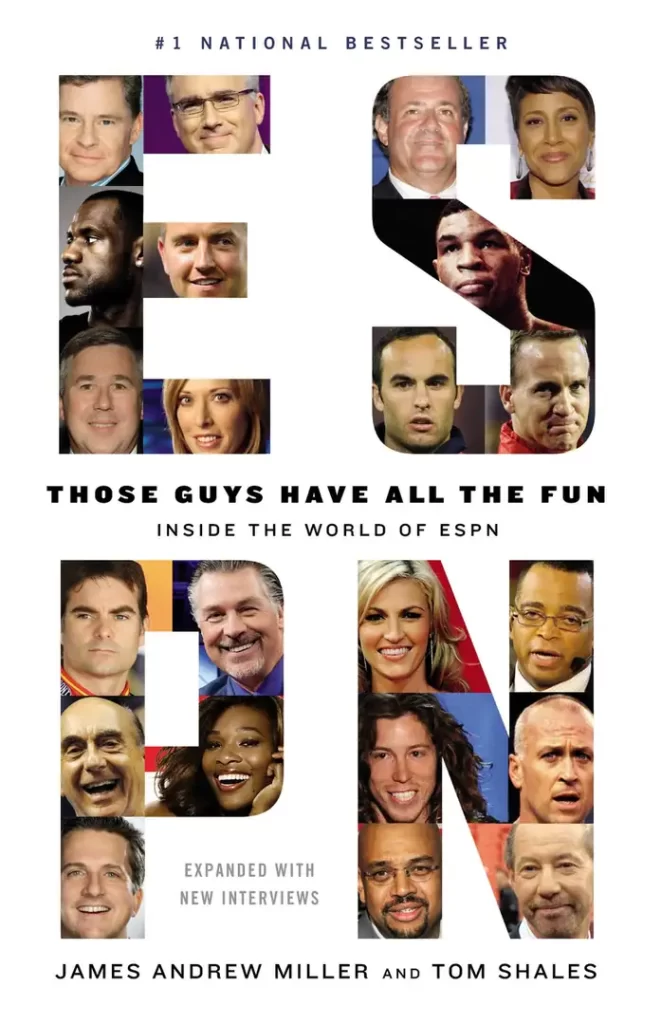
Those Guys Have All the Fun: Inside the World of ESPN

By James Andrew Miller & Tom ShalesReleased 2011Curated by SPMA Hub because sport culture lives beyond the field.

ESPN began as a proposition that sounded improbable: enough people would watch sport to sustain a channel devoted to it. Those Guys Have All the Fun reconstructs the organisation that made that proposition work, letting founders, executives, presenters and staff describe the ambition, ingenuity and workplace friction behind the familiar screen.

Arash Sayed
Covered by Arash Sayed
The Shelf
Those Guys Have All the Fun: Inside the World of ESPN

The Gist

Why it caught our attention

James Andrew Miller and Tom Shales published this oral history in 2011, drawing on more than 500 interviews. The book traces ESPN's growth from its Connecticut beginnings into a powerful sports broadcaster. It places the people recognised from television alongside the people responsible for financing, production and corporate decisions.

The form is central to the experience. Instead of a single retrospective voice smoothing away disagreements, interview excerpts sit beside one another. People remember the same organisation from different positions, and the differences help explain why commercial success and a satisfying working life were not always the same thing.

The Details

Quick facts

Format
Book
Author
James Andrew Miller & Tom Shales
Published
2011
ISBN
9780316043014

At A Glance

ESPN began as a proposition that sounded improbable: enough people would watch sport to sustain a channel devoted to it. Those Guys Have All the Fun reconstructs the organisation that made that proposition work, letting founders, executives, presenters and staff describe the ambition, ingenuity and workplace friction behind the familiar screen.

About This Shelf Item

About Those Guys Have All the Fun: Inside the World of ESPN

The early business story is especially absorbing. Bill Rasmussen's idea for a regional sports operation expanded as satellite distribution created a larger possibility. Financial backing and the combination of cable payments with advertising helped turn programming into a durable business. The familiar brand emerges through decisions about infrastructure and revenue as much as through on-air talent.

SportsCenter supplies another strand. Presenters developed recognisable voices and routines, helping make a highlights programme part of viewers' daily lives. The personalities that strengthened the audience relationship could also produce conflict inside the company. The book's accounts of celebrated anchors and executives reveal an organisation negotiating how much freedom its stars should have.

The workplace material is less comfortable. Accounts of harassment, rivalry and exclusion complicate the affectionate stories of a scrappy beginning. The interview format allows staff to describe the costs of a culture that some colleagues remembered as exciting or liberating. Those perspectives prevent the network's growth from functioning as an uncomplicated endorsement of everything that happened inside it.

Why It Belongs

The Sport Connection

Few books connect so many parts of the sport business so directly. Distribution, advertising, rights, talent management and brand loyalty all meet in ESPN's history. The early financial decisions explain how a broadcaster can become powerful enough to influence the organisations whose events it carries.

The coverage also raises a difficult structural issue. A sports network depends on leagues and events for programming while asking viewers to trust its reporting about them. The book's institutional history provides context for discussing that relationship, without reducing it to the behaviour of a single presenter or executive.

Its workplace accounts are equally relevant to managers. Rapid growth and a strong public identity can conceal uneven experiences inside an organisation. The oral history makes those differences audible. A company may be admired by its audience while employees disagree sharply about whose talent was rewarded, whose behaviour was excused and who had to bear the consequences.

Our Recommendation

Why Read Those Guys Have All the Fun: Inside the World of ESPN

Sports media professionals, students and viewers curious about the business behind their daily highlights are the obvious audience. The book is extensive, and its appeal comes from accumulation: small production decisions, major deals and personal disputes gradually form a picture of institutional power.

Readers interested in organisational culture will also find substantial material. The contrasting voices make it possible to ask how a successful company creates its own mythology and how employees participate in, resist or benefit from that story.

Arash Sayed

Final Thoughts

Arash's Final Thoughts

Those Guys Have All the Fun explains why ESPN became much more than a place to watch scores. It built habits, personalities and commercial relationships that shaped the sports landscape. By preserving the disagreements behind that achievement, Miller and Shales give readers a business history with the people still inside it.