




A person entering sport management may imagine working for a prominent club, but the industry's organizations have different missions, resources and measures of success. A professional team must generate sufficient revenue to compete. A nonprofit federation may prioritize participation, safe competition and long-term athlete development. A municipal program faces access, affordability and public accountability questions. Sport Management: Principles and Applications addresses these differences directly. The 2015 fourth edition, written by Russell Hoye, Aaron C. T. Smith, Matthew Nicholson and Bob Stewart, introduces sport management through the institutions and functions professionals encounter. Its value is less in any single sporting anecdote than in showing how management concepts change when applied to organizations with different purposes.
The Shelf · Books
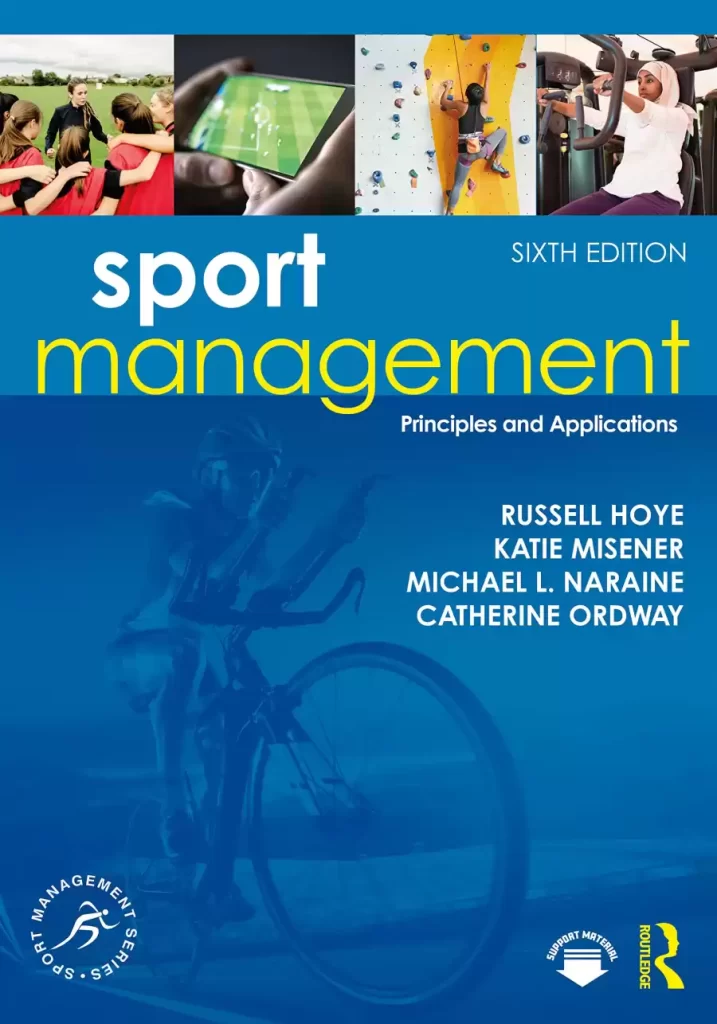
Sport Management: Principles and Applications
Sport organizations are not all professional franchises. Russell Hoye and his co-authors explain how management principles operate across commercial teams, nonprofit bodies and public-sector sport services in Sport Management: Principles and Applications.
The Gist
Why it caught our attention
The Details
Quick facts
- Format
- Book
- Author
- Russell Hoye, Aaron C. T. Smith, Matthew Nicholson & Bob Stewart
- Published
- 2015
- Genre
- Non-Fiction

At A Glance
Sport organizations are not all professional franchises. Russell Hoye and his co-authors explain how management principles operate across commercial teams, nonprofit bodies and public-sector sport services in Sport Management: Principles and Applications.

About This Shelf Item
About Sport Management: Principles and Applications
The textbook surveys core functions such as strategy, organizational structure, governance, human resources, finance, marketing and performance management. Those areas are connected in practice. A national sporting body cannot promise broader participation without thinking about facilities, workforce capacity and the costs of delivering programs. A club cannot set ambitious commercial goals without considering the people and operational systems that must implement them. Hoye and colleagues use cases and study questions to encourage readers to compare decisions across sporting settings. The fourth edition also addresses areas including media and organizational change, reflecting how much sport managers must coordinate beyond direct competition. Readers should note the edition carefully, since later versions have different contributor lists and updated examples.

Why It Belongs
The Sport Connection
For students deciding where they fit in the industry, the book is useful because it treats sport management as a collection of distinct professional responsibilities. Someone interested in sponsorship may need to understand brand strategy and contract delivery. A facility director needs scheduling, risk management and budgeting skills. An athlete-development coordinator must balance performance pathways with safeguarding and access. The textbook makes it easier to see why these roles intersect rather than exist as isolated job titles. Management decisions also depend on accountability. A public sport agency may answer to elected officials and residents, while a commercial franchise reports to ownership and investors. Applying the same performance metric without considering those structures would distort the purpose of the organization.

Our Recommendation
Why Read Sport Management: Principles and Applications
The sector-wide perspective is especially relevant when sport organizations work together. Professional teams may partner with community clubs, national governing bodies can rely on regional associations and municipalities often provide facilities used by nonprofit leagues. Collaboration requires agreement about costs, responsibilities, expected outcomes and the authority to make decisions. Strategic planning becomes concrete when these relationships are documented and measured. The text also encourages reflection on values that cannot be reduced to short-term profit: participant safety, inclusion, development and trust. None of these concerns removes the need for financial discipline. Instead, they require managers to understand how spending and governance choices support the mission the organization actually has. That is a more realistic introduction to the industry than focusing solely on elite sport.
A useful student exercise is to follow one policy from board approval through budgeting, staffing and delivery. The textbook's broad structure reveals how an apparently simple commitment, such as expanding youth access, can fail if governance and operational teams plan independently.
Final Thoughts
Arash's Final Thoughts
Sport Management: Principles and Applications is a strong foundational resource for a degree program or an early-career professional building vocabulary across the field. The 2015 edition offers a structured introduction, while readers seeking current policy details should consult newer sources as well. Its central contribution is to explain that effective management begins by identifying an organization's purpose, stakeholders and constraints. Only then can familiar tools from business, leadership and operations be applied responsibly to sport.
Keep Exploring
Similar Books on The Shelf





Stay in the loop
Follow SPMA
New jobs, interviews and sport-industry news in your feed.






74221295 new jobs in sport this week
Teams, leagues, agencies and brands in Canadain the USAin Canada & the USA are hiring. Find your next role, or let new ones come to you.
Just posted
 Digital Content & Social Media InternSport Management Hub · Toronto, ON★ Featured
 Event Operations & Fan Experience Crew (Game Day Staff Pool)Saskatoon Mamba · Saskatoon, SK1 day ago
 Chapter Director, First Tee – AlbertaGolf Canada · Edmonton, AB9 hours ago
 Assistant Athletic Trainer - BaseballUniversity of Iowa · Iowa City, IA9 hours ago
 General ManagerBrodie Rec League · Austin, TX19 hours ago
 Customer Marketing Coordinator, CommsFanDuel · New York, NY23 hours ago
- Digital Content & Social Media InternSport Management Hub · Toronto, ON★ Featured
- Assistant Athletic Trainer - BaseballUniversity of Iowa · Iowa City, IA9 hours ago
- General ManagerBrodie Rec League · Austin, TX19 hours ago
