The Shelf · Books

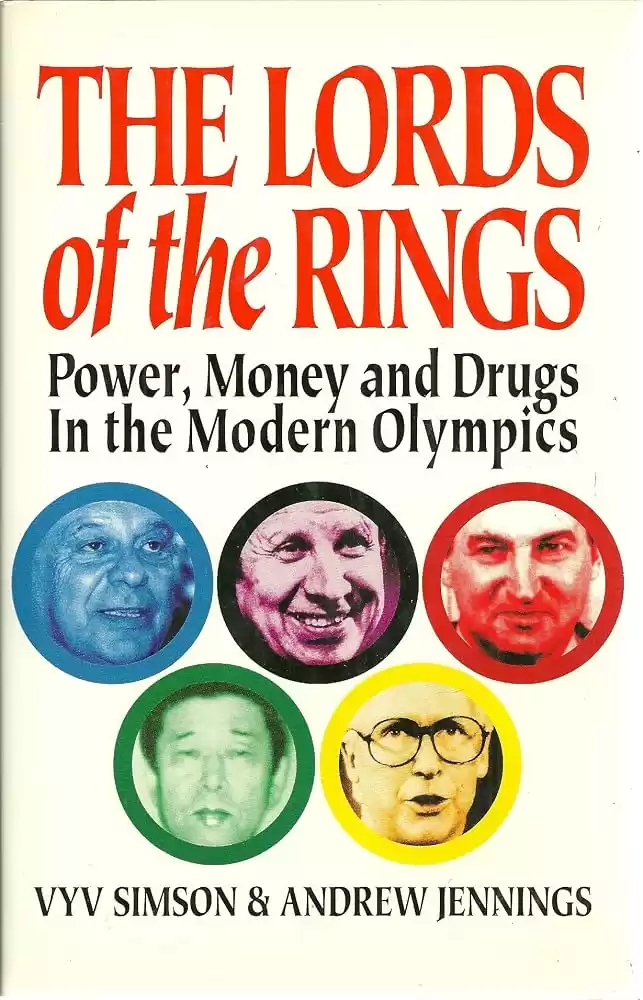
The Lords of the Rings

By Vyv Simson & Andrew JenningsReleased 1992Curated by SPMA Hub because sport culture lives beyond the field.

The Lords of the Rings examines who controlled the Olympic movement as it became one of the richest enterprises in sport. Journalists Vyv Simson and Andrew Jennings investigate the leadership of the International Olympic Committee under Juan Antonio Samaranch and the commercial interests that surrounded it.

Alex Bennett
Covered by Alex Bennett
The Shelf
The Lords of the Rings

The Gist

Why it caught our attention

Published in 1992, the year of the Barcelona Games, the book was one of the first sustained investigations into the IOC. It appeared as television rights and global sponsorship were transforming the Olympics into a major commercial property.

It met strong resistance from Olympic officials and legal action in Switzerland, where the IOC is based. Its central concerns were later echoed by the bribery scandal around Salt Lake City's bid for the 2002 Winter Games, which led to expulsions and reforms in 1999.

The Details

Quick facts

Format
Book
Author
Vyv Simson & Andrew Jennings
Published
1992

At A Glance

The Lords of the Rings examines who controlled the Olympic movement as it became one of the richest enterprises in sport. Journalists Vyv Simson and Andrew Jennings investigate the leadership of the International Olympic Committee under Juan Antonio Samaranch and the commercial interests that surrounded it.

About This Shelf Item

About The Lords of the Rings

Samaranch, IOC president from 1980 to 2001, is the book's central figure. The authors examine his background and his methods for consolidating authority within a body whose members were largely accountable to each other rather than to athletes or the public.

Commercialisation is a major theme. Simson and Jennings describe the role of Horst Dassler of Adidas and the marketing agency ISL in building global sponsorship and rights programmes, and ask who benefited from the relationships between Olympic leaders, federations and commercial partners.

The book also addresses doping and how sports authorities responded to it. The authors argue that institutions protecting the value of their events may be slow to confront problems that threaten their image.

The tone is investigative and openly critical. Jennings went on to write further books on the IOC and on FIFA, and readers should approach this one as journalism making a case, to be compared with later inquiries and official responses.

The authors also look at how Olympic decisions were made, including the selection of host cities and the allocation of television and sponsorship revenue among the IOC, national committees and international federations.

Their account of the relationship between sports administrators and commercial partners anticipates later investigations, including Jennings' work on FIFA.

Why It Belongs

The Sport Connection

For anyone working in sport governance, international federations or event bidding, The Lords of the Rings shows why transparency and independent oversight matter. Organisations that control valuable rights need clear rules on decision-making, conflicts of interest and the role of commercial partners.

It is also useful for sponsorship and partnership professionals. Brands associated with major events carry reputational risk when governance fails, and due diligence on a rights holder's integrity is part of protecting a sponsorship investment.

Its lessons apply at smaller scales as well. Any sport body that allocates events, funding or selection opportunities depends on trust in its processes, and that trust is easier to keep than to rebuild.

After the Salt Lake City scandal, the IOC introduced term limits, age limits and an ethics commission, and changed how members could interact with bid cities. Those reforms show how outside scrutiny can force governance change, and how investigative work like this book shaped the pressure for it.

Our Recommendation

Why Read The Lords of the Rings

Read The Lords of the Rings if you study sport governance, the Olympic movement or sports journalism, or work with international sport bodies. It provides valuable context for the IOC reforms that followed and for continuing debates about accountability.

It reflects one investigation at a particular time. This Shelf feature reflects the book's published arguments; it is not a chapter-by-chapter review.

It is also useful background for anyone studying anti-corruption policy in international sport.

Alex Bennett

Final Thoughts

Alex's Final Thoughts

The Lords of the Rings leaves a question every governing body should be able to answer: who holds the decision-makers to account? Sport's largest institutions earn public trust through visible checks and independent scrutiny, not through the prestige of the events they stage.