The Shelf · Books

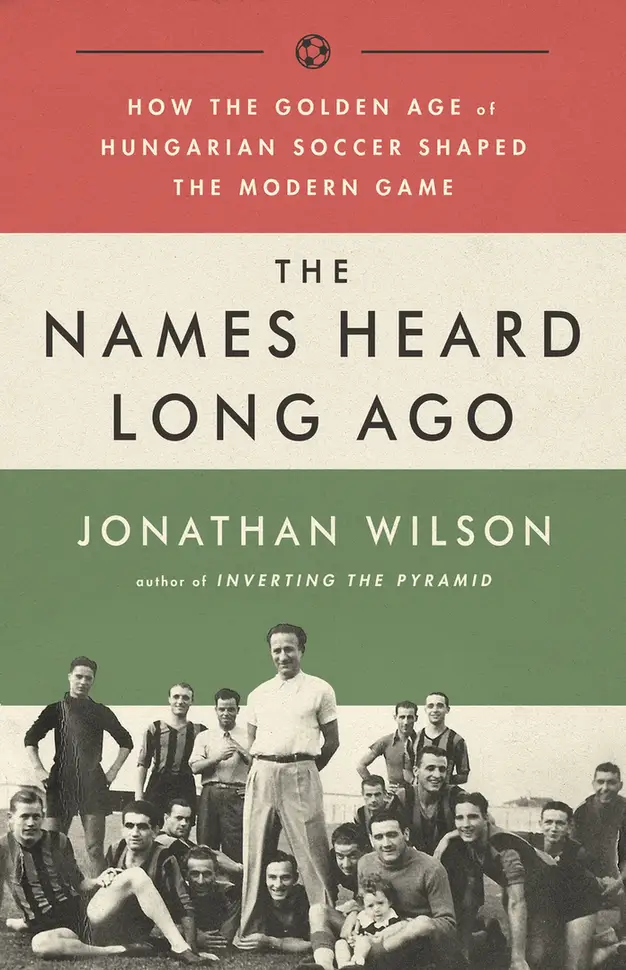
The Names Heard Long Ago: How the Golden Age of Hungarian Soccer Shaped the Modern Game

By Jonathan WilsonReleased 2019Curated by SPMA Hub because sport culture lives beyond the field.

Hungary's famous victories in the 1950s were the visible achievement of a much longer football education. In The Names Heard Long Ago, Jonathan Wilson follows the players, coaches and conversations that made that education possible. Their story moves from Budapest's sporting culture into war and exile, tracing ideas that helped change the game far beyond Hungary.

Arash Sayed
Covered by Arash Sayed
The Shelf
The Names Heard Long Ago: How the Golden Age of Hungarian Soccer Shaped the Modern Game

The Gist

Why it caught our attention

Published in 2019, the book looks behind the familiar image of Ferenc Puskás and the celebrated Hungarian national side. Wilson locates an earlier period of invention in the decades between the world wars, when football attracted people prepared to examine how the game might be played differently.

The setting matters as much as the tactics. Clubs, professional leagues and the discussion culture around the sport provided places for ideas to develop. Political violence then scattered many of the people involved, turning the history of Hungarian football into a story with consequences across Europe and South America.

The Details

Quick facts

Format
Book
Author
Jonathan Wilson
Published
2019
ISBN
9781568587844
Relevant Sport
Soccer

At A Glance

Hungary's famous victories in the 1950s were the visible achievement of a much longer football education. In The Names Heard Long Ago, Jonathan Wilson follows the players, coaches and conversations that made that education possible. Their story moves from Budapest's sporting culture into war and exile, tracing ideas that helped change the game far beyond Hungary.

About This Shelf Item

About The Names Heard Long Ago: How the Golden Age of Hungarian Soccer Shaped the Modern Game

Wilson describes a football culture in which analysis and imagination worked together. The people studying the game asked about movement, positioning and relationships between players, treating accepted practice as something that could be reconsidered. Their contribution was a way of thinking as well as a collection of particular formations.

Béla Guttmann gives that international movement a compelling individual form. Wilson follows his work in Brazil and Portugal, including his role in developing teams that could play with greater speed and directness. The coach's career shows how a sporting idea changes through contact with another football environment.

The wider history includes the destructive force of antisemitism and fascism. Many of the figures who helped create this culture were Jewish, and departure was often a matter of survival. Their later influence cannot be separated from the loss of the communities in which their work had begun.

The success associated with Hungary in the early 1950s therefore appears within a broader inheritance. Olympic achievement and the famous defeat of England become results of accumulated knowledge, rather than isolated miracles. Wilson's approach restores depth to a national team often remembered through a small number of extraordinary scorelines.

Why It Belongs

The Sport Connection

The Names Heard Long Ago offers an unusually rich account of how coaching knowledge travels. Methods move with people, then encounter different players, institutions and expectations. The history encourages coaches to examine the relationships and circumstances behind an admired style, including the adaptations that allowed it to work elsewhere.

For sport organisations, the book also makes a case for understanding the environments that encourage invention. The intellectual life around Hungarian football was part of its competitive strength. Discussion, disagreement and exchange helped turn observations into ideas that could be tried on the field.

Its account of forced migration gives the subject a more serious dimension. Sporting histories can celebrate the influence of a travelling coach while overlooking why that coach had to leave home. Wilson keeps the human cost within the story, making the spread of knowledge inseparable from questions of memory and historical responsibility.

Our Recommendation

Why Read The Names Heard Long Ago: How the Golden Age of Hungarian Soccer Shaped the Modern Game

Readers interested in tactical history will find the background to ideas that continue to shape football discussion. Those drawn to European history can enter through the lives affected by political upheaval and through the fate of a culture whose influence outlasted its destruction.

The book is particularly rewarding alongside Wilson's broader writing on tactics. Here, the narrower geographical focus allows a close examination of how one football culture developed and dispersed. Familiar clubs and achievements acquire new connections when viewed through the people who helped create them.

Arash Sayed

Final Thoughts

Arash's Final Thoughts

Wilson restores people to a history too easily reduced to formations and famous results. The Names Heard Long Ago shows that football's development depended on communities of thought and on individuals carrying knowledge through difficult lives. Remembering them changes the way the modern game looks: its apparent national traditions begin to reveal their many crossings and debts.