The Shelf · TV Series

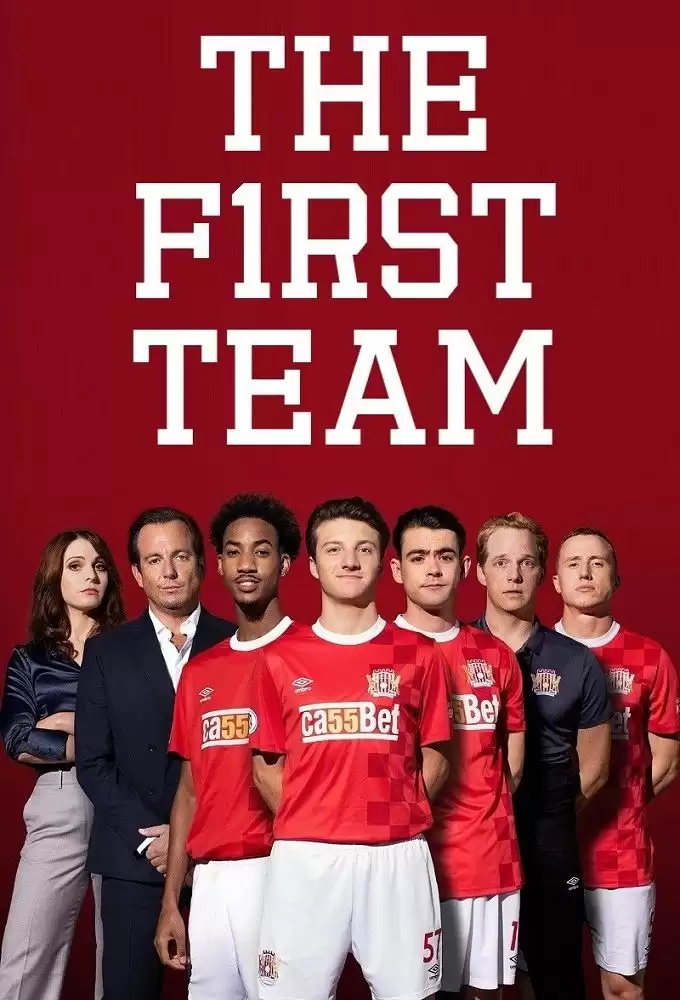
The First Team

Released 2020Curated by SPMA Hub because sport culture lives beyond the field.

A new signing, a chaotic chairman and a dressing room full of fragile egos provide the setup for BBC's The First Team. The 2020 sitcom follows three young players at a fictional Premier League club, but football is mostly happening somewhere beyond the camera. The jokes come from the absurd institutions surrounding the game: ownership, status, celebrity and players who are not nearly as worldly as their contracts suggest.

Arash Sayed
Covered by Arash Sayed
The Shelf
The First Team

The Gist

Why it caught our attention

Created by Damon Beesley and Iain Morris, the writers associated with The Inbetweeners, The First Team debuted on BBC Two in May 2020. Its six episodes focus on Mattie Sullivan, Benji Achebe and Jack Turner, played by Jake Short, Shaquille Ali-Yebuah and Jack McMullen. A fictional Premier League club gives the writers room to exaggerate the personalities of modern football without tying every scene to an identifiable team.

The opening episode, 'Selling Shirts', places Mattie's arrival alongside a meeting with eccentric chairman Mark Crane. That title is instructive: the new player is a footballer, but he is also a public commodity whose introduction becomes part of a commercial performance. The cast includes Will Arnett as Crane, Chris Geere as coach Chris Booth and Paolo Sassanelli as manager Cesare. Football's sporting centre is present, yet the series repeatedly returns to what happens when the professional structure behaves like an unruly office.

The Details

Quick facts

Format
TV Series
Released
2020
Genre
Drama
Relevant Sport
Soccer

At A Glance

A new signing, a chaotic chairman and a dressing room full of fragile egos provide the setup for BBC's The First Team. The 2020 sitcom follows three young players at a fictional Premier League club, but football is mostly happening somewhere beyond the camera. The jokes come from the absurd institutions surrounding the game: ownership, status, celebrity and players who are not nearly as worldly as their contracts suggest.

About This Shelf Item

About The First Team

The main trio are young men with sharply different ways of navigating a workplace they barely control. Mattie is an outsider trying to understand the club's unwritten rules. Benji combines confidence with startling immaturity, and Jack frequently appears stranded between his teammates' schemes and his own discomfort. Their friendships give the comedy some continuity, but the programme is deliberately episodic: one misunderstanding is usually replaced by a different social catastrophe the following week.

The humour is crude and often awkward rather than affectionate. Staff members and players behave irresponsibly, executives seem detached from ordinary consequences, and the management structure is treated as a source of comic instability. That is a recognisable extension of Beesley and Morris's earlier work; the players sometimes appear more like schoolboys than professional employees. It can feel repetitive when the joke depends on someone making the worst possible choice, and football action is rarely the point. Still, a sports workplace is unusually fertile ground for this kind of writing because talented young employees suddenly have money, attention and hierarchies they did not design.


The series' title is quietly ironic. Being named to a first-team squad sounds like professional arrival; the show keeps demonstrating how little personal maturity that achievement guarantees.

Why It Belongs

The Sport Connection

The First Team uses caricature to expose football's business infrastructure. Players must deal with image-making, ownership, merchandise and the demands of an employer whose public identity dwarfs them. An overseas signing enters not only a team but also a set of commercial expectations. The 'Selling Shirts' premise is an especially pointed example of recruitment being interpreted through marketing before a competitive contribution has been made.

No one should take its boardroom scenes as factual evidence of Premier League administration. Satire works by distortion. It is nevertheless useful for prompting questions about player orientation, welfare, communication between departments and the incentives created when footballers are treated simultaneously as athletes and consumer-facing personalities.

Our Recommendation

Why Watch The First Team

Watch for the contrast between the prestige of playing professional football and the ridiculousness of everyday life inside the club. Its appeal is strongest for viewers who like abrasive British sitcoms rather than match footage. Students of sport management can use it as a deliberately unreliable thought experiment: which institutional problems are exaggerated, and which would still cause trouble if the people behaved less absurdly? That distinction is more useful than pretending the show is a documentary.

Arash Sayed

Final Thoughts

Arash's Final Thoughts

The First Team is uneven but knowingly narrow in its target. It has little interest in the exhilaration of a winning goal; its business is the inflated, chaotic social machinery surrounding high-level football. The show is best understood as workplace satire with a football badge attached. At its sharpest, it reminds viewers that getting a player into a professional team does not mean the organisation has helped that person navigate adulthood or fame.