
The Shelf · TV Series

Yuri!!! on Ice

Released 2016Curated by SPMA Hub because sport culture lives beyond the field.

Yuri!!! on Ice begins after a disappointment, when Yuuri Katsuki is uncertain whether he still has a future in elite skating. His problem is not a complete absence of ability. It is the distance between what he can do and what he trusts himself to deliver when watched and judged.

Alex Bennett
Covered by Alex Bennett
The Shelf
Yuri!!! on Ice
Yuri!!! on Ice
The Gist Of Yuri!!! on Ice

The Gist

Why it caught our attention

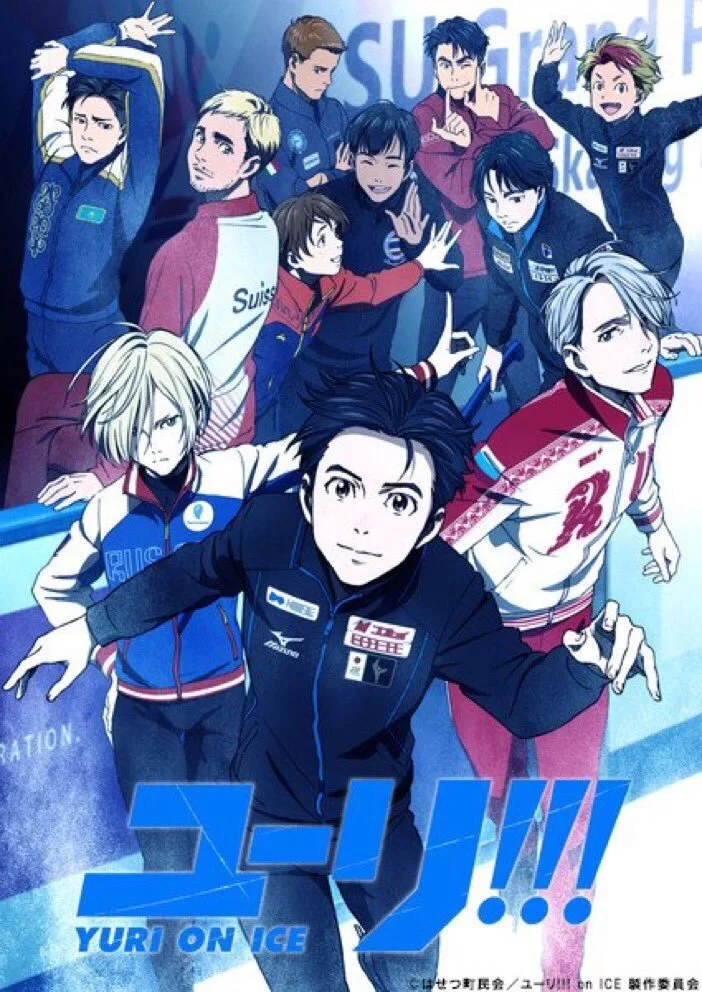
The 2016 anime follows the Japanese skater's return home after a poor competitive showing. The arrival of celebrated Russian skater Viktor Nikiforov, who offers to coach him, changes the terms of that uncertainty. A younger Russian competitor, Yuri Plisetsky, adds another form of pressure to an already unsettled relationship with performance.

Figure skating gives the story a distinctive structure because technical execution and artistic presentation must coexist. A programme is not simply a collection of successful elements. The athlete also has to make it coherent under competition conditions, carrying a chosen identity onto the ice while knowing that small errors can reshape the result.

The Details

Quick facts

Format
TV Series
Released
2016
Genre
Drama
Relevant Sport
Figure Skating

At A Glance

Yuri!!! on Ice begins after a disappointment, when Yuuri Katsuki is uncertain whether he still has a future in elite skating. His problem is not a complete absence of ability. It is the distance between what he can do and what he trusts himself to deliver when watched and judged.

About This Shelf Item

About Yuri!!! on Ice

Yuuri's admiration for Viktor complicates their new working relationship. Someone admired from a distance must become a person whose instructions can be questioned, understood and incorporated. Coaching requires forms of communication that celebrity does not. The series draws emotional energy from that movement between an idealised sporting image and the more uncertain reality of personal closeness.

Viktor's position is equally interesting. Being an exceptional performer does not automatically resolve the challenge of helping another athlete perform. Knowledge has to be translated into a form that suits Yuuri rather than simply reproducing Viktor's own habits. Their relationship makes coaching an act of interpretation, with both participants discovering what the other needs.

Yuri Plisetsky brings the urgency of a rising competitor. His presence prevents Yuuri's story from becoming a private recovery narrative detached from the field. Other skaters are developing, carrying expectations and claiming space. Yuuri must recover a sense of possibility while recognising that the competition will not pause until he feels ready to return.

Why It Belongs

The Sport Connection

The series is particularly useful for discussing the relationship between confidence and external approval. A skater's score is public and consequential, but an athlete cannot build a stable sense of self entirely around the latest judgment. Yuuri's uncertainty gives that tension an intimate form, without requiring viewers to master every detail of skating's technical scoring system.

It also highlights emotional communication as part of preparation. An athlete may understand an instruction intellectually while remaining unable to use it under pressure. Trust between coach and skater can change how an error is interpreted and whether uncertainty can be expressed honestly. That does not make trust a substitute for training; it affects how training becomes usable.

Because the programme places a close relationship at its centre, viewers can also consider the boundaries between personal attachment and professional responsibility. The emotional intensity is part of the fiction's appeal. It should not be converted into a universal model for coaching arrangements, where power, dependence and the athlete's freedom to disagree require careful attention.

Our Recommendation

Why Watch Yuri!!! on Ice

Yuri!!! on Ice suits viewers interested in performance psychology, skating and sport stories that give vulnerability a central role. Its competition sequences belong to a larger account of identity and connection. The series is valuable because it allows an accomplished athlete to feel uncertain without treating that uncertainty as proof that he does not deserve a place among the best.

Alex Bennett

Final Thoughts

Alex's Final Thoughts

Yuuri's return matters because it requires more than copying the image of confidence he associates with Viktor. He has to develop a way of performing that can belong to him. The anime gives that process emotional and sporting weight, asking how an athlete can remain open to another person's influence without disappearing inside someone else's idea of excellence.