The Shelf · TV Series

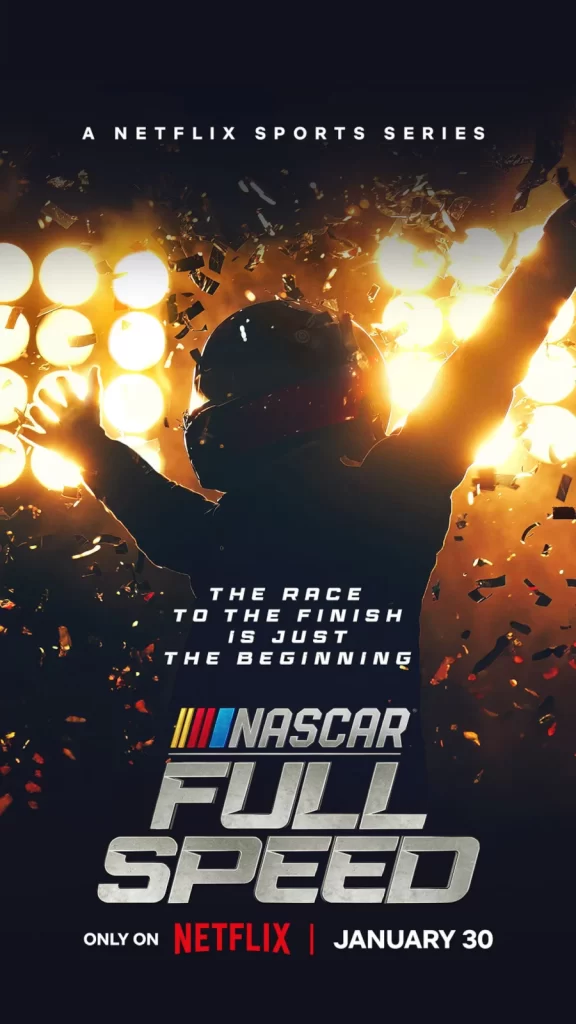
NASCAR: Full Speed

Released 2024Curated by SPMA Hub because sport culture lives beyond the field.

NASCAR: Full Speed turns the closing stages of a racing season into a study of pressure shared between a driver and an organisation. The person in the car receives the most visible judgment. The result also depends on preparation, decisions and coordinated work distributed across a much larger team.

Alex Bennett
Covered by Alex Bennett
The Shelf
NASCAR: Full Speed
NASCAR: Full Speed
The Gist Of NASCAR: Full Speed

The Gist

Why it caught our attention

The first season of the documentary series premiered in 2024 and follows the 2023 NASCAR Cup Series playoffs and championship race. Its five-part structure concentrates on the decisive portion of that campaign. This overview concerns that original season, rather than describing later instalments or presenting the series as a complete history of stock-car racing.

Featured drivers include Ryan Blaney, Denny Hamlin, William Byron, Kyle Larson, Bubba Wallace and others. Their presence creates several versions of competitive urgency. Established success, an unresolved championship ambition and the desire to prove progress do not feel identical, even when all the drivers are pursuing the same final title.

The Details

Quick facts

Format
TV Series
Released
2024
Relevant Sport
Motorsport

At A Glance

NASCAR: Full Speed turns the closing stages of a racing season into a study of pressure shared between a driver and an organisation. The person in the car receives the most visible judgment. The result also depends on preparation, decisions and coordinated work distributed across a much larger team.

About This Shelf Item

About NASCAR: Full Speed

The playoff format gives the documentary a clear source of tension. Strong work over a season must be converted into performance at particular moments, and the consequences of a mistake can become unusually concentrated. A driver's choices are therefore shaped not only by the car's immediate position, but by what the championship situation requires from that race.

Hamlin's position as both driver and team co-owner adds a distinctive organisational perspective. Competing personally and being invested in a wider operation are related but different roles. The overlap makes it possible to consider how an experienced driver understands the sport's business while still having to make immediate decisions from inside his own competitive campaign.

The off-track access also challenges the idea that drivers are interchangeable personalities hidden behind helmets. Family life and different ways of handling expectation shape the people returning to the car. Such material is most useful when it provides context, rather than treating a personal anecdote as a complete explanation for why a particular race was won or lost.

Why It Belongs

The Sport Connection

For sport management, NASCAR offers an especially visible case of interdependence. A driver needs the work of engineers, mechanics and pit personnel, while those specialists need clear information and effective coordination. The car's speed is an organisational output as well as an athletic one. Giving attention only to individual nerve misses much of the system producing the performance.

The series also invites discussion of decision-making under compressed time. Race strategy involves uncertainty, changing conditions and opponents making their own choices. A decision that produces a poor outcome is not automatically evidence that it was irrational when made. Reviewing the available information separately from the eventual result is essential to understanding a team's work fairly.

Its production relationship with NASCAR is relevant to the perspective. The documentary introduces personalities and gives the sport a platform to explain its attraction to wider audiences. That access can be informative while remaining selective. Viewers should recognise the series as an account designed around particular drivers and a dramatic championship period, not an independent examination of every aspect of the racing business.

Our Recommendation

Why Watch NASCAR: Full Speed

NASCAR: Full Speed is a useful entry point for audiences who know the visual spectacle but not the people and organisation behind it. Existing fans can connect the access to races they remember; newcomers can see why the championship has personal and professional stakes beyond a finishing order. The emphasis on the 2023 playoffs gives those stakes a clear and manageable frame.

Alex Bennett

Final Thoughts

Alex's Final Thoughts

The documentary's strongest sporting insight is that a driver can be alone in the cockpit without performing alone. Every decisive lap carries other people's preparation and choices with it. Following the championship through that relationship makes the racing more intelligible and turns speed from an isolated sensation into the visible result of coordinated, fallible human work.