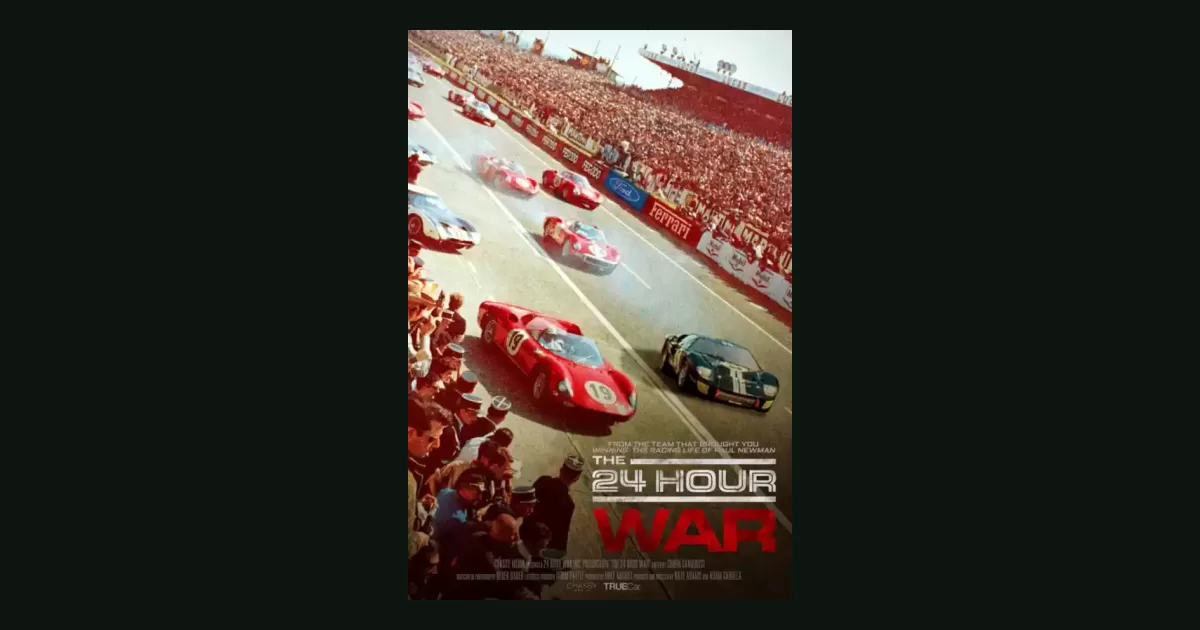
The Shelf · Movies

The 24 Hour War

Released 2016Curated by SPMA Hub because sport culture lives beyond the field.

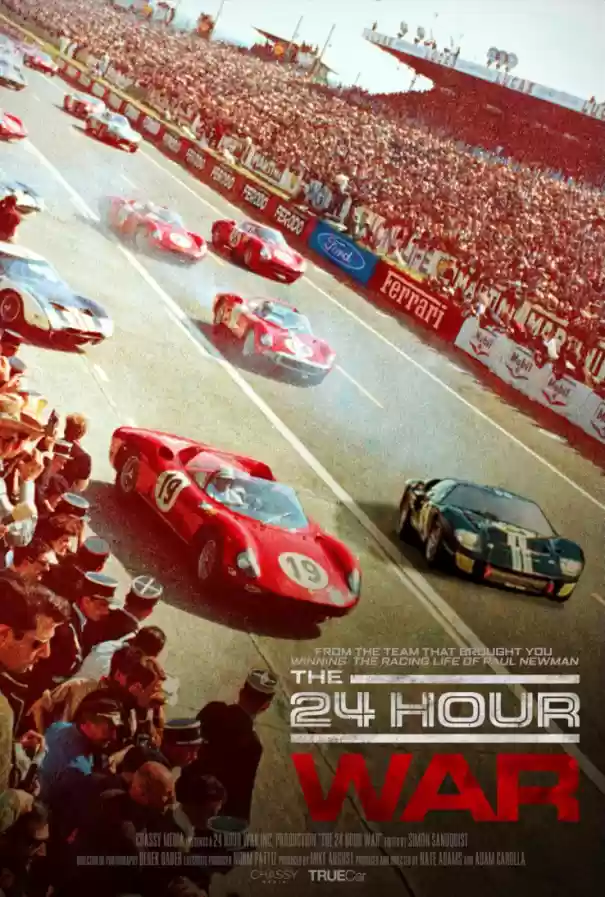
The 24 Hour War turns the Ford-Ferrari contest at Le Mans into an account of how companies use sport to solve commercial problems. The 2016 documentary follows an automotive rivalry in which engineering, leadership and brand reputation became inseparable.

Arash Sayed
Covered by Arash Sayed
The Shelf
The 24 Hour War
The 24 Hour War
The Gist Of The 24 Hour War

The Gist

Why it caught our attention

Directed by Adam Carolla and Nate Adams, The 24 Hour War examines the rivalry that escalated after Ford's attempted purchase of Ferrari failed in the early 1960s. Ford's determination to compete with the Italian manufacturer produced the GT40 program and a new level of investment in endurance racing. The goal was not merely to enter another race. It was to establish technical credibility on an international stage where Ferrari had already built a formidable reputation.

The documentary draws on interviews with figures connected to the era and its legacy, alongside historical footage of racing machinery and the teams surrounding it. That material helps move the story beyond a simple clash of famous company founders. Competitive success depended on designers, engineers, mechanics, drivers, suppliers and managers working across organizational boundaries under unusually public pressure.

The Details

Quick facts

Format
Movie
Released
2016
Relevant Sport
Motorsport

At A Glance

The 24 Hour War turns the Ford-Ferrari contest at Le Mans into an account of how companies use sport to solve commercial problems. The 2016 documentary follows an automotive rivalry in which engineering, leadership and brand reputation became inseparable.

About This Shelf Item

About The 24 Hour War

Endurance racing makes corporate strategy visible through the physical reliability of a car. A fast lap can demonstrate promise, but a twenty-four-hour event requires performance to survive changing conditions, driver handovers and mechanical strain. For Ford, the challenge was not only acquiring technology. The organization had to coordinate design choices, testing information and race operations quickly enough to challenge a more established rival.

The documentary frames the conflict as a dramatic commercial confrontation. That storytelling device is effective, but viewers should distinguish the film's account of personalities and motivations from the full corporate histories of either company. Industrial decisions generally involve more participants and competing aims than one confrontation can contain. The documented sporting result is important; the filmmakers' interpretation of why leaders acted is an argument to assess, not a transcript of their private deliberations.

Why It Belongs

The Sport Connection

For sport-business readers, The 24 Hour War offers a detailed case study of sponsorship before the modern separation between a racing team and a brand partner became commonplace. Racing was used as product development, advertising and an expression of national and corporate ambition. The investment made sense only if technical performance could produce a persuasive public story. A failure on the circuit was therefore both an engineering setback and a reputational event.

The management problem is familiar beyond motorsport: a company sets a high-profile objective, recruits specialist talent and must make decisions under compressed deadlines while different departments measure success differently. Race teams care about lap time and reliability. Executives care about budgets and positioning. Marketing staff care about public meaning. The documentary is most illuminating when those interests align imperfectly and progress requires collaboration instead of a single heroic decision.

Our Recommendation

Why Watch The 24 Hour War

Watch The 24 Hour War alongside a dramatized treatment of the same rivalry to see how factual interviews and cinematic storytelling select different points of emphasis. The documentary is particularly relevant for motorsport managers, sponsorship professionals and anyone examining how sport can become part of an industrial strategy. The supporting cast of technical specialists is as important as the owners whose names define the title.

Its emphasis on the rivalry can still overshadow other competitors and the risks borne by drivers and crews. Corporate victory does not automatically settle questions about safety, cost or the distribution of credit. Those omissions make useful discussion prompts. Who carried the project when the cameras were not focused on executives? Which lessons transfer to organizations without the resources of a global automaker?

Arash Sayed

Final Thoughts

Arash's Final Thoughts

The 24 Hour War belongs on the Shelf because it reveals that a racing program can be both a sporting enterprise and a corporate instrument. Ford and Ferrari wanted to win, but they were also negotiating what their brands stood for. The people who made those ambitions operational are the documentary's most valuable management story.