The Shelf · Movies

Williams

Released 2017Curated by SPMA Hub because sport culture lives beyond the field.

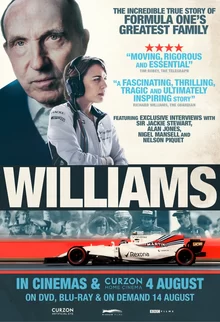
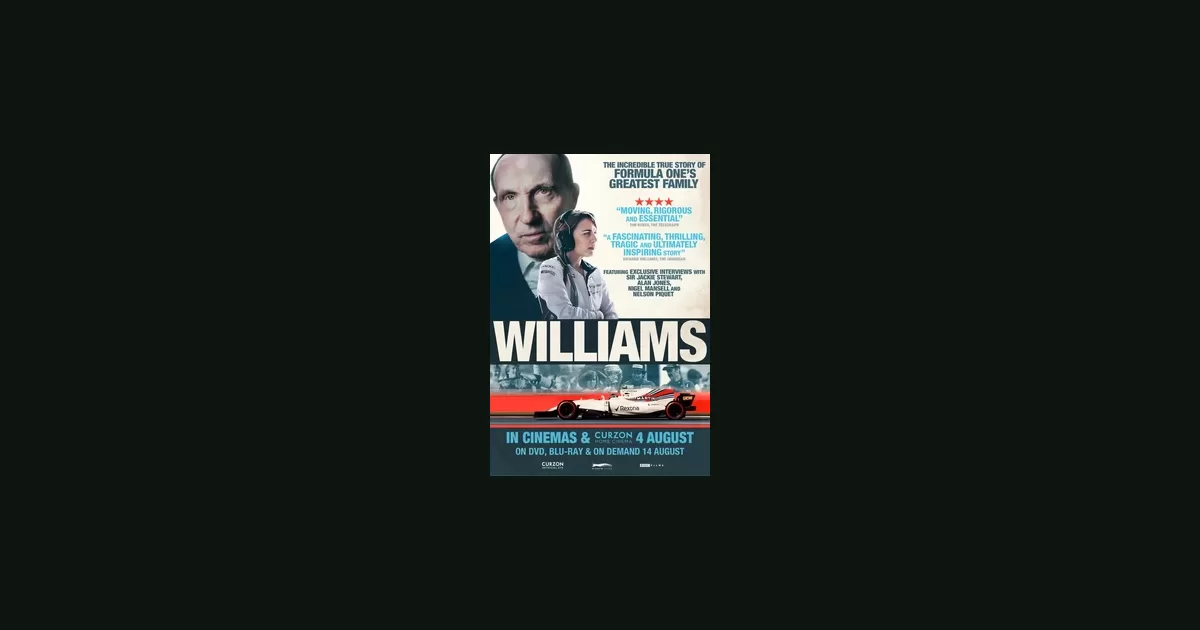
Williams tells the story of a Formula 1 team founder whose ambition created an enduring racing organization, and whose family absorbed the cost of keeping it alive. Morgan Matthews's 2017 documentary connects ownership, engineering and private resilience.

Arash Sayed
Covered by Arash Sayed
The Shelf
Williams
Williams
The Gist Of Williams

The Gist

Why it caught our attention

Frank Williams built one of Formula 1's best-known independent teams through a period in which technical ingenuity could make a smaller organization compete with richer manufacturers. The documentary follows his rise, the competitive achievements of Williams Grand Prix Engineering and the aftermath of the 1986 road accident that left him with life-changing injuries. It also explores the contribution of his family, who faced responsibilities far beyond what a race-day audience could see.

Matthews combines archive material, motorsport interviews and intimate testimony to place the team beside the people sustaining it. The familiar images of championships and famous drivers remain important, but they are not the only source of drama. The sport's demanding travel, technical preparation and financial pressure shaped a household as well as a business. That dual perspective distinguishes Williams from a straightforward victory compilation.

The Details

Quick facts

Format
Movie
Released
2017
Relevant Sport
Motorsport

At A Glance

Williams tells the story of a Formula 1 team founder whose ambition created an enduring racing organization, and whose family absorbed the cost of keeping it alive. Morgan Matthews's 2017 documentary connects ownership, engineering and private resilience.

About This Shelf Item

About Williams

The film gives substantial attention to Frank's late wife, Virginia, and to family relationships complicated by the team's consuming requirements. Frank's determination helped build the organization, but determination alone is not presented as a complete explanation for its survival. The documentary's emotional center is the gap between a founder's public legacy and the less visible work required to sustain a family and institution through crisis.

The British Council's film listing identifies Matthews as director and places the documentary within the history of a team that won multiple world championships. Those achievements are real, but the film is still a constructed portrait. Interview selection and family perspective influence its account of priorities and sacrifice. It is most useful when viewers consider those choices rather than assuming every side of an organization receives equal space.

Why It Belongs

The Sport Connection

Williams offers a striking case of founder dependence in professional sport. When an enterprise is strongly identified with one individual, leadership succession, decision authority and continuity become difficult to separate from personal loyalty. A racing team needs investment, technical direction and sporting leadership every season, regardless of what is happening in the founder's private life. That creates challenges for delegation and governance which cannot be resolved by admiring perseverance.

The team's engineering culture also complicates the common contrast between commercial ambition and sporting authenticity. Williams sought competitive success through an organization that needed sponsors, specialists and effective financial management. Technical distinction did not relieve it of commercial obligations. For sport-business students, the documentary provides a useful entry point into how independent teams protect their identity while depending on external resources to remain competitive.

Our Recommendation

Why Watch Williams

The documentary is particularly relevant to readers interested in Formula 1 ownership, succession planning, organizational culture and the relationship between sporting and family enterprises. It makes those subjects tangible through a historical team rather than a management textbook. The strongest scenes are not necessarily about cars crossing a finish line; they concern the people whose lives were organized around maintaining the team.

Williams is also a reminder to be careful with the language of personal sacrifice. A founder's dedication can be remarkable without automatically justifying every cost borne by relatives or colleagues. The film's family perspective makes that tension difficult to ignore, even as it celebrates an important sporting achievement. Readers can admire the Williams story and still ask how professional organizations might distribute responsibility more sustainably.

Arash Sayed

Final Thoughts

Arash's Final Thoughts

Williams belongs on the Shelf because it shows that building an exceptional sports team is not the same as building an institution that can operate independently of its founder. The distinction becomes clearest when personal crisis collides with organizational ambition. That is a management question with consequences far beyond motorsport.