




Alex Ferguson's record at Manchester United invites a straightforward documentary about success. His son Jason Ferguson instead directs a 2021 film that begins from a more personal point: Ferguson's recovery after a serious brain haemorrhage in 2018 and the fear of losing treasured memories. That frame changes how the football story unfolds. Victories at Aberdeen and Manchester United remain important, but they are presented alongside early life, family relationships and periods when the path forward was uncertain. It is a film about a famous manager's identity, not a coaching manual. For sports-management readers, that distinction matters because leaders often become publicly defined by outcomes while the emotional and domestic costs of their positions remain largely invisible.
The Shelf · Movies
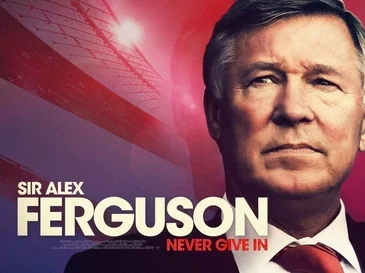
Sir Alex Ferguson: Never Give In
Sir Alex Ferguson: Never Give In combines a manager's memories with the vulnerability of recovering them, revealing a career shaped by more than the trophies on display.

The Gist
Why it caught our attention
The Details
Quick facts
- Format
- Movie
- Released
- 2021
- Genre
- Documentary
- Relevant Sport
- Soccer

At A Glance
Sir Alex Ferguson: Never Give In combines a manager's memories with the vulnerability of recovering them, revealing a career shaped by more than the trophies on display.

About This Shelf Item
About Sir Alex Ferguson: Never Give In
Using archival footage and interviews, the documentary follows Ferguson from Scotland through his playing and coaching years and into the era that transformed Manchester United into a worldwide sporting brand. The film revisits difficult beginnings at the club, important team transitions and moments when relationships with players or staff demanded judgment. Family members and former football colleagues provide perspectives that complement Ferguson's own recollections. Because the director is his son, this is an intimate and sympathetic portrait rather than a detached institutional investigation. Viewers should keep that proximity in mind while appreciating the access it creates. The account is most engaging when the great results are shown as the endpoint of decisions made without any guarantee they would work.

Why It Belongs
The Sport Connection
For club managers, the film emphasizes continuity and the significance of being supported through early uncertainty. Ferguson's eventual success can make his authority look inevitable, although his initial seasons at United involved pressure and doubt. Organizations need to decide when a leader's system deserves more time and when poor results reveal a deeper problem. That judgment is difficult to make from a single scoreline. The documentary also highlights relationships between coaches, players and institutions. A club built around a dominant managerial figure may achieve remarkable consistency while becoming dependent on one person's capacity and memory. Succession planning therefore needs to begin before circumstances make it urgent, however uncomfortable that conversation may be.
A football club can prepare a new manager for tactical duties, but the responsibility of shaping an institution over decades is harder to teach. Ferguson's recovery and recollections allow the documentary to consider the personal costs of an unusually consuming career. Leadership is not simply the ability to demand standards from other people. It requires building relationships that can carry those standards when a manager is absent, and recognizing the difference between commitment and an expectation of unlimited personal sacrifice. The family perspective also helps complicate the public image of a figure often described only through authority and confrontation. Because this is a personal portrait, viewers should be careful about drawing universal conclusions from one person's memories. For sports-management readers, its usefulness lies in the questions it prompts about succession, knowledge transfer and institutional dependence. Manchester United's record during Ferguson's tenure does not mean another club can reproduce his system by copying his personality.

Our Recommendation
Why Watch Sir Alex Ferguson: Never Give In
Never Give In will interest readers of sports leadership and personal legacy, particularly those examining how organizations remember their own histories. It shows the emotional weight of decisions that are often reduced to statistics: a transfer, an appointment, a farewell or a title. Managers may recognize the tension between public confidence and private doubt. Yet the film's personal perspective is also its limitation. It provides insight into Ferguson's priorities and relationships, not an exhaustive account of Manchester United's financial or organizational history. A productive viewing pairs admiration for his achievements with questions about how executives create durable structures that survive even exceptional leaders.
Final Thoughts
Arash's Final Thoughts
Sir Alex Ferguson: Never Give In belongs on the Shelf because it restores time and human fragility to an extraordinary managerial career. It suggests that building a sporting institution involves more than winning repeatedly. It means creating relationships and memories that remain meaningful after the work, and sometimes the ability to recall it easily, has changed.
Keep Exploring
Similar Movies on The Shelf












Same sport
More Soccer on The Shelf








Stay in the loop
Follow SPMA
New jobs, interviews and sport-industry news in your feed.






43251294 new jobs in sport this week
Teams, leagues, agencies and brands in Canadain the USAin Canada & the USA are hiring. Find your next role, or let new ones come to you.
Just posted
 Digital Content & Social Media InternSport Management Hub · Toronto, ONFeatured
 Assistant/Associate Golf ProfessionalGlen Abbey Golf Club · Oakville, ON14 hours ago
 Physical Literacy Program LeaderPISE (Pacific Institute for Sport Excellence) · Victoria, BC19 hours ago
- Digital Content & Social Media InternSport Management Hub · Toronto, ONFeatured
 Summer InternFirst Tee · Charleston, SC8 hours ago
