The Shelf · Movies

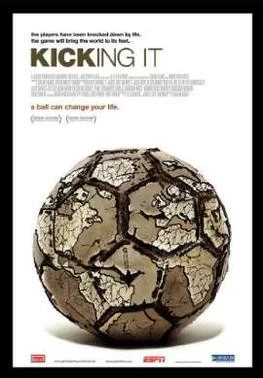
Kicking It

Released 2008Curated by SPMA Hub because sport culture lives beyond the field.

A documentary follows players representing their countries at the Homeless World Cup. It offers a concrete way to discuss sport's potential without treating competition as a miracle cure. The Homeless World Cup brings international competition into lives seldom represented by professional sport.

Arash Sayed
Covered by Arash Sayed
The Shelf
Kicking It

The Gist

Why it caught our attention

Personal histories of homelessness and recovery unfold beside a tournament built around international participation and dignity.

The Homeless World Cup is an actual international competition, and the documentary does not need to manufacture its emotional intensity. Participants represent teams and care about the outcomes while arriving with experiences that make the event more than a tournament. Its strongest interviews resist the idea that sport guarantees a dramatic change in circumstances. A player can feel immense pride at taking part and still face difficult decisions about housing, work and relationships afterward.

The Details

Quick facts

Format
Movie
Released
2008
Relevant Sport
Soccer

At A Glance

A documentary follows players representing their countries at the Homeless World Cup. It offers a concrete way to discuss sport's potential without treating competition as a miracle cure. The Homeless World Cup brings international competition into lives seldom represented by professional sport.

About This Shelf Item

About Kicking It

The film allows competing national identities to coexist with the non-commercial purposes of social sport.

The Homeless World Cup puts players on an international stage without pretending that football ability will resolve all the difficulties they face outside it. The documentary allows teams to represent national identities while telling stories that are rarely visible in mainstream sporting coverage. The competition has a formal structure and real emotional importance, but the path to participating is often more significant than the final standing. The film is strongest when players' conversations are given room alongside the action rather than being reduced to portraits of extraordinary adversity.

International competition provides the documentary's structure, but homelessness is not a single condition shared identically by every player. Their stories involve different relationships with housing, support services and national identity. That variety is the reason to listen carefully rather than treating the tournament as evidence that sport can solve an entire social problem. The Homeless World Cup may create opportunities for pride and connection; what happens when the players return to their ordinary lives is a separate and equally important question.

Why It Belongs

The Sport Connection

Charity governance, event funding, athlete support and the measurement of social outcomes are more relevant than professional salaries.

Social-sport programs often measure outcomes in terms that make sense to funders but do not capture everything participants value. Stability, relationships, treatment access and confidence may matter more than a tournament victory. The Homeless World Cup also requires event governance, national partners and support that continues after the players return. The documentary is useful for people designing sport-for-development initiatives because it puts participants at the center while leaving open the hardest question: what happens when the celebratory event is over?

Our Recommendation

Why Watch Kicking It

It offers a concrete way to discuss sport's potential without treating competition as a miracle cure.

The international format gives players reasons to be proud of representing their countries, but the documentary does not need a championship victory to justify its attention. The best interviews leave room for disappointment, uncertainty and ordinary hopes after the tournament. That restraint matters in a field where a successful social program can otherwise become a convenient source of uplifting publicity.

Arash Sayed

Final Thoughts

Arash's Final Thoughts

Kicking It is valuable because it keeps social sport from becoming entirely abstract. Funding reports can describe participation targets and outcomes; the film shows people whose own accounts may not fit those categories neatly. It is worth watching for the international sense of community, but also for the question left once everyone has gone home. If the competition is a gateway to support, who is responsible for ensuring that support is still present months later?