The Shelf · Movies

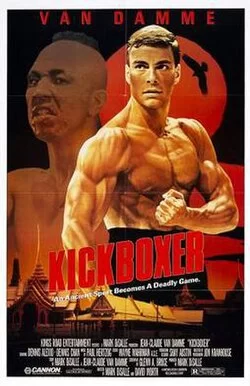
Kickboxer

Released 1989Curated by SPMA Hub because sport culture lives beyond the field.

When Eric Sloane is gravely injured in a fight with Tong Po, his brother Kurt pursues a rematch and the training he believes will make it possible. Kickboxer helped establish Jean-Claude Van Damme's screen persona through punishing practice sessions and spectacular movement. Its revenge plot is simple; its treatment of violence, cultural difference and the fighter's body warrants closer attention.

Arash Sayed
Covered by Arash Sayed
The Shelf
Kickboxer

The Gist

Why it caught our attention

Released in 1989, Kickboxer was directed by Mark DiSalle and David Worth. Van Damme plays Kurt Sloane, Dennis Alexio is his brother Eric, Michel Qissi is Tong Po and Dennis Chan plays Xian, the trainer Kurt seeks out in Thailand. The film belongs to the American martial-arts action cycle that made training itself a central attraction. It promises that the preparation will be nearly as cinematic as the match.

Eric enters a fight in Thailand expecting his skills to travel smoothly across disciplines. The encounter with Tong Po ends in catastrophe. Kurt remains abroad, angry and unprepared, and submits himself to Xian's instruction. The journey has the structure of a revenge story, but the central stretch is devoted to making a very different body out of Kurt's: balance, flexibility, endurance and his tolerance for pain must all change.

The Details

Quick facts

Format
Movie
Released
1989
Genre
Drama

At A Glance

When Eric Sloane is gravely injured in a fight with Tong Po, his brother Kurt pursues a rematch and the training he believes will make it possible. Kickboxer helped establish Jean-Claude Van Damme's screen persona through punishing practice sessions and spectacular movement. Its revenge plot is simple; its treatment of violence, cultural difference and the fighter's body warrants closer attention.

About This Shelf Item

About Kickboxer

The training scenes are the film's genuine attraction. Van Damme's ability to perform high kicks and stretches gives the camera something more interesting than rapidly edited punches. Xian's methods are severe, often theatrical and sometimes implausible as responsible coaching. They nevertheless create a clear visual distinction between Kurt's early desperation and the control he is gradually able to display. His movement becomes the story's measure of progress.

Tong Po, by contrast, is presented less as a complete person than as a frightening obstacle. His size, menace and capacity for brutality are emphasized at the expense of motivation. The imbalance may suit a pulp action film, but it also deserves criticism. The movie draws heavily on simplified ideas about Thailand as a place of exotic danger and secret expertise, filtering a local fighting tradition through the ordeal of a visiting American hero. Appreciating Van Damme's athletic performance need not mean accepting that cultural shorthand.

The revenge structure also limits what the film can say about the sport it depicts. Kurt is not primarily pursuing a championship or a sustainable career. He wants to answer an injury with another fight. As a result, questions about officiating, sanctions and the welfare of competitors are largely displaced by the demand for a satisfying confrontation. The final contest has the heightened logic of an action climax rather than a credible model of regulated competition.

Why It Belongs

The Sport Connection

Combat sports depend on an uncomfortable bargain: controlled violence must be sufficiently dangerous to attract interest while remaining within rules intended to protect participants. Kickboxer deliberately collapses much of that boundary. Eric's injury provides the emotional engine, yet the proposed answer is another encounter in which the risks are amplified rather than restrained.

The film is useful for discussing how promoters and audiences can romanticize punishment. Kurt's body becomes both the proof of his discipline and the spectacle being sold. A responsible sporting structure would ask whether the match should occur, who is medically cleared and what independent authority can stop it. The movie chooses revenge over those questions, which makes them more visible to a critical viewer.

Our Recommendation

Why Watch Kickboxer

See it for Van Damme's physical presence, the long stretch of training that makes his athleticism legible and the specific place the film holds in late-1980s martial-arts cinema. Dennis Chan offers a warmer counterweight to the increasingly grim revenge plot, though Xian's instruction is designed for screen excitement rather than imitation.

It is not a nuanced representation of Thai culture or professional kickboxing governance. The caricatured villain and occasional melodrama are substantial limitations. Those flaws are part of the reason it belongs in a sports-media discussion: popular images of a fighting discipline can circulate far beyond the practical realities that athletes, coaches and regulators must manage.

Arash Sayed

Final Thoughts

Arash's Final Thoughts

Kickboxer's appeal is built on the visible work of a remarkable performer. Its weaknesses come from treating the sport around him as little more than a vehicle for righteous retaliation. Holding those observations together produces a more interesting response than either nostalgia or dismissal. The movie shows how action cinema can popularize an athletic practice while also distorting the culture and safeguards that make that practice possible.