The Shelf · Movies

The Smashing Machine

Released 2025Curated by SPMA Hub because sport culture lives beyond the field.

The Smashing Machine presents elite mixed martial arts as a system that can turn physical dominance into personal dependence. Mark Kerr becomes a champion in a young and expanding sport, yet the same culture that celebrates his pain offers few convincing answers when control, health and identity begin to collapse.

Arash Sayed
Covered by Arash Sayed
The Shelf
The Smashing Machine

The Gist

Why it caught our attention

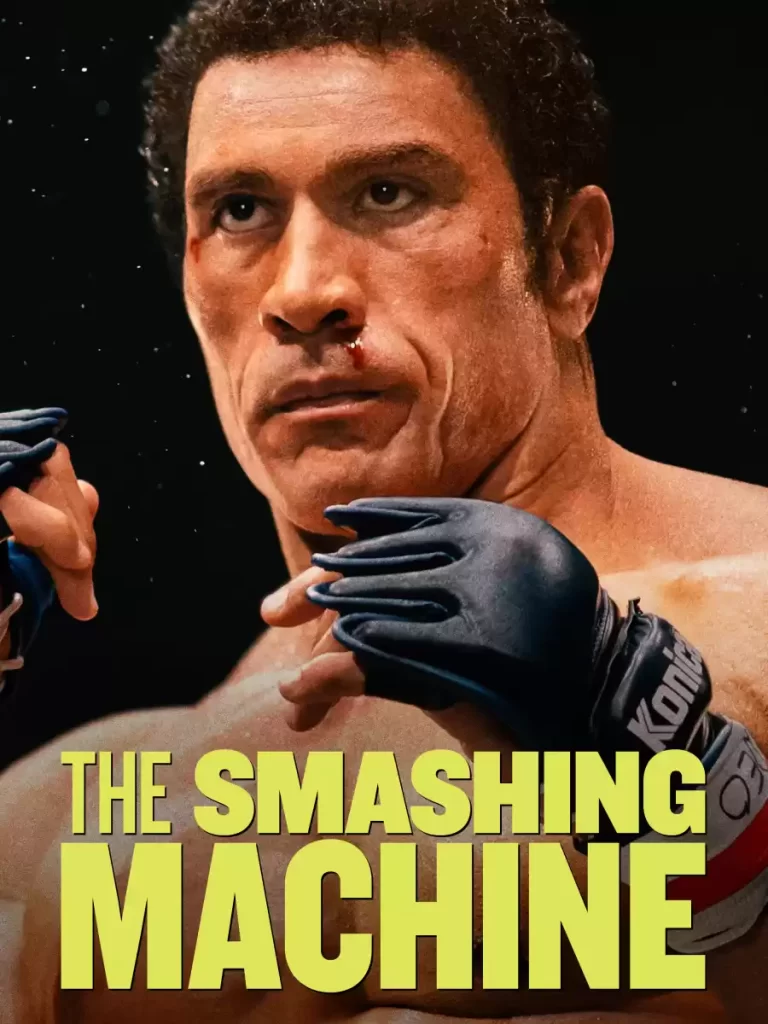
Written and directed by Benny Safdie, The Smashing Machine is a 2025 dramatic portrait of mixed martial artist and UFC fighter Mark Kerr. Dwayne Johnson plays Kerr, while Emily Blunt plays Dawn Staples. The film follows Kerr during the early era of modern mixed martial arts, when fighters were building reputations inside a sport whose commercial and regulatory structures were still developing.

The story is based on Kerr's life but is not a documentary. A24 describes it as the true story of a fighter whose pursuit of greatness made him a legend and nearly cost him everything. Safdie's film is interested in the contradiction between public strength and private instability. Kerr's body is his livelihood, his identity and the instrument through which other people measure his value.

The Details

Quick facts

Format
Movie
Released
2025
Genre
Drama

At A Glance

The Smashing Machine presents elite mixed martial arts as a system that can turn physical dominance into personal dependence. Mark Kerr becomes a champion in a young and expanding sport, yet the same culture that celebrates his pain offers few convincing answers when control, health and identity begin to collapse.

About This Shelf Item

About The Smashing Machine

Kerr enters the film as a formidable competitor with an exceptional record. His accomplishments include major tournament victories in mixed martial arts, wrestling success and recognition across several combat-sport organizations. The film does not treat those achievements as a simple path to fulfilment. Success creates new expectations, and the pressure to remain dominant becomes part of the problem.

The setting is important. Early mixed martial arts carried the atmosphere of a developing industry: promoters were building events, rules and audiences while fighters absorbed the physical risk. Kerr's career sits inside that transition. He is both an athlete and a product of a sport learning how to package violence, personality and legitimacy for a larger market.

Safdie keeps the focus close to Kerr and Dawn rather than presenting a broad institutional history of the UFC. That choice makes the film more intimate, but it also narrows the account. The audience sees the costs of Kerr's ambition through his body, relationships and dependence, while the wider evolution of the sport remains part of the background. The result is a character study shaped by the business conditions around it.

Why It Belongs

The Sport Connection

The Smashing Machine is especially useful for examining athlete welfare in combat sports. When an athlete's earning power depends on constant readiness to fight, injury and recovery can become financial problems rather than purely medical ones. The organization may need the athlete available, the promoter may need a marketable event and the fighter may feel pressure to accept risk before the body is prepared.

Kerr's story also exposes the weakness of treating toughness as a complete welfare policy. A culture that rewards silence can make it harder for athletes to disclose pain, dependency or emotional distress. Managers cannot solve that problem through motivational language. They need credible medical oversight, confidential support, clear return-to-competition standards and financial structures that do not punish athletes for seeking help.

The film's treatment of Dawn is also relevant. An athlete's support network often absorbs the consequences of a career built around risk, but those people may have little authority within the sport. A responsible organization must consider how its demands affect families and partners without making them responsible for managing the athlete's health.

Our Recommendation

Why Watch The Smashing Machine

Watch The Smashing Machine if you are interested in MMA history, athlete welfare, sports commercialization or the relationship between performance and identity. It will be most useful to viewers willing to sit with an uncomfortable portrait rather than expect a conventional triumph narrative.

Its limitation is its close concentration on Kerr. The film offers a dramatic interpretation of a real career and does not provide a complete history of early UFC governance, fighter contracts or the wider MMA labour market. Those subjects require additional research. What the film does provide is a specific human case through which those management questions become difficult to ignore.

Arash Sayed

Final Thoughts

Arash's Final Thoughts

The Smashing Machine refuses to treat athletic damage as proof of commitment. Mark Kerr's achievements are real, but the film's lasting concern is what happens when a sport can reward a fighter's destruction more easily than it can support his recovery. Its warning is aimed at the system around the champion, not only at the champion himself.