The Shelf · Movies

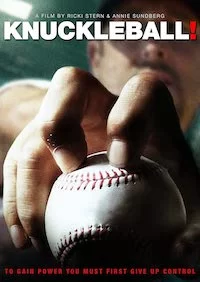
Knuckleball!

Released 2012Curated by SPMA Hub because sport culture lives beyond the field.

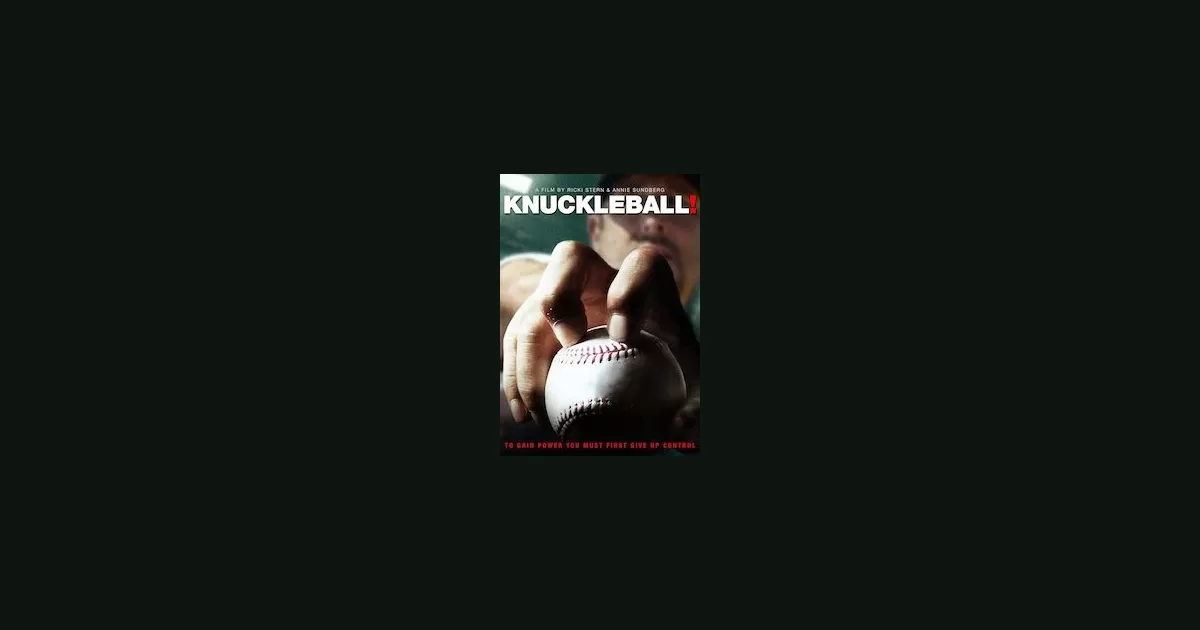
Knuckleball! is about athletes who make a career using a pitch that behaves unpredictably even by baseball's standards. Its larger subject is specialization: how a player with an unconventional skill finds coaches, patience and an organization willing to let that skill develop.

Arash Sayed
Covered by Arash Sayed
The Shelf
Knuckleball!
Knuckleball!
The Gist Of Knuckleball!

The Gist

Why it caught our attention

Directed by Ricki Stern and Annie Sundberg, the 2012 documentary follows major-league knuckleball pitchers Tim Wakefield and R.A. Dickey. Their signature pitch is defined less by overwhelming speed than by movement that can confuse hitters, catchers and sometimes the pitchers themselves. The movie observes a craft that survives inside a sport increasingly fascinated by velocity and measurable physical tools.

Wakefield and Dickey offer different career circumstances, but each demonstrates how an unusual technical identity can sustain a professional livelihood. Their experience also raises a practical question for talent evaluators: when a skill sits outside the standard development model, who has the knowledge to recognize and support it?

The Details

Quick facts

Format
Movie
Released
2012
Relevant Sport
Baseball

At A Glance

Knuckleball! is about athletes who make a career using a pitch that behaves unpredictably even by baseball's standards. Its larger subject is specialization: how a player with an unconventional skill finds coaches, patience and an organization willing to let that skill develop.

About This Shelf Item

About Knuckleball!

The knuckleball is unusually difficult to teach through conventional instruction because it relies on creating little spin and accepting movement that resists perfect control. Coaches cannot always use the same cues that apply to a traditional power pitcher. The documentary follows the athletes' conversations about technique and the learning that occurs when specialists share knowledge across organizations and generations.

It also gives the pitch a community. A small network of practitioners understands frustrations that are difficult to communicate to people who have not tried to master the same problem. That professional solidarity is important because careers built on unusual methods can look fragile to clubs seeking predictable development pathways.

Why It Belongs

The Sport Connection

Sports organizations often create standardized criteria to compare prospects fairly. Those benchmarks can improve efficiency, but they may also overlook athletes whose performance comes through unfamiliar methods. Knuckleball! suggests that evaluation teams need specialist knowledge and opportunities for unconventional candidates to demonstrate results over a meaningful period.

The film is equally relevant to workforce planning. When a technical skill is rare, an organization cannot assume it can always hire a suitable instructor from the usual market. Knowledge transfer, mentorship and documentation become strategic assets. This applies beyond baseball to adaptive sport, niche disciplines and evolving performance technologies. A program that depends on one expert without building successors is vulnerable when that person retires.

There is an organizational risk in coaching unusual performers to look like everyone else. A knuckleball pitcher may need different practice routines, evaluation windows and tactical support from a conventional starter. Those differences complicate roster construction, especially when few instructors have direct expertise. The documentary encourages staff to ask whether a standard development pathway is genuinely suitable or merely easier to administer. Staff must also communicate these differences to catchers and coaches whose usual assumptions about pitch movement may not apply. Specialized success often requires the entire team to learn alongside an unusual athlete.

Our Recommendation

Why Watch Knuckleball!

The documentary succeeds because it makes a peculiar pitch understandable without pretending it is a guaranteed solution. Its athletes discuss difficulty and uncertainty with humour, and viewers see the emotional difference between being celebrated for a rare skill and wondering whether a club will continue to trust it.

It should not be interpreted as evidence that every struggling pitcher ought to convert to the knuckleball. The pitch is hard to develop, and the circumstances that supported Wakefield and Dickey were unusually favourable. The wider lesson is about making space for informed experimentation, not selling a shortcut to professional baseball.

Arash Sayed

Final Thoughts

Arash's Final Thoughts

Knuckleball! belongs on the Shelf because it shows how much institutional patience can matter to an unconventional athlete. Talent identification is not only the search for familiar signals. It is also the willingness to recognize a useful exception and build the knowledge needed to support it.