The Shelf · Music

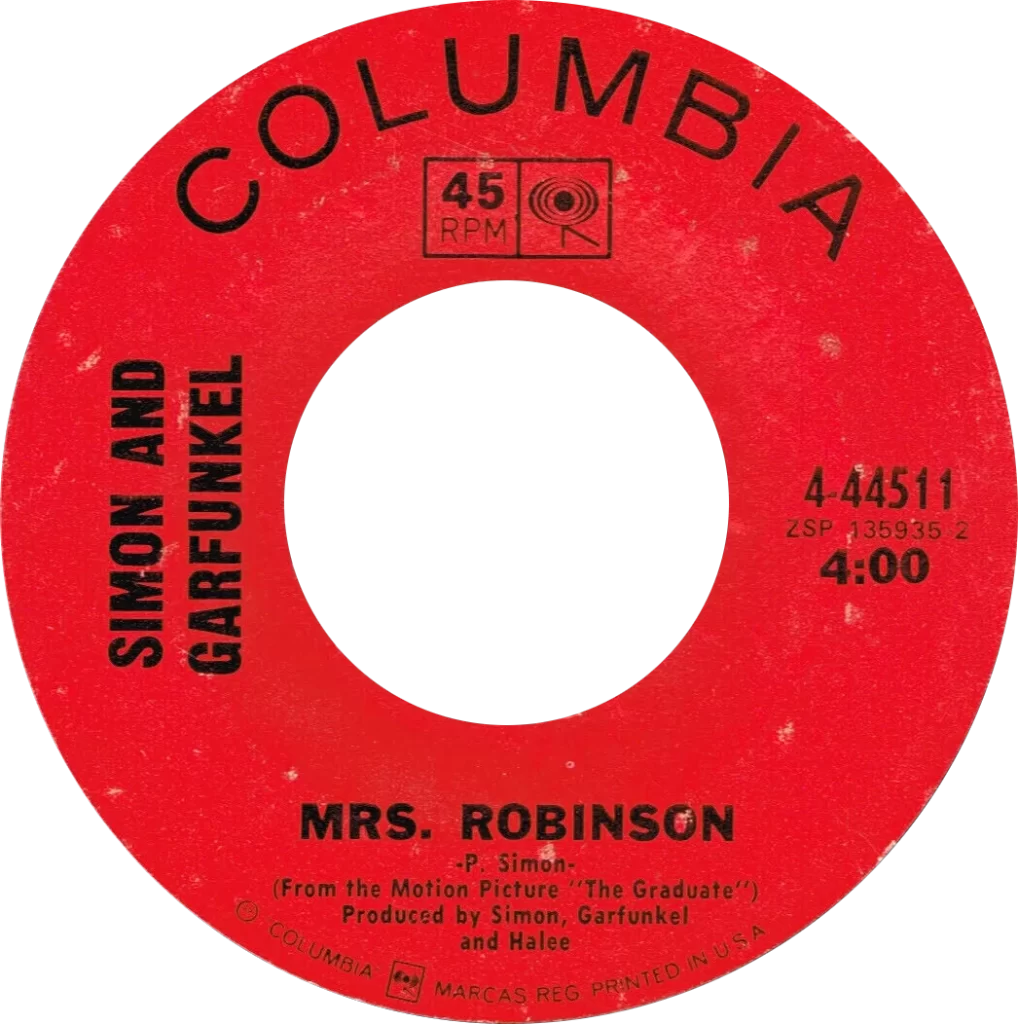
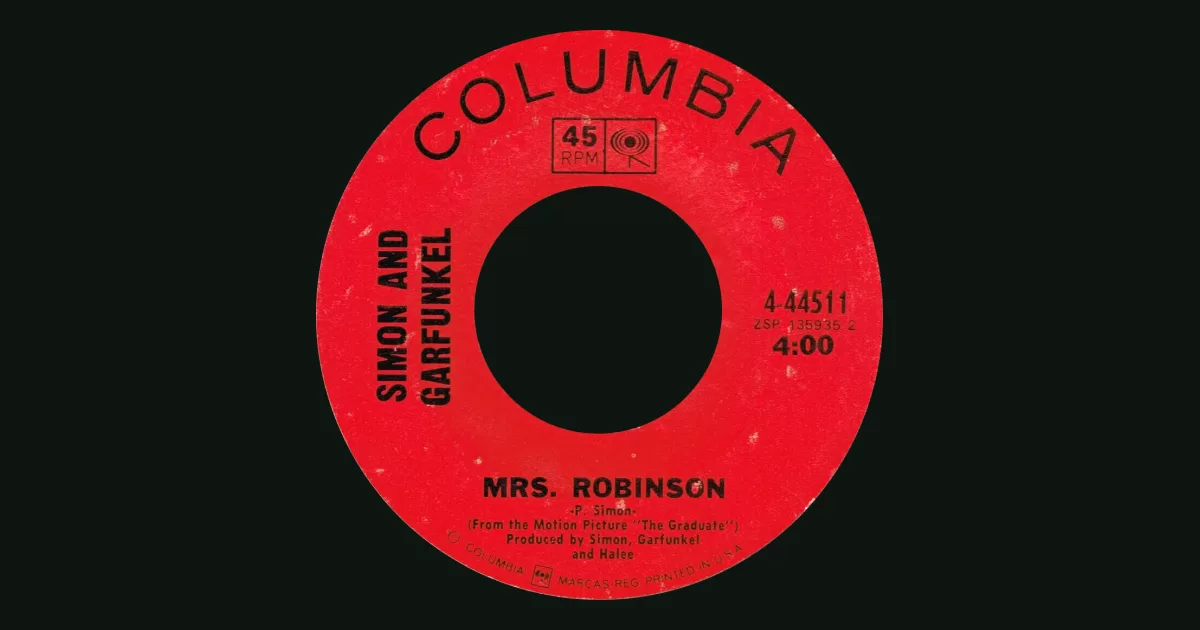
Mrs. Robinson

By Simon & GarfunkelReleased 1968Curated by SPMA Hub because sport culture lives beyond the field.

Simon and Garfunkel's Mrs. Robinson is not a baseball song, but Paul Simon's reference to Joe DiMaggio gives it an unusually rich connection to changing ideas of American heroism.

Alex Bennett
Covered by Alex Bennett
The Shelf
Mrs. Robinson by Simon & Garfunkel
Mrs. Robinson
The Gist Of Mrs. Robinson

The Gist

Why it caught our attention

Joe DiMaggio appears near the end of Mrs. Robinson, but Simon and Garfunkel's 1968 hit was never intended as a baseball anthem. The song is closely associated with the film The Graduate and the album Bookends, a setting of social dislocation and uncertainty very different from a celebratory ballpark performance. The DiMaggio reference works precisely because an admired sporting figure seems to belong to an older moral vocabulary.

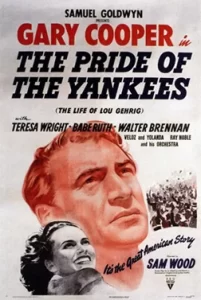
Paul Simon has explained that the former Yankees outfielder represented something he considered missing from public life. MLB's historical discussion of the song identifies DiMaggio as a symbol of grace and national solidarity in Simon's imagination. Whether listeners share that view of the athlete is a separate question.

The Details

Quick facts

Format
Music
Artist
Simon & Garfunkel
Released
1968
Sport link
Athlete
Relevant Sport
Baseball

At A Glance

Simon and Garfunkel's Mrs. Robinson is not a baseball song, but Paul Simon's reference to Joe DiMaggio gives it an unusually rich connection to changing ideas of American heroism.

About This Shelf Item

About Mrs. Robinson

The lyric does not report a game or identify a particular baseball achievement. It asks why the country seems to have lost a figure of DiMaggio's stature. This is nostalgia filtered through popular music, not an accurate record of DiMaggio's full personality or career. He remained a public figure, and the suggestion that he had disappeared could understandably sound odd if taken literally.

Simon himself was a baseball fan, and his choice of name has been widely discussed. The mention gives the song an image of sporting heroism that was recognizable to Americans who had never attended a Yankees game. That scale of recognition is the important cultural fact; the recording's main subject remains outside sport.

Why It Belongs

The Sport Connection

For sport managers and historians, the reference illustrates how athletes can become shorthand for values that audiences later argue over. A player's reputation is not frozen at the moment of retirement. Artists, advertisers, fans and political commentators can attach new meanings to it. Some will be affectionate, others reductive, and few will amount to a complete portrait of a complicated person.

There is a temptation to describe that process as brand management. Yet Simon's mention was not presented as a Yankees campaign or a sponsorship transaction. The meaning emerged through a songwriter's personal association and a national audience's understanding. It is an example of public memory operating beyond a club's control.

DiMaggio’s public presence did not end with his playing career, which is one reason the song’s question should not be taken literally. The distance between Simon’s ideal and a person’s actual life is central to understanding the reference fairly.

Our Recommendation

Why Listen Mrs. Robinson

Listening to the whole song prevents the familiar DiMaggio line from swallowing everything else. Its arrangements, film association and other lyrical images belong to the late-1960s cultural atmosphere that made an appeal to an earlier kind of hero emotionally effective. The baseball reference gains its force from contrast with those surroundings.

The lyric's afterlife also reveals the instability of nostalgic language. For one listener, DiMaggio represents excellence and composure; for another, the name may recall the commercial endorsements and celebrity culture that also shaped his later years. A responsible article should acknowledge that tension instead of presenting Simon's image as objective history.

Alex Bennett

Final Thoughts

Alex's Final Thoughts

Mrs. Robinson earns its place on a sports-media shelf through a relatively brief reference, and the article should say so openly. There is no need to stretch the song into a detailed baseball narrative. Its actual contribution is to show how a sports figure can become a metaphor inside a cultural work whose central story is elsewhere.

DiMaggio’s appearance lasts only a moment, but the line is strong because Simon knew the name would arrive carrying a history of its own. The recording says more about public longing and selective memory than about baseball. Its best sports-history reading therefore resists pretending a beloved player was a flawless national symbol. The distance between the real person and the cultural image is exactly what makes the allusion worth examining.