
The Shelf · Movies

The Pride of the Yankees

Released 1942Curated by SPMA Hub because sport culture lives beyond the field.

The Pride of the Yankees remembers Lou Gehrig through the relationships that make his final public farewell matter. Baseball gives him fame and a remarkable record, but the film locates his stature in the ordinary loyalties that remain when continuing to play is no longer possible.

Alex Bennett
Covered by Alex Bennett
The Shelf
The Pride of the Yankees
The Gist Of The Pride of the Yankees

The Gist

Why it caught our attention

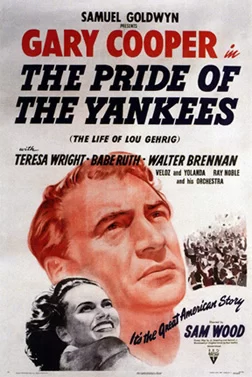
Released in 1942, a year after Gehrig's death, Sam Wood's film stars Gary Cooper as the New York Yankees first baseman. Teresa Wright plays Eleanor, whose relationship with Gehrig becomes central to the story. Walter Brennan appears as a sportswriter, while several Yankees figures, including Babe Ruth, appear as themselves.

The timing shapes the film's purpose. It is an affectionate tribute to a recently lost public figure rather than an attempt to investigate every complication of his career. Its emotional framework asks viewers to understand why a ballplayer's illness and departure affected people far beyond the stadium.

The Details

Quick facts

Format
Movie
Released
1942
Genre
Drama
Relevant Sport
Baseball

At A Glance

The Pride of the Yankees remembers Lou Gehrig through the relationships that make his final public farewell matter. Baseball gives him fame and a remarkable record, but the film locates his stature in the ordinary loyalties that remain when continuing to play is no longer possible.

About This Shelf Item

About The Pride of the Yankees

Gehrig's family life provides the foundation. The film gives substantial attention to his mother's ambitions and concern for his future, making baseball initially part of a negotiation about what a worthwhile life should look like. Athletic promise does not immediately erase a parent's preference for stability.

His relationship with Eleanor broadens that world. The marriage matters because it gives the later crisis an intimate scale. A public knows a player's name and statistics; a partner shares the routines and expectations that an illness can quietly dismantle. Wright's role prevents the film from becoming only a procession of sporting achievements.

The consecutive-games record supplies the most powerful athletic image. Gehrig's 2,130 appearances in succession make reliability visible as a number. That achievement also sharpens the eventual interruption. A career defined by being available every day meets a condition that effort and loyalty cannot overcome.

The farewell at Yankee Stadium gathers those strands together. The film builds toward a moment in which a celebrated athlete recognises what he has received from other people. Its meaning depends on the relationships established earlier, not simply on the audience knowing that an important career has ended.

Why It Belongs

The Sport Connection

For a sport audience, the film raises a useful question about the qualities organisations choose to commemorate. Gehrig's greatness is linked to dependability, humility and gratitude as well as production. The tribute presents a model of sporting character that extends beyond the spectacular moment or the pursuit of individual attention.

It also shows how clubs and media help turn personal loss into shared memory. Real baseball figures appearing beside actors connect the dramatisation to the world its original audience recognised. The stadium becomes a place where private grief can be publicly acknowledged without being fully understood by everyone present.

A thoughtful reading should preserve the distinction between the film's heroic presentation and the experience of illness itself. Gehrig's response is not a standard against which other people facing serious disease should be measured. The film honours one life; its emotional power does not make every element of that life a universal obligation.

Our Recommendation

Why Watch The Pride of the Yankees

The Pride of the Yankees is especially valuable for viewers interested in older sports cinema and the making of an enduring public image. Its pace, sentiment and selective treatment of baseball differ from a modern career retrospective. Approaching it as a memorial makes those choices more intelligible.

It also works as a companion to more detailed accounts of Gehrig's playing career. The film supplies an emotional portrait, while other sources can fill in the competitive context that it compresses. Neither function needs to cancel the other, provided the distinction stays clear.

Alex Bennett

Final Thoughts

Alex's Final Thoughts

The film's final effect comes from shifting the meaning of strength. The athlete known for an uninterrupted run of games becomes memorable for how he acknowledges an ending. The Pride of the Yankees remains a moving example of sport providing the setting for a story about love, dependence and gratitude.