The Shelf · Movies

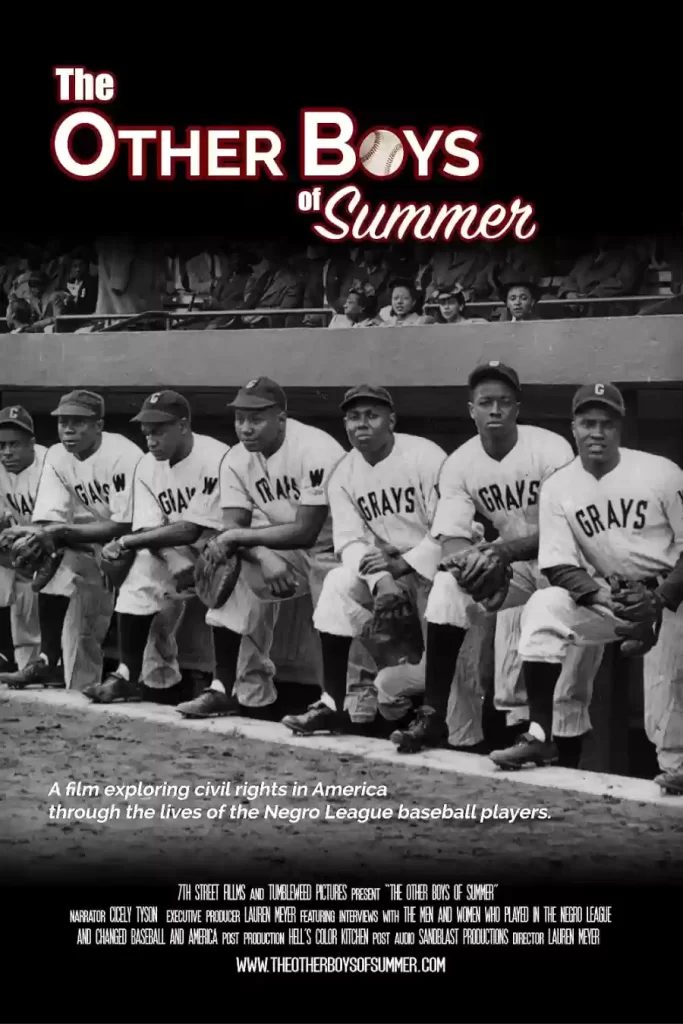
The Other Boys of Summer

Released 2018Curated by SPMA Hub because sport culture lives beyond the field.

A documentary recovers the history of Black baseball players who competed in the Negro Leagues before integration. It reminds viewers that exclusion distorts what later generations remember as the standard of excellence. Negro League veterans preserve a professional baseball history long excluded from mainstream recognition.

Arash Sayed
Covered by Arash Sayed
The Shelf
The Other Boys of Summer

The Gist

Why it caught our attention

Former players describe the skill, travel and social worlds that rarely received coverage comparable to white major-league stars.

The documentary's interviews resist the familiar history in which Negro League players appear only as a supporting chapter before integration. They were members of professional sporting communities with their own rivalries, audiences and ambitions. Their memories reveal how segregation altered everyday working conditions, from travel to access to recognition. Photographs and records matter, but the speakers' descriptions give the surviving evidence a depth that a list of statistics cannot supply.

The Details

Quick facts

Format
Movie
Released
2018
Relevant Sport
Baseball

At A Glance

A documentary recovers the history of Black baseball players who competed in the Negro Leagues before integration. It reminds viewers that exclusion distorts what later generations remember as the standard of excellence. Negro League veterans preserve a professional baseball history long excluded from mainstream recognition.

About This Shelf Item

About The Other Boys of Summer

Oral testimony and archival material preserve voices at risk of disappearing from mainstream baseball history.

The players interviewed in this documentary lived and worked inside a baseball world whose ability was regularly denied recognition by official institutions. Their memories concern more than a missing set of statistics. They describe travel, discrimination, crowds, competition and the daily effort required to sustain the Negro Leagues. The archive material allows those voices to be heard alongside images that historically received far less distribution than the achievements of white major-league stars. The film's urgency increases as fewer firsthand witnesses remain available.

The documentary's value also depends on timing. Each surviving witness offers knowledge that cannot be fully replaced by photographs, league tables or later academic writing. Baseball history is unusually rich in statistics, which can make the gaps in its archival record look like gaps in talent rather than gaps in recognition. Listening to former Negro League players helps correct that mistake. Their accounts show a professional sporting culture with its own demands and achievements, and they challenge the idea that baseball's official institutions were ever neutral custodians of the game's full history.

Why It Belongs

The Sport Connection

Segregated labour markets, team ownership and control over official sporting records shape the significance of the film.

Sporting history is shaped by who has the resources to maintain records, preserve film and tell stories to subsequent generations. Segregated baseball clubs operated as businesses within restrictive markets, and their players' accomplishments were often treated as separate from the story of the national game. Correcting that exclusion is not merely a commemorative act; it changes how development, talent and sporting institutions are evaluated. The documentary makes oral history an essential part of a sport-management conversation about recognition and ownership of the past.

Our Recommendation

Why Watch The Other Boys of Summer

It reminds viewers that exclusion distorts what later generations remember as the standard of excellence.

The documentary restores voices too often absent from accounts of baseball's celebrated past. Watch for the lived experience of Black players and the institutions that excluded them from the major-league system. These histories are not an optional supplement to the familiar record books; they change what those books can be understood to represent. The film is valuable because it lets overlooked participants speak rather than treating integration as a single tidy ending.

Arash Sayed

Final Thoughts

Arash's Final Thoughts

The Other Boys of Summer is valuable for baseball historians and sport managers because it addresses who receives the authority to define the game's past. Commercial leagues and official record books once helped marginalize extraordinary athletes. Recovering those voices changes more than the museum display. It challenges how the sport understands talent, labor and the organizations that profited from selective inclusion. The film is moving precisely because its witnesses are allowed to be more than symbols of injustice.