Career Guide
About This Role
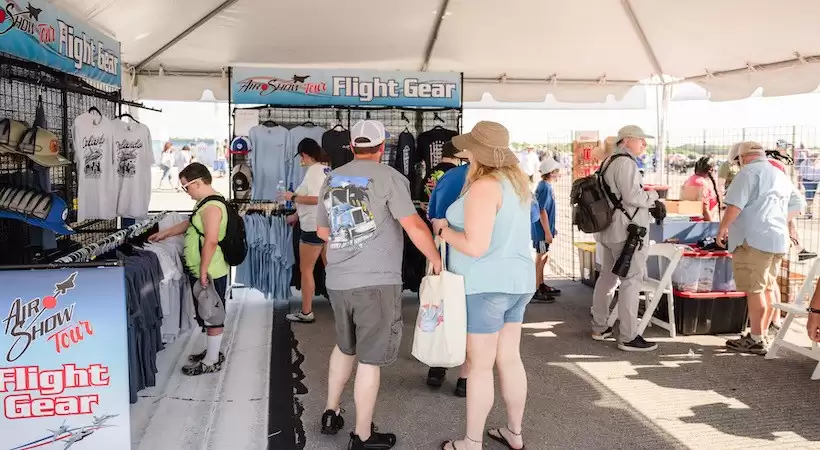
A Team Merchandise Manager runs a sport organization’s retail business: deciding what products to sell, buying and managing inventory, running the team store and online shop, staffing game nights and hitting sales targets. The job is retail management in a sport setting, with sharp peaks around home games, playoff runs and holidays, and long quiet stretches in between.
Scope depends heavily on the organization. A major-league club may have several stadium stores, an e-commerce team, a licensing partner and a dedicated buyer. A junior hockey or minor-league baseball team may have one store run by one manager who also handles community events or game operations.
What a team merchandise manager does day to day
The Peterborough Petes treat their souvenir shop as a regular retail business, Director of Merchandise Don Sharp told SPMA (2021). That means weekday hours plus every game night, and daily work marking and replenishing stock, building displays, unpacking deliveries, filling online orders, paying suppliers, designing and ordering new products, and hiring, scheduling and training game-night staff.
At a larger club, the same responsibilities scale up. Michelle Young, Manager of Retail for the Toronto Blue Jays (2019), described overseeing two stores at Rogers Centre, one open year-round and one seasonal, with responsibility for sales goals, staff training, stock procedures, merchandising plans, scheduling, payroll and sales reporting. She also led most of the hiring for roughly 150 seasonal retail staff.
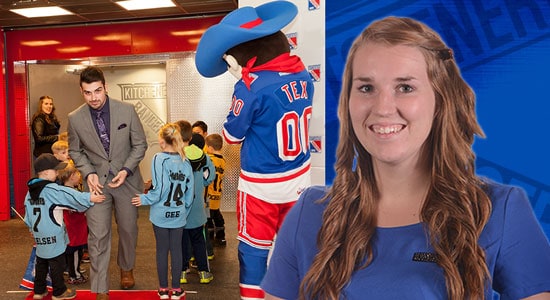
In smaller organizations, merchandise is often one half of a combined role. Rochelle Thiel (2020) managed both community events and the team store for the OHL’s Kitchener Rangers. She described a “typical schedule” rather than a typical day: Thursdays for store hours, supplier meetings and inventory checks, Fridays for home games, and player and mascot appearances on other days.
What a team merchandise manager decides, and what sits with others
The merchandise manager usually owns product selection within brand guidelines, buying and inventory levels, pricing and promotions, store layout and staffing. Inventory is the core financial risk: order too little before a playoff run and sales are lost; order too much of a design that fails and the stock ends up in a clearance bin.
Some decisions are shared or controlled elsewhere. Logos and trademarks are usually governed by the league’s licensing rules, and official jerseys and many products come through licensed manufacturers. The Marketing Manager typically owns brand standards and campaigns; partnership deals that put a sponsor on merchandise are negotiated by the partnerships team, such as a Partnership Activation Manager. Finance sets budgets and margin targets.
In junior hockey, merchandise is often one part of a wider job. Rochelle Thiel of the Kitchener Rangers told SPMA in 2020: “With regard to being the Merchandising Manager, I look after all aspects of running the team store, Rangers Authentics.” Thiel also coordinates “player and mascot appearances with Community Groups and Sponsors.”
Connecting merchandise to the community
Good merchandise programs extend the brand beyond the arena. Sharp described partnering with local minor hockey associations to supply their gear and clothing through the team store at reasonable prices, so the Petes brand is seen across the community. He also added a custom jersey machine that could personalize a jersey in about 15 minutes, which boosted game-night sales and created year-round demand for gifts.
Other common tactics include co-branded products with local retailers, limited releases tied to heritage nights or charity games, and online drops timed to milestones. Each needs to be weighed against inventory risk and licensing rules.
Stocking decisions can even make headlines. SPMA’s answer on why the Seattle Mariners stocked their team store with Blue Jays merchandise shows how visiting-fan demand can shape what a store carries.
Skills employers look for in a team merchandise manager
- Retail and inventory management: open-to-buy planning, stock turns, shrink control and point-of-sale systems.
- Sales analysis: knowing which products, sizes and price points sell on game nights versus online.
- Staff leadership for a large, part-time, seasonal workforce.
- Vendor management and negotiation with suppliers and licensees.
- E-commerce basics: product listings, fulfillment and returns.
How to become a team merchandise manager
Many merchandise managers start on the shop floor. Young took a retail job at the Jays Shop a year after university, then combined further education and volunteer experience before being promoted to manage retail. General retail management experience transfers well; so does game-night work in a team store, which shows you can handle the pace.
Sport apparel brands are another route into the field. SPMA’s profile of Scott Hudson (2019) follows a career through facilities, New Balance and New Era. When interviewing for a team role, ask whether e-commerce is in-house or outsourced, who approves designs, how licensing works, and what the store’s annual sales target is.
Team merchandise manager jobs on SPMA: what the postings show
Since late 2023, SPMA has listed 71 jobs that match this role, including 8 in Canada and 63 in the United States. Employers used titles such as “Retail Sales Associate”, “Retail Associate”, “Retail Event Associate” and “Merchandise Intern”. Organizations that posted them include Fanatics Commerce, Brooks Running, Florida Panthers Hockey Club, Ltd, Beloit Snappers and Canada Basketball.
Among 6 U.S. postings that listed an annual salary, the middle half of salary midpoints ran from US$88,000 to US$178,000, with a median of US$109,000. Among 12 U.S. postings that listed hourly pay, the median midpoint was US$22.27 an hour (middle half US$20.00–US$24.36). Examples of posted pay: Digital Merchandising Specialist, Arc’teryx (North Vancouver): C$70,000–C$92,000 a year; E-Commerce Manager, Sporting Life (Richmond Hill): C$45,000–C$55,000 a year.
Source: SPMA’s database of 3,289 sport job postings in Canada and the U.S., late 2023 to November 2026, matched by job title. Pay figures use the midpoint of each posted range and exclude postings without pay. See current team merchandise manager openings on SPMA.
Team merchandise manager salary and job outlook
No single government occupation category closely matches the Team Merchandise Manager role, so national salary figures can be misleading. Pay depends on the level of sport, the organization’s size and budget, and the region; roles with junior, minor-league, university and nonprofit organizations generally pay less than similar jobs at major professional teams.
The most reliable guide is current postings: check pay ranges on SPMA’s jobs board, and in Canada compare with Job Bank’s wage search for related occupations.
Common career questions
What does a team merchandise manager do?
A team merchandise manager buys products, manages inventory, runs the team store and online shop, hires and schedules game-day retail staff, and is responsible for merchandise sales targets.
Do you need a sport management degree to work in team merchandise?
Not necessarily. Retail management experience is often more relevant. Degrees in business, marketing or sport management help, but many managers are promoted from store roles.
Who designs team merchandise?
It varies. Licensed manufacturers produce many official items, while the merchandise manager may design or commission local products within brand and league licensing rules.
What is the busiest time for team merchandise?
Home openers, playoff runs, special theme nights and the holiday season are usually the biggest periods.
Further reading and qualification checks
See the U.S. Bureau of Labor Statistics Retail Sales Workers profile for broad occupational data. Related SPMA guides: Fan Experience Manager, Game Day Operations Manager and Community Relations Manager.