
The Shelf · Books

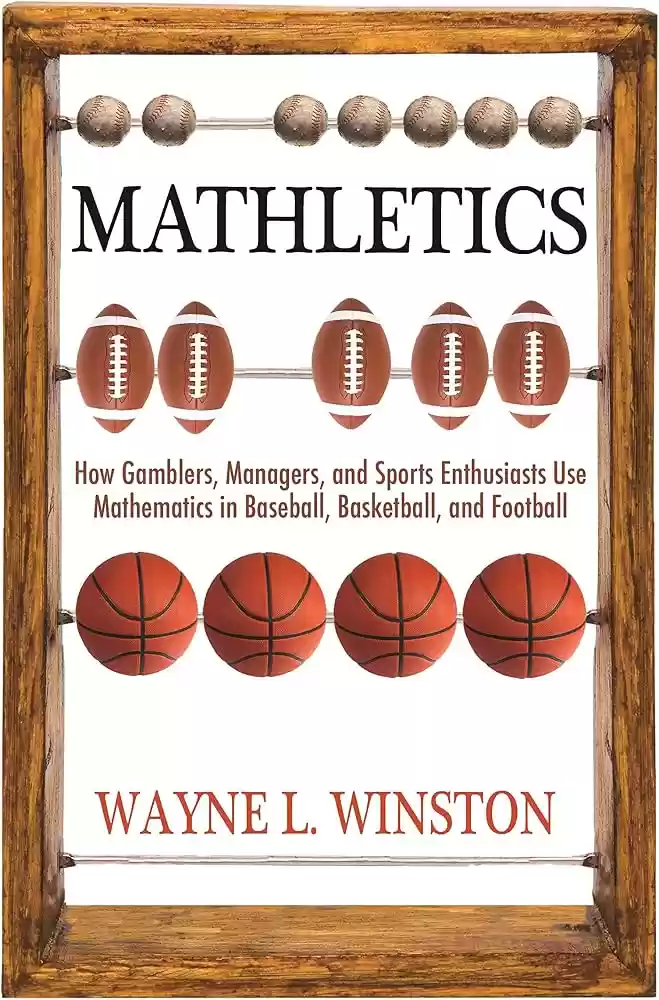
Mathletics

By Wayne L. WinstonReleased 2009Curated by SPMA Hub because sport culture lives beyond the field.

Mathletics shows how mathematics can answer practical questions in professional sport. Wayne Winston, a professor of decision sciences at Indiana University's Kelley School of Business, applies statistical methods to baseball, football and basketball decisions.

Alex Bennett
Covered by Alex Bennett
The Shelf
Mathletics

The Gist

Why it caught our attention

Published by Princeton University Press in 2009, the book arrived as analytics was spreading beyond baseball into other sports. Winston had worked as a statistical consultant for the NBA's Dallas Mavericks, which gave his basketball chapters practical grounding.

A second edition in 2022, with Konstantinos Pelechrinis and Scott Nestler, updated the material for the tracking-data era, a sign of the book's lasting use in teaching.

The Details

Quick facts

Format
Book
Author
Wayne L. Winston
Published
2009

At A Glance

Mathletics shows how mathematics can answer practical questions in professional sport. Wayne Winston, a professor of decision sciences at Indiana University's Kelley School of Business, applies statistical methods to baseball, football and basketball decisions.

About This Shelf Item

About Mathletics

The baseball section covers foundational ideas, including the Pythagorean method of estimating wins from runs scored and allowed, and ways of measuring how much each batting event is worth in runs.

In football, Winston examines the value of field position, when teams should attempt fourth-down conversions and how point spreads reflect the relative strength of teams.

The basketball chapters explore measures of player value, including adjusted plus-minus, which estimates how a team performs with a player on the court after accounting for teammates and opponents.

Throughout, Winston explains the limitations of models, including small samples and noisy data. The book treats analytics as a way of thinking rather than a set of fixed answers.

Winston also discusses sports betting markets, explaining how point spreads and odds aggregate information and why they are often hard to beat. That discussion is useful for understanding how prices reflect the collective judgement of many observers, a concept that applies far beyond gambling.

Each chapter includes worked examples that readers can reproduce in a spreadsheet, which makes the book practical for teaching and self-study.

Why It Belongs

The Sport Connection

For analysts, scouts and coaches, Mathletics provides an accessible introduction to methods that are now standard in many front offices, and a foundation for learning more advanced techniques.

Business staff can apply the same reasoning to pricing, attendance forecasting, sponsorship valuation and marketing measurement, where similar statistical tools are used.

It also helps managers who supervise analytics teams ask better questions about models, assumptions and evidence before acting on a recommendation.

With legal sports betting now widespread in North America, the book's explanations of odds, probability and market efficiency are relevant to integrity officers, media partners and anyone assessing the commercial relationships between leagues and sportsbooks.

Our Recommendation

Why Read Mathletics

Read Mathletics if you want to build analytical skills for a career in sport, or need a grounding in how data informs team decisions. Readers comfortable with spreadsheets will be able to follow along.

The first edition predates tracking data, so consider the 2022 update for current methods. This Shelf feature reflects the book's published content; it is not a chapter-by-chapter review.

Instructors teaching introductory sports analytics will find it a well-structured course text.

Alex Bennett

Final Thoughts

Alex's Final Thoughts

Mathletics treats numbers as tools for asking better questions, not as replacements for judgement. That balance between evidence and experience remains the foundation of good decision-making in sport, on the field and in the front office.