



A modern sports executive works within a commercial ecosystem that did not appear overnight. Media contracts, sponsorship models, venue development and institutional relationships changed as the industry grew, often through experimentation rather than one coordinated plan. The Sport Business Handbook: Insights from 100+ Leaders Who Shaped 50 Years of the Industry, published in 2019, gathers perspectives on that evolution. The volume is associated with editors Rick Horrow, Rick Burton and Myles Schrag, among its credited contributors. Its appeal is the range of professional voices and experiences rather than a single claim about how to run a team. Students can read it as an introduction to the people, negotiations and business choices that shaped the sector.
The Shelf · Books
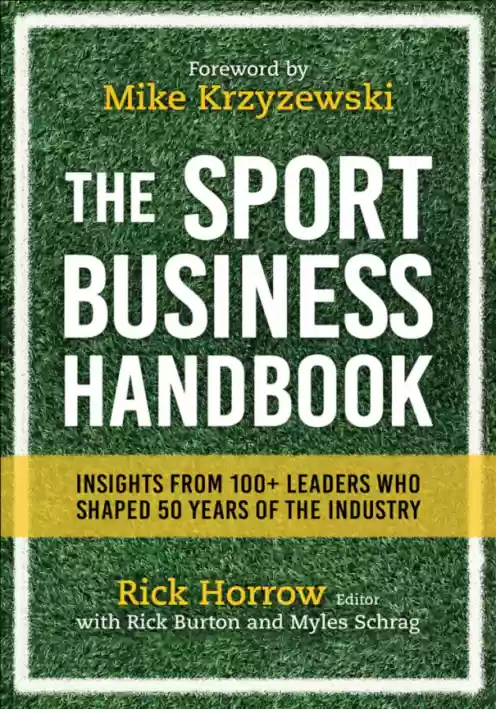
The Sport Business Handbook
The sport business industry was built by people making decisions about television, partnerships, venues and audiences. The Sport Business Handbook collects lessons from leaders involved in that transformation, offering a valuable historical industry perspective.
The Gist
Why it caught our attention
The Details
Quick facts
- Format
- Book
- Author
- Rick Horrow, Rick Burton & Myles Schrag
- Published
- 2019
- Genre
- Non-Fiction

At A Glance
The sport business industry was built by people making decisions about television, partnerships, venues and audiences. The Sport Business Handbook collects lessons from leaders involved in that transformation, offering a valuable historical industry perspective.

About This Shelf Item
About The Sport Business Handbook
The handbook's perspective covers more than competition on the field. Sports entertainment depends on the development of commercial rights, distribution partnerships, facilities and relationships with audiences. An executive negotiating a sponsorship deal faces questions about what the rights holder can deliver and how a brand will measure value. A venue project may require coordination among investors, governments, teams, community groups and event organizers. An industry built on these transactions also depends on personal relationships and institutional credibility. The book's contributions can help readers understand how different professional roles emerged as sports properties attracted wider commercial attention. At the same time, recollections from successful leaders should be interpreted as perspectives shaped by their careers, not proof that every decision they made was optimal.

Why It Belongs
The Sport Connection
For someone entering sports business, the practical value is learning to distinguish job functions that outsiders often merge. Sales and partnership activation are related, but a signed contract still has to be implemented. Venue financing and event-day operations affect the same property on different time horizons. Media-rights negotiation depends on audience demand, distribution technologies and regulatory conditions that change over time. Managers who see only their own departmental objectives can underestimate those connections. The handbook encourages readers to examine how executives communicate across disciplines and translate commercial opportunity into realistic obligations. Its historical approach also helps identify which successful practices emerged from particular circumstances and should not be copied without modification.

Our Recommendation
Why Read The Sport Business Handbook
There is an important limitation to leadership collections: the voices of prominent executives are more visible than those of workers, participants and communities who may experience the same business choices differently. Readers should supplement the handbook with evidence about labour, access, public subsidies and athlete welfare. That critical approach strengthens rather than reduces the book's usefulness. A sports-management education benefits from understanding what industry leaders believed they were building and from testing those accounts against wider consequences. The industry's past decisions influence today's revenue expectations, stadium strategies and sponsorship inventories, but the conditions surrounding them have changed. Digital platforms and new athlete commercial rights, for example, require contemporary analysis beyond any fixed historical collection.
One practical approach is to choose a transaction or partnership described by a contributor and trace its effects across other stakeholders. That exercise reveals why a celebrated commercial achievement may look different from the perspectives of a fan, athlete or publicly funded venue.
Final Thoughts
Arash's Final Thoughts
The Sport Business Handbook is a valuable career and industry-history resource for readers who want to understand where established commercial practices came from. Its strongest lesson is that successful sporting ventures combine relationships, capital, operations and an audience willing to care. The responsible manager must evaluate all four while questioning whose experiences are represented in the story. Read this volume as a collection of informed perspectives and a foundation for further research, not as a universal blueprint for every future deal.
Keep Exploring
Similar Books on The Shelf











Stay in the loop
Follow SPMA
New jobs, interviews and sport-industry news in your feed.






6872140 new jobs in sport this week
Teams, leagues, agencies and brands in Canadain the USAin Canada & the USA are hiring. Find your next role, or let new ones come to you.
Just posted
 Content Creation InternSport Management Hub · Toronto, ON★ Featured
 Marketing InternLUG Sports Group · Remote1 hour ago
 Sales & Business Development InternWager Chatter · Toronto, ON1 hour ago
 Inside Sales Representative (Seasonal Position)Myrtle Beach Pelicans · Myrtle Beach, SC1 hour ago
 Director, FinanceFront Office Sports · New York, NY21 hours ago
 Staff Engineer, Balance and Ledger - CoreFanatics Betting & Gaming · New York, NY23 hours ago
- Content Creation InternSport Management Hub · Toronto, ON★ Featured
- Inside Sales Representative (Seasonal Position)Myrtle Beach Pelicans · Myrtle Beach, SC1 hour ago
- Marketing InternLUG Sports Group · Remote1 hour ago
