





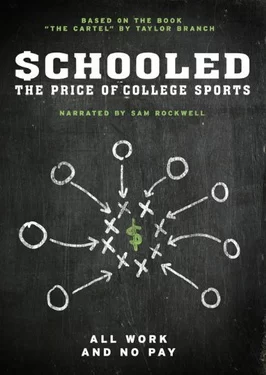
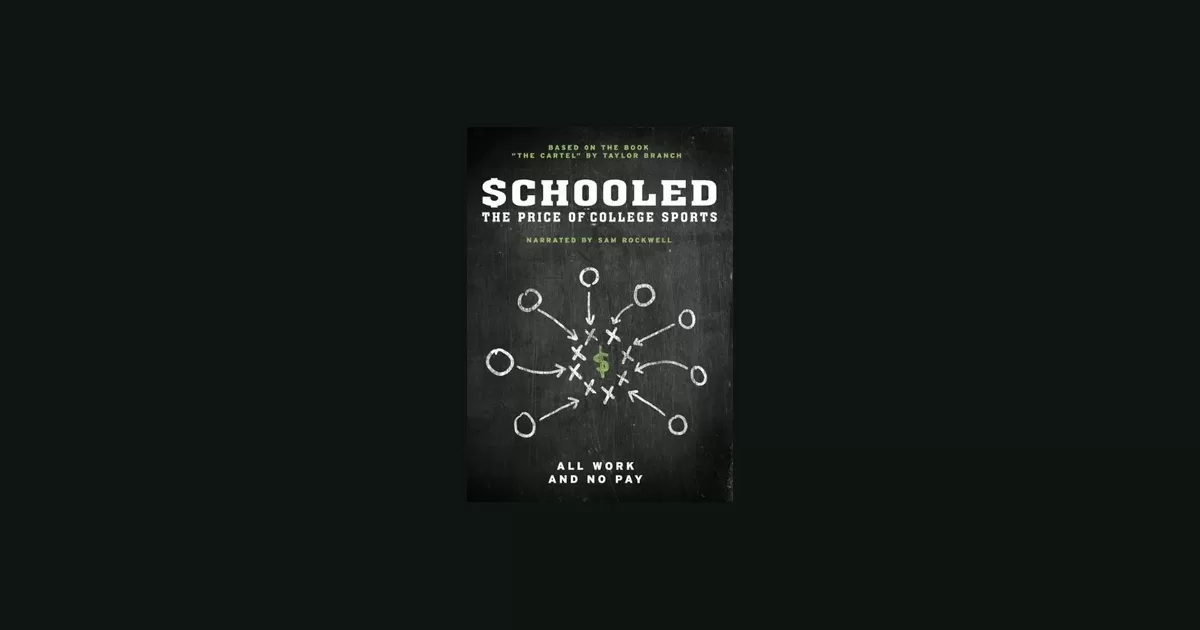
The word amateur can make an arrangement sound straightforward: an athlete participates in sport while receiving educational opportunities rather than a professional salary. Directors Trevor Martin and Ross Finkel challenge that simplicity in Schooled: The Price of College Sports, a 2013 documentary that draws on historical criticism of the NCAA's business model. With input from sports figures and commentators, the film explores how rules were created and defended as the financial value of college competition expanded. This is an advocacy-minded work rather than a comprehensive account of every university's finances. Its value lies in asking why the economic language used to describe a game can be so different from the language used to describe the people who play it.
The Shelf · Movies
Schooled: The Price of College Sports
Schooled investigates the history of NCAA amateurism, asking how college athletics became a major commercial business while retaining strict limits on athlete compensation.
The Gist
Why it caught our attention
The Details
Quick facts
- Format
- Movie
- Released
- 2013
- Genre
- Documentary

At A Glance
Schooled investigates the history of NCAA amateurism, asking how college athletics became a major commercial business while retaining strict limits on athlete compensation.

About This Shelf Item
About Schooled: The Price of College Sports
The documentary traces debates about amateurism, compensation and institutional authority through a historical lens. Fans see full arenas and recognizable team brands, while media contracts and coaching salaries reveal a business with real economic power. The film asks whether a restrictive model of compensation can be justified by appealing to education, especially when athletes have obligations that affect their daily lives. It also introduces the history of the term student-athlete and its place in legal and administrative arguments. Readers should separate the documentary's presentation of that history from the current legal position, which has changed significantly. As a record of how these disputes were framed before later reforms, Schooled remains useful.

Why It Belongs
The Sport Connection
Sports managers can use the film to consider how an institution justifies a governance system to the people most affected by it. A rulebook may state the conditions for participation, yet a credible policy needs more than formal compliance. It must explain the purpose of restrictions, the benefits provided and the mechanisms available to challenge unfair treatment. Scholarship packages, insurance, academic support and opportunities to earn from personal identity all have different implications. The most productive discussion asks how such elements fit together rather than reducing the debate to one cash figure. The film's historical allegations also show why organizations should be cautious when a commercial model depends on language that the public increasingly finds inconsistent with observable practice.
Amateurism became part of college sport's public identity, but the commercial framework around major events kept evolving. The film's interviews and legal discussion help explain why that mismatch became a source of sustained conflict. A scholarship represents real value, yet its existence does not automatically settle debates over medical care, image rights or a player's ability to earn money. Athletic departments also face costs that extend beyond the programs most visible on television. A serious policy discussion has to acknowledge those differences rather than treating every institution as financially identical. Because Schooled predates major changes in NCAA compensation rules, it should be read as a record of the arguments that shaped reform, not as an up-to-date explanation of today's legal landscape. That historical position is especially useful for future sports managers. It shows how language that once seemed unquestionable can be challenged when the economic relationships beneath it become difficult to defend.

Our Recommendation
Why Watch Schooled: The Price of College Sports
Schooled will appeal to readers interested in NCAA history, sport law and institutional communications. It is valuable precisely because its 2013 timing predates several major compensation developments. A modern reader can compare the criticisms it records with the rules now governing NIL deals and educational benefits, identifying which problems were addressed and which may have changed form. The documentary also raises methodological questions. What evidence supports the claim that athletes create particular financial value, and how should benefits that cannot be measured in salaries be considered? Engaging with those distinctions prevents the film from becoming a shorthand for a more complicated contemporary debate.
Final Thoughts
Arash's Final Thoughts
Schooled earns a Shelf place as a record of contested assumptions at the heart of big-time college sport. It asks administrators to justify the balance they strike between education, entertainment revenue and athlete autonomy. Policies can evolve, but the obligation to explain that balance fairly remains.
Related organizations

Keep Exploring
Similar Movies on The Shelf






Stay in the loop
Follow SPMA
New jobs, interviews and sport-industry news in your feed.






51128179 new jobs in sport this week
Teams, leagues, agencies and brands in Canadain the USAin Canada & the USA are hiring. Find your next role, or let new ones come to you.
Just posted
 Foreman, Field MaintenanceMaple Leaf Sports & Entertainment (MLSE) · Toronto, ON6 hrs ago
 Registrar & Administrative CoordinatorCheer Sport Sharks · Vancouver, BC17 hrs ago
 Policy Analyst & Committee LeadSport, Physical Activity and Recreation Council (SPARC) · within Canada1 day ago
 Product Senior DirectorFanDuel · Atlanta, GA7 hrs ago
 IT Operations Intern, 2027 SeasonIndianapolis Motor Speedway · Indianapolis, IN9 hrs ago
 Intern, Graphic Design (Sprint Season)Inter Miami CF · Miami, FL9 hrs ago
- Foreman, Field MaintenanceMaple Leaf Sports & Entertainment (MLSE) · Toronto, ON6 hrs ago
- IT Operations Intern, 2027 SeasonIndianapolis Motor Speedway · Indianapolis, IN9 hrs ago
- Intern, Graphic Design (Sprint Season)Inter Miami CF · Miami, FL9 hrs ago
