The Shelf · Movies

Giant

Released 2025Curated by SPMA Hub because sport culture lives beyond the field.

Giant presents boxing success as a partnership between a young fighter who refuses to be ordinary and a trainer who understands how to turn difference into competitive identity. Its central tension is whether a sport built on individual courage can make room for the community and politics surrounding a champion.

Arash Sayed
Covered by Arash Sayed
The Shelf
Giant

The Gist

Why it caught our attention

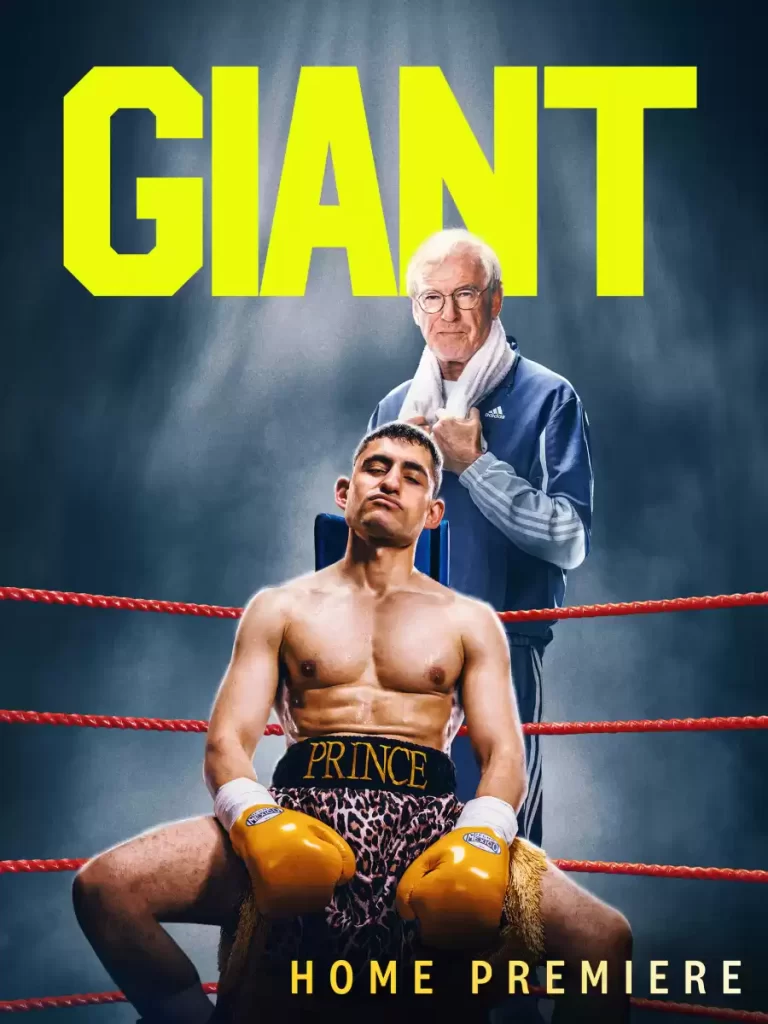
Rowan Athale's 2025 biographical sports drama follows Naseem 'Prince' Hamed and Brendan Ingle, the Sheffield trainer who helped shape his career. Amir El-Masry plays Hamed and Pierce Brosnan plays Ingle. The film traces Hamed's rise from working-class Sheffield to boxing stardom, while also addressing the racism and Islamophobia he encountered in Britain during the 1980s and 1990s.

That premise makes Giant more than a sequence of training scenes and bouts. Hamed's style, personality and public image become part of the story of his success. Ingle's role is equally important because he is not merely preparing a fighter for competition. He is helping a young athlete understand how technical ability, confidence and public attention can be combined into a distinctive professional identity.

The Details

Quick facts

Format
Movie
Released
2025
Genre
Drama
Relevant Sport
Boxing

At A Glance

Giant presents boxing success as a partnership between a young fighter who refuses to be ordinary and a trainer who understands how to turn difference into competitive identity. Its central tension is whether a sport built on individual courage can make room for the community and politics surrounding a champion.

About This Shelf Item

About Giant

The film is based on the relationship between Hamed and Ingle rather than on a single contest. Boxing provides the visible structure, but the subject is development: how a trainer recognizes unusual potential, how an athlete learns to trust an unorthodox method and how a local partnership becomes a national and international business.

Hamed's route to the top is presented within the social conditions of 1980s and 1990s Britain. The film acknowledges that his career was shaped by more than punches and titles. His identity as a British Muslim boxer, the hostility he faced and the persona he developed all affected how audiences and the boxing industry responded to him. The available festival description identifies racism and Islamophobia as central pressures in the story.

Because Giant is a dramatization of real lives, its scenes and compressed relationships should not be treated as a complete biography. The film's value lies in its interpretation of the partnership and its attention to the cultural work required to make a boxer visible. It also raises questions about the line between authentic self-expression and a marketable sports persona.

Why It Belongs

The Sport Connection

Giant offers a useful case study in athlete development. Ingle's contribution is not limited to physical instruction. He helps Hamed build a style that audiences can recognize immediately, which turns technical difference into an asset. For a boxing operation, that distinction matters because commercial value is often attached to personality as much as to the record.

The film also shows why representation and performance cannot be separated easily. Hamed's public identity challenges the expectations placed on a British champion, while the racism around him demonstrates that visibility does not automatically produce acceptance. A promoter may benefit from an athlete's uniqueness while still trying to manage how that uniqueness is presented.

There is a practical lesson here for sport organizations, although it is not a simple leadership parable. A coach can help an athlete develop without erasing the qualities that make the athlete distinctive. At the same time, the athlete's marketability should not be allowed to obscure the discrimination and unequal expectations that shape the path to recognition.

Our Recommendation

Why Watch Giant

Watch Giant if you are interested in boxing, athlete branding or the relationship between a coach's eye and an athlete's public identity. It should also interest sport managers examining how local facilities and trusted mentors can produce talent that larger organizations later monetize.


Viewers should approach it as a dramatized biography, not a definitive historical record. Its account is concentrated around Hamed and Ingle, so the broader boxing economy and the perspectives of other participants receive less attention than the central partnership.

Arash Sayed

Final Thoughts

Arash's Final Thoughts

Giant's strongest idea is that a champion's identity is developed long before it is sold to a mass audience. Hamed brings the talent and force of personality, but Ingle provides a setting in which those qualities can become a coherent sporting project. The film leaves a sharper question behind: when a fighter becomes a brand, who protects the person who made the brand possible?