





Written with Tim Vandehey, the book follows McCormack's career through the 2010 Ironman World Championship in Hawaii, where he secured a second title at thirty-seven. That success followed fourth place the previous year and a deliberate reconsideration of how to race his opponents. The title reflects his personality: he is willing to discuss winning directly, including the strategic and psychological work behind it. Yet the story also depends on earlier disappointments at Kona. Success elsewhere did not automatically solve the demands of that race. McCormack had to examine what was happening, adapt his preparation and keep returning to an event that had exposed his weaknesses.
The Shelf · Books
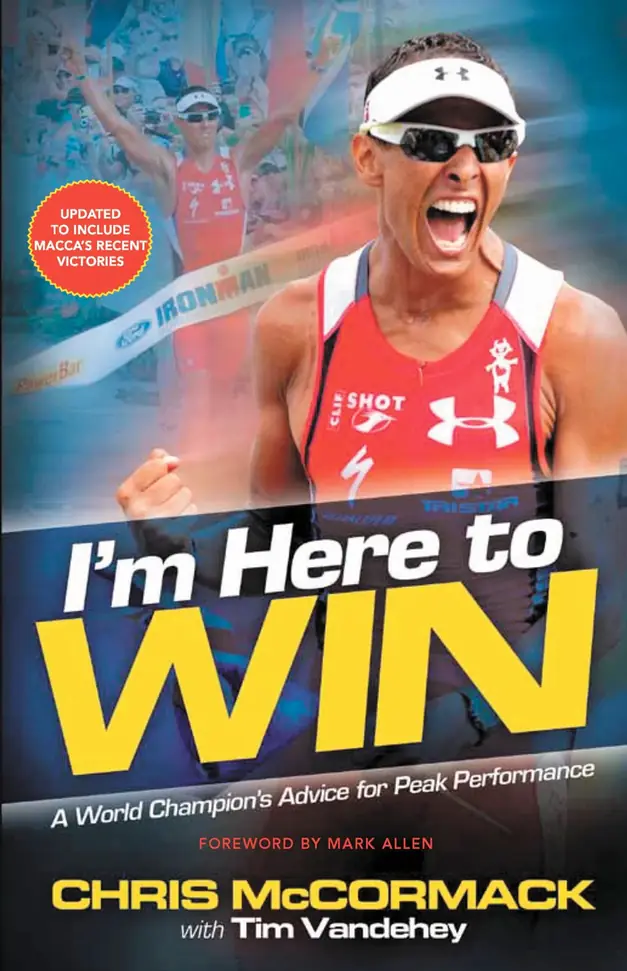
I'm Here to Win: A World Champion's Advice for Peak Performance
By Chris McCormack & Tim VandeheyReleased 2011Curated by SPMA Hub because sport culture lives beyond the field.
Chris McCormack approaches an Ironman as a contest with other people as well as a test of endurance. I'm Here to Win brings that combative outlook to his racing story, mixing defeats, rivalries and preparation with an account of how he learned to turn exceptional fitness into the result he wanted.
The Shelf
The Gist
Why it caught our attention
The Details
Quick facts
- Format
- Book
- Author
- Chris McCormack & Tim Vandehey
- Published
- 2011
- ISBN
- 9781455502684
- Genre
- Biography

At A Glance
Chris McCormack approaches an Ironman as a contest with other people as well as a test of endurance. I'm Here to Win brings that combative outlook to his racing story, mixing defeats, rivalries and preparation with an account of how he learned to turn exceptional fitness into the result he wanted.

About This Shelf Item
About I'm Here to Win: A World Champion's Advice for Peak Performance
The memoir gives considerable attention to the mental contest surrounding elite triathlon. McCormack discusses the way competitors read one another, the confidence communicated before a race and the friction that rivalry can produce. His clashes with Normann Stadler and Faris Al-Sultan belong to this account of competitive identity. The interest is not simply in who said what. It is in how an athlete uses emotion and perception to prepare himself while trying to influence the field around him.
The 2010 contest with Andreas Raelert provides a particularly clear setting for the relationship between endurance and tactics. After hours of effort, decisions still have to be made about another athlete's condition and the moment to act. McCormack also acknowledges the people supporting his preparation. Family, advisers and training relationships complicate the picture of an individual crossing the finish line alone. The performance may be singular, but the work that makes it possible is shared.

Why It Belongs
The Sport Connection
For coaches and performance staff, the book offers a forceful example of an athlete interpreting his own competitive behaviour. McCormack's confidence is part of the method, but so is his willingness to revisit a result that did not meet his expectations. That combination is more useful than a simple instruction to become mentally tougher. The account invites discussion about which aspects of a competitor's approach depend on temperament, experience or the demands of a particular event. His outspoken rivalries also reveal how public communication can become part of competition itself. A statement may affect an opponent, an audience and the speaker's own sense of obligation to perform.

Our Recommendation
Why Read I'm Here to Win: A World Champion's Advice for Peak Performance
Experienced endurance athletes will recognise the absorption required to organise a life around a major race. Newer triathletes can learn about the strategic dimension of a discipline that is sometimes described only in distances and finishing times. Readers who enjoy a candid, argumentative sporting personality are likely to find McCormack engaging, even when they would make different choices. The book combines memoir with performance advice, so its most rewarding use is reflective: consider how he identifies a problem, seeks information and adjusts. That process can be examined without assuming that another athlete should reproduce his training or his confrontational manner.
Final Thoughts
Arash's Final Thoughts
I'm Here to Win gives ambition a specific voice. McCormack is interested in preparation that survives the presence of an equally determined rival, not merely in private reassurance that the work has been done. His story gains depth from the races that resisted him and the people who helped him respond. The result is a lively account of competitive craft, showing how endurance, observation and judgement meet when an athlete has enough strength to remain in the contest and must still decide how to finish it.
Keep Exploring
Similar Books on The Shelf










Same sport
More Cycling on The Shelf

Stay in the loop
Follow SPMA
New jobs, interviews and sport-industry news in your feed.






Hiring now on Sports Hired
58225283 new jobs in sport this week
Teams, leagues, agencies and brands in Canadain the USAin Canada & the USA are hiring. Find your next role, or let new ones come to you.
3701,0541,424 open jobs3,8668,20712,073 organizations
Just posted
 Policy Analyst & Committee LeadSport, Physical Activity and Recreation Council (SPARC) · within Canada3 hrs ago
 Head Coach, Synchro 9 National TeamSkate Canada · Ottawa, ON4 hrs ago
 Analyst | AnalysteOttawa Rapid FC · Ottawa, ON4 hrs ago
 2027 Summer Camp InternFirst Tee · Richmond, VA6 hrs ago
 Triple-a Athletic TrainerDetroit Tigers · Toledo, OH7 hrs ago
 Development CoachHouston Astros · Houston, TX7 hrs ago
- Policy Analyst & Committee LeadSport, Physical Activity and Recreation Council (SPARC) · within Canada3 hrs ago
- Head Coach, Synchro 9 National TeamSkate Canada · Ottawa, ON4 hrs ago
- Analyst | AnalysteOttawa Rapid FC · Ottawa, ON4 hrs ago
Copied
