The Shelf · Books

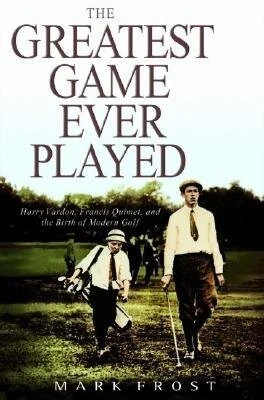
The Greatest Game Ever Played: Harry Vardon, Francis Ouimet, and the Birth of Modern Golf

By Mark FrostReleased 2002Curated by SPMA Hub because sport culture lives beyond the field.

Francis Ouimet did not fit the image of the man expected to defeat Harry Vardon at the 1913 U.S. Open. That mismatch gives Mark Frost's The Greatest Game Ever Played its initial drama. The deeper story follows two golfers whose different careers expose the social barriers surrounding a game they had loved since childhood.

Arash Sayed
Covered by Arash Sayed
The Shelf
The Greatest Game Ever Played: Harry Vardon, Francis Ouimet, and the Birth of Modern Golf

The Gist

Why it caught our attention

Frost's 2002 book builds toward the championship at the Country Club in Brookline, Massachusetts. Ouimet was a twenty-year-old American amateur. Vardon was an established British professional with an international reputation. Their meeting supplies the dramatic centre, but Frost first follows the paths that made the contest possible.

The result is a dual sporting biography within a broader history of golf. The men's different generations and circumstances matter, as do the similarities in their determination. Frost uses those connections to make the Open more than an upset story in which an unknown hero simply arrives and defeats a famous opponent.

The Details

Quick facts

Format
Book
Author
Mark Frost
Published
2002
ISBN
9780786869206
Relevant Sport
Golf

At A Glance

Francis Ouimet did not fit the image of the man expected to defeat Harry Vardon at the 1913 U.S. Open. That mismatch gives Mark Frost's The Greatest Game Ever Played its initial drama. The deeper story follows two golfers whose different careers expose the social barriers surrounding a game they had loved since childhood.

About This Shelf Item

About The Greatest Game Ever Played: Harry Vardon, Francis Ouimet, and the Birth of Modern Golf

Ouimet's working-class background places access at the heart of the narrative. His ability developed alongside a game associated with people who possessed much greater wealth and social standing. Golf presented a practical opportunity and a social boundary at the same time. His father's reservations underline how difficult it could be to imagine the sport as a plausible path for someone in his position.

Vardon brings another version of that struggle. His professional standing did not erase the earlier poverty or illness that shaped his career. Frost's attention to those experiences gives the older champion a life beyond his role as the obstacle in Ouimet's story. The final contest becomes more interesting when both men's achievements are allowed their full weight.

The tournament chapters gather these histories into a shared test. Ted Ray's presence in the decisive playoff also matters to the historical event: the championship was not literally a private two-man match. Frost's larger cast keeps the competition connected to the professional and amateur golf world surrounding its best-known figures.

Why It Belongs

The Sport Connection

The book offers a useful way to examine participation and public identification. Ouimet's success suggested that an athlete from outside golf's established social centre could belong among its leading players. That kind of moment can change who feels invited to imagine themselves in a sport, even when institutional barriers take longer to move.

Frost's account also connects sporting drama with the growth of an event's reputation. A championship gains meaning through the players who contest it and the stories audiences attach to them. The 1913 Open's enduring importance cannot be explained by the score alone. For those studying sport development, the book creates a concrete discussion about how access, public attention and exceptional performance interact without being identical forces.

Our Recommendation

Why Read The Greatest Game Ever Played: Harry Vardon, Francis Ouimet, and the Birth of Modern Golf

Golf enthusiasts will find a substantial narrative behind one of the sport's defining American championships. Readers interested in class and opportunity can approach it through the two central lives, even without a detailed knowledge of tournament history. Frost provides a competition around which those larger questions can remain focused.

The book also suits readers who know the film adaptation and want the wider context. Its room for Vardon, Ouimet and their contemporaries makes the historical landscape more complicated than a single inspirational victory. The pleasures of the contest and the difficulties of entering the sport remain connected.

Arash Sayed

Final Thoughts

Arash's Final Thoughts

The Greatest Game Ever Played earns its ambitious title through the scale of the story Frost places around the result. Ouimet's victory matters, but so do the years that made him capable of contesting it and the opponent whose career gave it meaning. The book invites admiration for an upset while preserving the dignity and difficulty on both sides of the encounter.