





At thirty-seven, Carrie chooses another season of competition after watching Nicki Chan challenge her major-title record. Her father, Javier, returns as her coach, restoring a partnership that reaches back to childhood. Their bond gives the novel its emotional centre. The person helping her improve is also the person who helped shape her understanding of success, making technical advice difficult to separate from family history, affection and the expectations they share.
The Shelf · Books
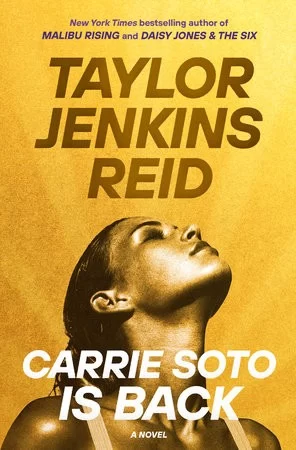
Carrie Soto Is Back
By Taylor Jenkins ReidReleased 2022Curated by SPMA Hub because sport culture lives beyond the field.
Carrie Soto Is Back begins when retirement stops feeling like a secure place in history. Taylor Jenkins Reid's 2022 novel follows a former tennis champion who returns because another player threatens the record around which she has built her identity. The comeback gives the story its pace, but the deeper contest concerns whether Carrie can understand her worth through anything other than remaining the best.

The Shelf
The Gist
Why it caught our attention
The Details
Quick facts

At A Glance
Carrie Soto Is Back begins when retirement stops feeling like a secure place in history. Taylor Jenkins Reid's 2022 novel follows a former tennis champion who returns because another player threatens the record around which she has built her identity. The comeback gives the story its pace, but the deeper contest concerns whether Carrie can understand her worth through anything other than remaining the best.

About This Shelf Item
About Carrie Soto Is Back
The return is not simply a test of whether Carrie still wants to win. Her body, circumstances and opponents have changed, while the public has its own judgement about whether she belongs on tour. She cannot recover an earlier career by refusing to acknowledge the passage of time. The competitive problem requires adaptation, and the personal problem is deciding what adaptation means for someone who has long treated compromise as a form of defeat.
Bowe Huntley, another player confronting his own uncertain future, adds a different relationship to the comeback. Training and personal connection create possibilities that do not fit neatly into Carrie's guarded approach. The novel uses that tension to ask whether closeness must distract from ambition or whether the refusal of closeness has become an unnecessary part of how she defines serious commitment to the game and to herself.

Why It Belongs
The Sport Connection
For SPMA readers, Carrie's public reputation is a useful point of discussion. An uncompromising female athlete can be judged not only for results but also for failing to make her ambition pleasant to watch. The novel allows readers to examine that double demand without assuming that every difficult action is therefore justified. Carrie can deserve the right to compete fiercely while still needing to consider how she treats other people in pursuit of her goals.
The father-coach relationship raises equally specific questions. Family knowledge can create trust and continuity, but it can also make sporting disappointment feel like a judgement on the relationship itself. A coach who is also a parent occupies two roles that may call for different responses. Javier and Carrie's connection gives those tensions a human setting, showing why support involves more than identifying the most effective tactic for the next match.

Our Recommendation
Why Read Carrie Soto Is Back
Readers do not need detailed tennis knowledge to follow the story's central conflict. The record provides a clear external measure, while the relationships complicate what retaining it would mean. That balance makes the novel accessible without turning the sport into mere decoration. Tennis's individual rankings and repeated head-to-head tests make it a particularly sharp setting for a character who wants the world to provide an unambiguous answer about her place within it.
Because this is fiction, its players and careers should be read on their own terms rather than mapped directly onto real champions. The invented sporting history gives Reid room to examine ambition, ageing and emotional risk. Readers can debate Carrie's choices without requiring her to serve as an ideal representative of women in tennis. Her difficulty is part of the point: a compelling athlete character does not have to be consistently admirable or easy to like.
Final Thoughts
Alex's Final Thoughts
Carrie Soto Is Back uses a comeback to test the meaning of greatness after the first period of acclaim has ended. Reid makes winning matter while asking whether it can bear the full weight Carrie places on it. The novel belongs on the SPMA shelf for its close connection between athlete identity, family coaching and public judgement, with a sporting record acting as both motivation and a limit on how its owner imagines her life.
Keep Exploring
Similar Books on The Shelf




Same sport
More Tennis on The Shelf





Stay in the loop
Follow SPMA
New jobs, interviews and sport-industry news in your feed.






Hiring now on Sports Hired
58225283 new jobs in sport this week
Teams, leagues, agencies and brands in Canadain the USAin Canada & the USA are hiring. Find your next role, or let new ones come to you.
3701,0541,424 open jobs3,8668,20712,073 organizations
Just posted
 Policy Analyst & Committee LeadSport, Physical Activity and Recreation Council (SPARC) · within Canada3 hrs ago
 Head Coach, Synchro 9 National TeamSkate Canada · Ottawa, ON4 hrs ago
 Analyst | AnalysteOttawa Rapid FC · Ottawa, ON4 hrs ago
 2027 Summer Camp InternFirst Tee · Richmond, VA6 hrs ago
 Triple-a Athletic TrainerDetroit Tigers · Toledo, OH7 hrs ago
 Development CoachHouston Astros · Houston, TX7 hrs ago
- Policy Analyst & Committee LeadSport, Physical Activity and Recreation Council (SPARC) · within Canada3 hrs ago
- Head Coach, Synchro 9 National TeamSkate Canada · Ottawa, ON4 hrs ago
- Analyst | AnalysteOttawa Rapid FC · Ottawa, ON4 hrs ago
Copied
