



The Ravens provide access to work that usually remains behind the public performance. Coaches, executives and players prepare for a season whose demands are partly predictable and partly beyond control. Everyone knows that some carefully made plans will fail. The difficult task is to develop enough depth and coordination that the organisation can respond without pretending that one person can always substitute for another at no cost.
The Shelf · Books
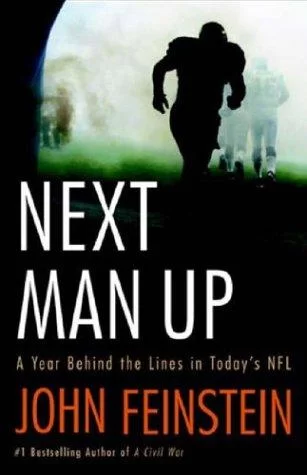
Next Man Up
By John FeinsteinReleased 2005Curated by SPMA Hub because sport culture lives beyond the field.
Next Man Up takes a familiar football phrase and examines the organisation required to make it true. John Feinstein follows the Baltimore Ravens through an NFL season, where injuries, roster decisions and competitive setbacks continually alter the plan. The 2005 book makes replacement a central fact of team life, with human consequences that are easily hidden when the phrase is used only to praise professional readiness.

The Shelf
The Gist
Why it caught our attention
The Details
Quick facts
- Format
- Book
- Author
- John Feinstein
- Published
- 2005
- Genre
- Non-Fiction
- Relevant Sport
- American Football

At A Glance
Next Man Up takes a familiar football phrase and examines the organisation required to make it true. John Feinstein follows the Baltimore Ravens through an NFL season, where injuries, roster decisions and competitive setbacks continually alter the plan. The 2005 book makes replacement a central fact of team life, with human consequences that are easily hidden when the phrase is used only to praise professional readiness.

About This Shelf Item
About Next Man Up
Feinstein's account follows the personnel decisions that give that preparation its shape. A roster is a competitive group, but it is also a set of working lives subject to evaluation. The language of depth charts and transactions can make those lives appear abstract. Following the people through meetings, practice and decisions restores the uncertainty behind a player's place on the team, especially when the margin between staying and leaving is small.
The distinction between a star and a less secure player becomes particularly important. Both contribute to the same result, yet their leverage and experience of the organisation can differ sharply. A celebrated athlete's absence may dominate public discussion while the person asked to fill the role faces the largest immediate change in responsibility. The team needs confidence from that player, even when the wider conversation has already framed the replacement as a problem.

Why It Belongs
The Sport Connection
For SPMA readers, the title opens a useful discussion about succession planning. Being prepared for disruption means more than identifying a name on a list. People need practice, information and an understanding of what will be expected when their role changes. The book's football setting makes those requirements visible under pressure. A plan that exists only on paper is of limited value when the organisation suddenly needs someone to perform a demanding task.
The same phrase also needs an ethical qualification. Treating athletes as replaceable can help a team survive a season while obscuring the physical and personal cost borne by those who cannot continue. Readiness and care should not be opposing commitments. A responsible organisation must prepare for absence while still recognising the injured person as more than a vacancy, and Feinstein's sustained view gives readers a basis for considering that tension.

Our Recommendation
Why Read Next Man Up
Football followers will appreciate the movement between the field and the decisions surrounding it. The book is especially useful for readers who want to understand why a season cannot be explained entirely through the head coach or quarterback. Scouts, executives and specialist coaches face distinct problems whose solutions have to fit together. The resulting picture makes the team look less like a single mind and more like an institution trying to coordinate competing demands.
Its value is not a promise that close access reveals every hidden truth about the NFL. It is the accumulation of detail about how one team works over time. Readers can consider what is specific to Baltimore and what may reflect broader features of the sport. That distinction keeps the account grounded and prevents a compelling season narrative from being turned too quickly into a universal management rule for every organisation.
Final Thoughts
Alex's Final Thoughts
Next Man Up makes preparedness concrete while preserving the people behind it. Feinstein shows why an NFL team must plan for constant change, and why doing so involves difficult judgements about talent, health and opportunity. The book belongs on the SPMA shelf as an account of organisational depth, where the test is not merely whether a replacement exists but whether the whole team has done the work needed to support that transition.
Related organizations


Keep Exploring
Similar Books on The Shelf










Same sport
More American Football on The Shelf







Stay in the loop
Follow SPMA
New jobs, interviews and sport-industry news in your feed.






Hiring now on Sports Hired
6872140 new jobs in sport this week
Teams, leagues, agencies and brands in Canadain the USAin Canada & the USA are hiring. Find your next role, or let new ones come to you.
319318637 open jobs2,3063,6215,927 organizations
Just posted
 Content Creation InternSport Management Hub · Toronto, ON★ Featured
 Marketing InternLUG Sports Group · Remote2 hours ago
 Sales & Business Development InternWager Chatter · Toronto, ON2 hours ago
 Inside Sales Representative (Seasonal Position)Myrtle Beach Pelicans · Myrtle Beach, SC2 hours ago
 Director, FinanceFront Office Sports · New York, NY22 hours ago
 Staff Engineer, Balance and Ledger - CoreFanatics Betting & Gaming · New York, NY24 hours ago
- Content Creation InternSport Management Hub · Toronto, ON★ Featured
- Inside Sales Representative (Seasonal Position)Myrtle Beach Pelicans · Myrtle Beach, SC2 hours ago
- Marketing InternLUG Sports Group · Remote2 hours ago
Copied
